«I had a farm in Africa, at the foot of the Ngong Hills…». Thus begin the famous Out of Africa by Baroness Karen Blixen, published in 1937 under the pseudonym Isak Dinesen. A role that Meryl Streep played in Sydney Pollack’s film of the same name (1985). The words of “the lioness,” as the natives called her, could well have been those of another writer, Doris Lessing (1919-2013), who also had a farm, with an old mud house with a thatched roof of savanna straw. The woman who took part in campaigns against nuclear weapons, criticized the South African apartheid regime, brought to print The Golden Notebook in 1962 and found a few reasons to embrace Sufism.
Lessing’s work is deeply autobiographical. In it she reveals herself as feminist, pacifist and anti-colonialist. It abounds in social critique without neglecting the purely existential. In The Grass Is Singing (1950), her first novel, she spoke of racial segregation with colonial Zimbabwe as the backdrop. Nevertheless, in 1994 she decided to tell her life as it truly was in Under My Skin. The second part came out in 1997 and was titled Walking in the Shade. Earlier, in 1984, she had released Impertinent Daughters. In its pages, with crushing candor, it dwells on the complex relationship with her mother, Emily Maude McVeagh, who was a single mother.
Impertinent Daughters, first published in Spanish (Lumen), is a family and social portrait. Her real life as a novel. A mother who never ceased to be a five-o’clock Englishwoman even in African lands; a father who hated England, a brother who adapted and she, the misfit, the perpetual rebel, for whom “the farm, the veld (field) and Africa were the best stroke of luck of my life.” She writes: “We settled in a land that had never been cultivated, when the white and Black fools had not yet ruined the savannah, surrounded by birds and wild animals of every kind, free to roam at our whim across thousands of acres, with solitude as the most precious gift. And yet, our mother spent sleepless nights, distressed because her children did not have everything, were not good middle-class kids from some residential neighborhood in London.”
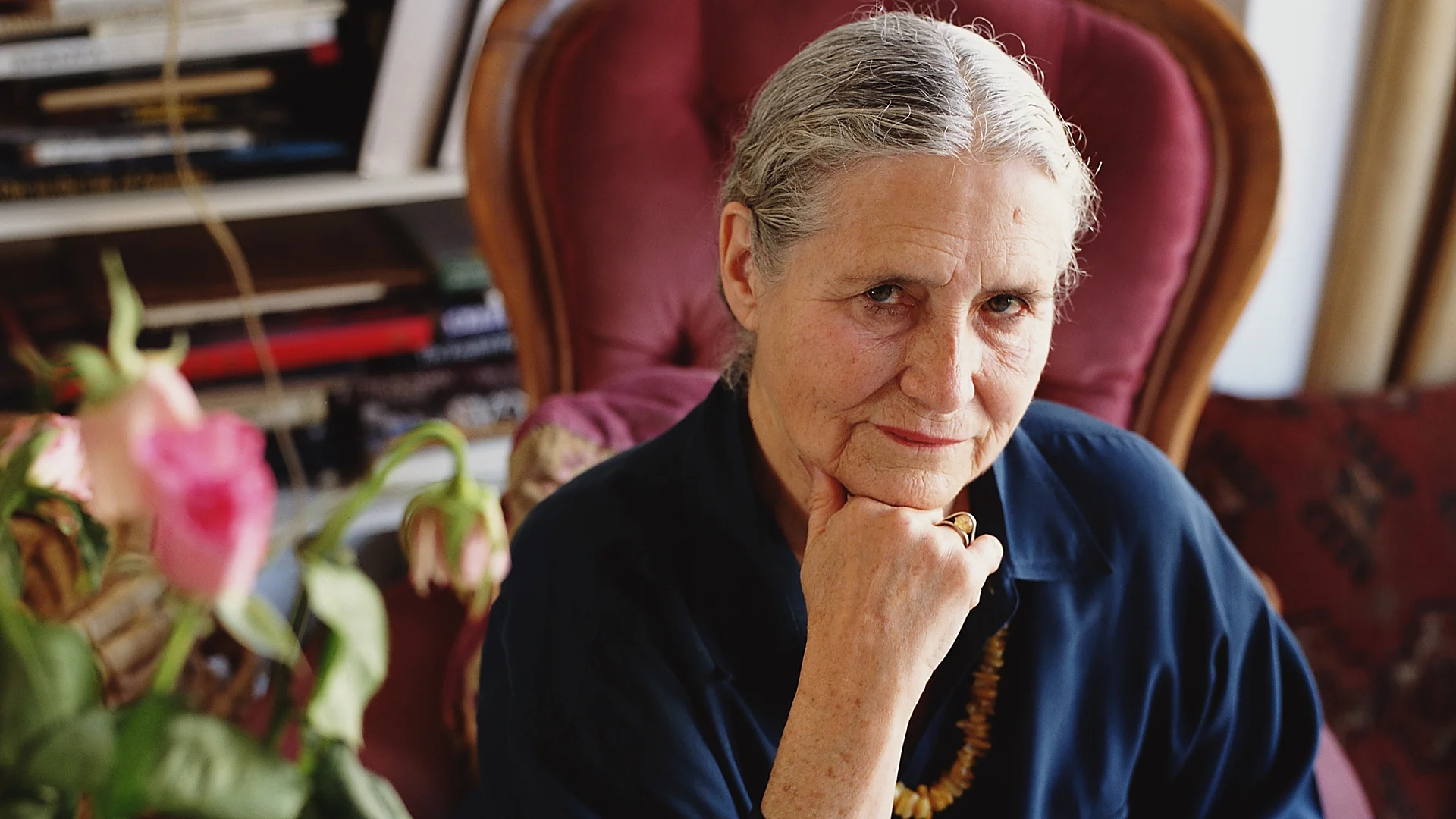
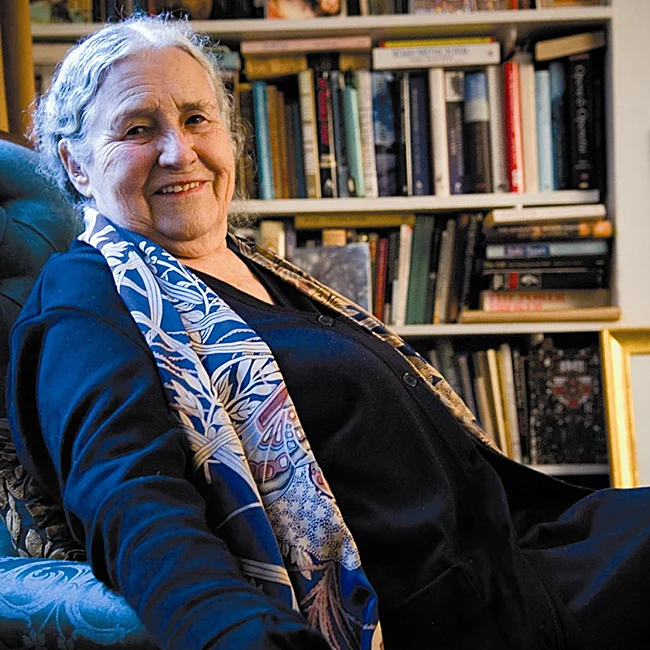
Doris Lessing, Nobel Prize in Literature
Her Nobel Prize in Literature acceptance speech, which she received in 2007, is included as an appendix in these memoirs. She called it How Not to Win the Nobel Prize. Doris Lessing took the opportunity to relocate to 1980s Zimbabwe. A friend, a professor in London, had answered the call for help from Africa: “She is a noble and idealistic person, but the shock of what she found in that school caused a depression that took a while to recover from.” Shortly after, Lessing was invited to give a talk at a school in London. She recalls that dusty Zimbabwean school where “we have been taught to read, but we have no books” and, at the same time, that privileged center in the British capital with a well-stocked library that is barely used because almost no one reads. Lessing was part of an organization that was born to bring books to the villages.
The writer Doris Lessing led a life worthy of a novel, lived with rebellion.
The writer was born in Persia, present-day Iran, in 1919, the daughter of English parents. For extra exotica, at five years old, the family moved to Southern Rhodesia, present-day Zimbabwe. From the country that borders Zambia, where Victoria Falls plunges, she returned to London for good in 1949. She carried with her all the books she had read and set to writing. Her Memoirs of Africa pass through “the butterflies, moths and bees that buzzed through the aromatic scrub of the Kalahari.” But also through a Black woman who was pregnant with two small children clinging to her legs, waiting in the queue at the Indian grocer to obtain some water. Surprisingly, she read Anna Karenina by Tolstoy.
Alfred, Emily and the War
The protagonist of Impertinent Daughters is not the daughter, but the mother. A mother who “could only have been the product of that era and that place: London, Great Britain, the British Empire.” Her father, the grandfather, whom she calls “pedantic with airs,” had raised his children “as was customary in Victorian patriarchs, with the rod and without love.” Mr. McVeagh was stunned when Emily Maude, his eldest daughter, told him she wanted to be a nurse: “If you take up that, don’t you ever set foot in this house!” He did not listen, and by the time World War I broke out in 1914, Emily was already working at the Royal Free Hospital. There arrived the man who would become her husband and father of her children, Alfred Tayler. He had had a horrific childhood, and the war ended up confirming his nature: “He had always been contemplative and philosophical.”
In 1919, the couple moved to Persia. Alfred was offered the opportunity to work at a bank branch in the historic city of Kermanshah, and they took it. The bank assigned them a stone house with a wonderful garden and servants at their disposal. From Kermanshah, which to Lessing reminds her of Granada, they moved to the capital, Tehran. Emily, social life-loving, was happy; Alfred still wanted to be a farmer.
From Persia to Rhodesia
South Rhodesia then crossed their lives. At that time, it was said that anyone could make a fortune in a short time with the maize cultivation in British colonial Africa. One had to move. “What did they think they would find?” the author asks herself. Because her mother carried trunks full of Harrods clothes, curtains and Liberty tapestries, in addition to the governess, Biddy O’Halloran, who painted her lips and wore her hair in the garçon style.
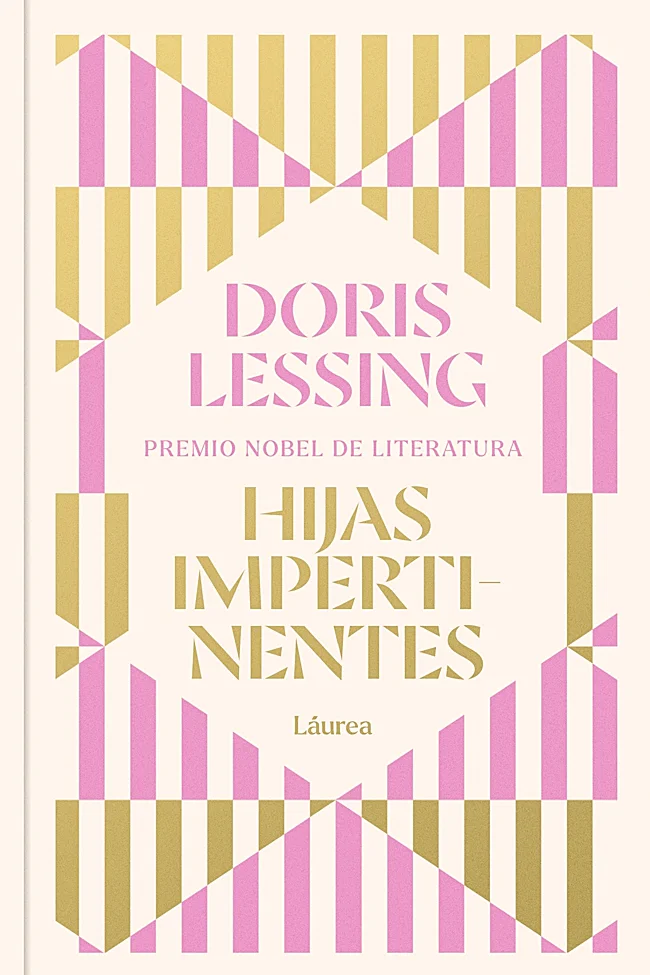
The cover of the book Impertinent Daughters, by Doris Lessing.
There Doris spent her childhood. Learning the geography that her mother taught her and her brother, “using piles of clay and sand that had been left over from the construction of the house, creating continents, countries and mountains that hardened in the sun and whose oceans and rivers could fill with water,” she recounts. It was her mother who opened the doors to the world of literature, “to which I would soon escape to flee from it.” At 15 she left home and worked as a nanny. At 18, she found work as a telephonist in the capital, Salisbury, today Harare.
To her mother, that meant “the definitive defeat.” At 19, came the first marriage, to the official Frank Wisdom. World War II broke out. Her brother enlisted in the Navy. Her first child was born. The second followed. The divorce came. She was only 23. There was another marriage, with “a German in the middle of a war against Germany!,” and a third child. This German was Gottfried Lessing, a Jewish exile, whose surname she kept despite the separation.
Mother of an “Impertinent Daughter”
In Rhodesia, amid the gold fever, which her father succumbed to, they continued with their life imported from England. The Africans called them “the people who never stop eating.” Maude, who was among the women who “despised and feared blacks,” never abandoned the expectations: “The music lessons she received had to culminate in concert performances, since she could have become a concert pianist. If I began to hum a song, opera opened up before me,” Doris recalls. And, at the same time, it was inconceivable that any white child would learn to speak Shona or try to understand African life.
Doris was not a wished-for daughter. She herself says so. Maude expected a boy and “having a girl was a disappointment.” Things were not easy for either of them: “All the memories I keep of my mother are marked by antagonism, arguments and a sense of exclusion.” Her case was not unique: “All the girls I knew had problems with their mothers,” stresses Doris Lessing.
She, however, tries to understand it: “All those ruthless and pitiable mothers had been special in one way or another in their day, had supported the suffragists, had fought to make a career. But they had defeated them.” On one hand, she sympathizes with “that woman who suffered from a lack of love, support and tenderness.” On the other, she acknowledges as an “impertinent daughter” that “I had to face her at every moment, or else she would have devoured me.”