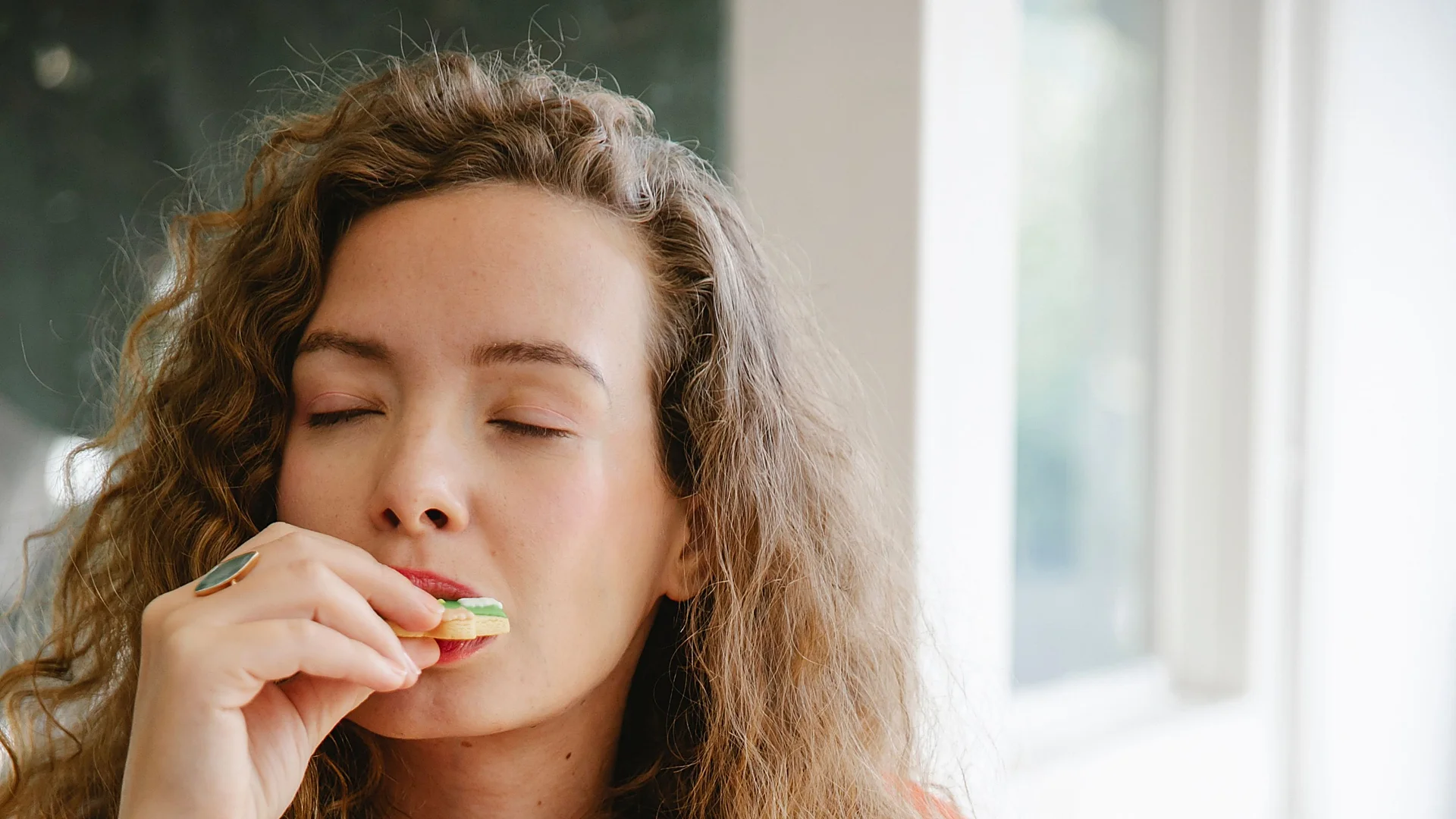
It’s six o’clock in the evening, it’s almost night and the punctual need to eat something sweet appears. Many women experience it with guilt, as if they had failed September’s resolutions. Dr. María Amaro, a nutrition expert, proposes looking at it from another angle. “That craving is a message from the body, and like every message, it deserves to be heard before it is silenced,” she explains. Understanding where it comes from is the first step to giving a response better than a packet of cookies.
The first trigger is the lack of light. Between summer and the end of October we lose several hours of sunlight per day, and with the time change it gets dark in the middle of the afternoon. According to Amaro, when light is scarce, melatonin production is advanced and serotonin activity, the one that sustains a good mood, decreases. “The result is a feeling of tiredness and apathy that the brain tries to compensate with the quickest reward it knows: sugar,” she notes.
The cold does the rest. For thousands of years, autumn was the season to accumulate reserves before winter, and the brain continues to read the temperature drop as an invitation to seek energy-dense foods. That’s why at this time hearty dishes, hot sweets and sugary drinks are more appealing. For the doctor, it’s no coincidence that the body asks for more as soon as we take out the first jacket.
On top of that comes the return to routine, with demanding schedules, rushing and less time to cook. That sustained stress, combined with less sleep, alters hunger signals. And temptation is everywhere: pastries in the café, cookies in the office and Halloween and All Saints’ Day sweets in every storefront. “The environment, in autumn, pushes toward sugar,” Amaro summarizes.
The Role of Hormones
To understand why the body looks for sugar almost on autopilot, the doctor looks at serotonin. It is made from tryptophan, an amino acid that has to compete with others to reach the brain. When you eat carbohydrates, insulin removes those competitors from the blood and tryptophan has a clear path. The brain thus learns that a sweet does return well-being in minutes. It’s a form of self-medication, effective in the short term, but with a caveat: after the glucose spike comes the drop, and with it a new craving, warns.
Cortisol, the stress hormone, also works against. When it stays high for weeks, it increases the appetite for highly palatable foods rich in sugar and fat. Sleeping little worsens the picture, because it raises ghrelin, which wakes the hunger, and reduces leptin, the signal that we are full. “Less light, more stress and worse rest form the perfect combination for sugar to seem the only answer,” says Amaro.
Strategies That Work
The big mistake, according to the doctor, is to respond to the craving with prohibitions. “Eliminating sugar all at once tends to last three days; by the fourth, fatigue and anxiety win the game and the rebound comes back stronger,” she explains. What works is to change the conditions that provoke it. Start with a breakfast rich in protein and fiber, such as eggs, natural yogurt, fresh cheese, oats or whole-grain bread. “Days that start with pastries often end with more sweetness,” she warns. A planned snack also helps, with fruit and a handful of nuts.
Your quickest advice is to start with liquid sugar, the sugar in sodas, juices, sweetened coffees, and soluble cocoa. “It’s the change with the most impact and the least sacrifice,” she asserts. She also recommends reading the labels on sauces, packaged breads, or flavored yogurts, and recalls that the WHO suggests not exceeding 10% of daily energy from free sugars, ideally 5%. At home, it’s better to have washed fruit on hand: “What isn’t at home won’t be eaten at eleven at night.” A morning walk in the light and seven to nine hours of sleep complete the list.
The Sweet That Autumn Brings
Autumn season lends a hand. October fills markets with naturally sweet foods, such as roasted sweet potato with cinnamon, roasted pumpkin, apples and pears, persimmon, pomegranate, or chestnuts. Amaro advises pairing fruit with natural yogurt, fresh cheese or nuts to prolong satiety, and leaning on spices like cinnamon, vanilla or cardamom, which enhance sweetness without adding sugar. If chocolate is desired, let it be dark, at least 85%, and savor it in one ounce slowly. “Pleasure is also part of a healthy diet,” she reminds.
But the doctor does not promise that everything will be solved in the kitchen. Sugar is often a comfort during a gray afternoon or a tiring day, and hormones weigh in: before menstruation or in perimenopause, the craving for sweets can spike. Insulin resistance, hypothyroidism or lack of iron or vitamin D can also be at play. And if sadness, extreme fatigue and the need for carbohydrates last for weeks, it may be a seasonal affective disorder, which requires medical assessment. That craving at six in the evening is not your enemy, she concludes.