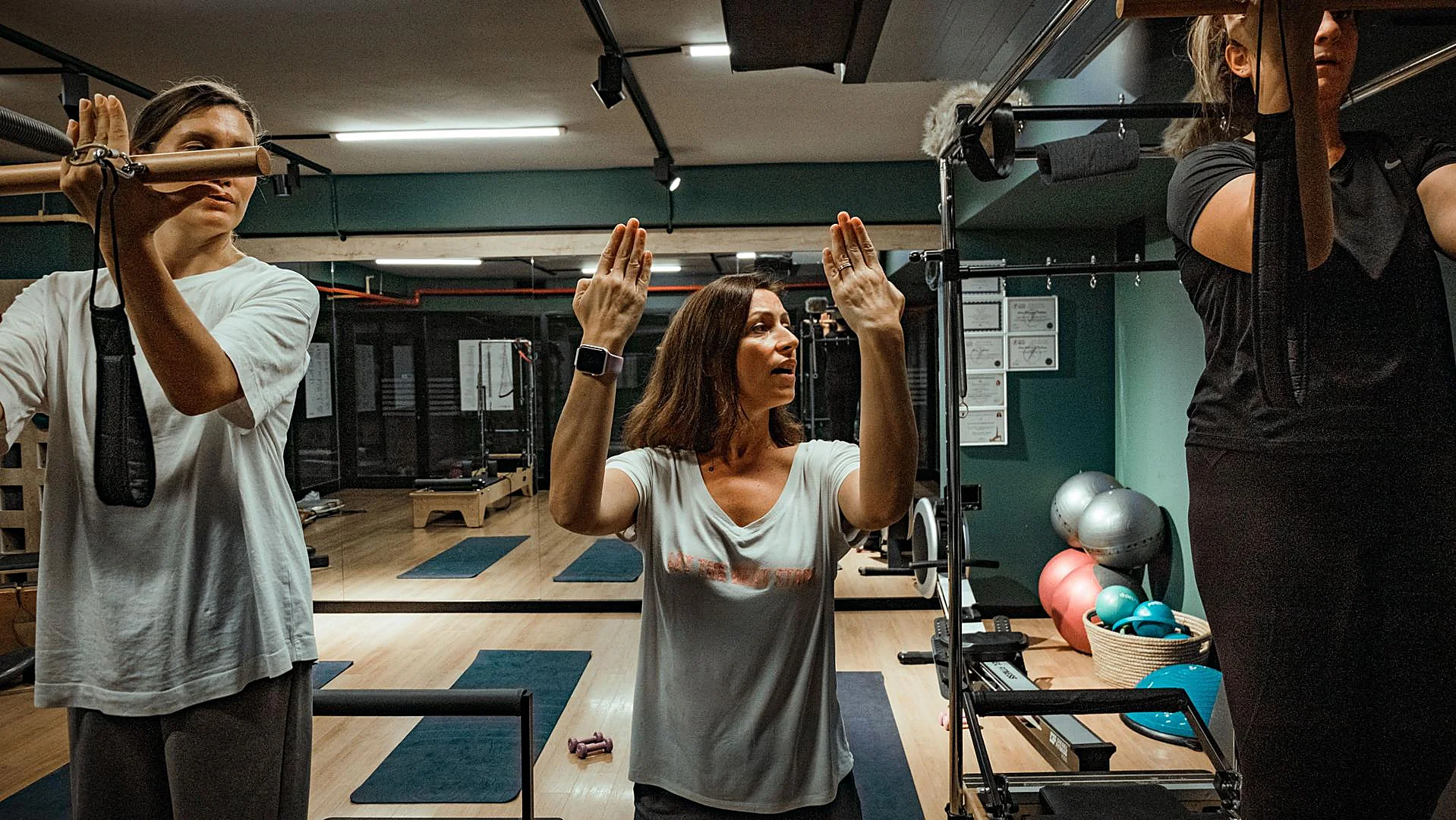
Every January the scene repeats: new resolutions, crowded gyms and, in a few weeks, many of those good intentions fall by the wayside. Anakarina Balza proposes getting ahead. She has 25 years as a certified Pilates instructor and trains new teachers in the program Teacher Training of Club Pilates España. Her idea is simple: “October is a good time to start.” At this point, she explains, most have already recovered their work and family schedules after the summer.
And that helps a lot to find a fixed slot in the week. Balza acknowledges that no month guarantees that a person will be constant. But in October routines tend to be more organized, and thus it is easier for classes to become a habit and not a goal that lasts two weeks. Moreover, who starts now reaches January with several months of practice and the movements already learned.
To take the first step you don’t need anything special. Neither prior experience, nor being very flexible, nor being in shape. “The exercises can be adapted to different levels and the learning is progressive,” Balza explains. It is one of the barriers that the instructor often hears: the idea that Pilates is only for people who already move well. And that’s not the case.
There are two other myths that the instructor often hears. One is that Pilates consists only of stretching. The other, that if a class doesn’t leave you exhausted, it doesn’t work. Both fall in the first session. “Movements that appear simple can require significant muscular work when performed correctly,” she warns. What seems easy from the outside often costs quite a bit more from within.
What the first weeks are like
At the beginning, it’s normal to find it hard. According to Balza, the most difficult thing is usually coordinating breathing with movement, holding certain positions, and properly activating the muscles that stabilize the body. It is also common to be surprised by the intensity of exercises that seemed the calmest. None of that is a bad sign. It is part of learning a new method.
After a few weeks of practice, things change. “Many people begin to recognize better how their body moves,” explains the instructor. Gaining confidence and noticing more mobility or less stiffness, sometimes sooner than expected. That said, Balza asks for patience with other improvements. The changes in strength and endurance, she reminds, require more time and consistency.
To keep the habit going, her advice is not to overdo it at the start. “The key is to choose a manageable frequency, set realistic schedules and progress gradually,” she summarizes. In other words, better two classes a week that can be maintained than four that are abandoned in November. The October goal is for Pilates to fit into real life, not into an ideal schedule.
How to choose the right studio
Before signing up, Balza recommends focusing on three things: the training of the instructors, the size of the groups, and whether the exercises adapt to each person. For someone starting from zero, these are especially important, because at the beginning technique is everything. A large group and an instructor without time to correct can turn the first classes into a frustrating experience.
It is also worth checking that the studio has different levels and a way of working that allows progress safely. The most common mistake, according to the instructor, is to decide solely by price or proximity. These factors matter, but they should not be the only ones. The important thing is that the sessions fit the experience and the needs of each person.
In the end, the advantage of October is not only in the calendar. Starting now means reaching Christmas with the method learned and the habit in motion, instead of adding Pilates to the list of January resolutions. Balza sums it up like this: “Starting now also means not postponing until January the benefits that physical activity can bring.”