How does the body end up after a full day looking at a screen? José Ballesta Ballesteros, an expert and yoga teacher, has pinpointed it: “Perhaps the part of the body that suffers the most is the cervical area and the shoulders, as well as the lower back, because the flexion done to look at the computer amplifies that imbalance.” Spending so many hours in that position, he adds, can generate tension and disrupt the natural relationship between these structures.
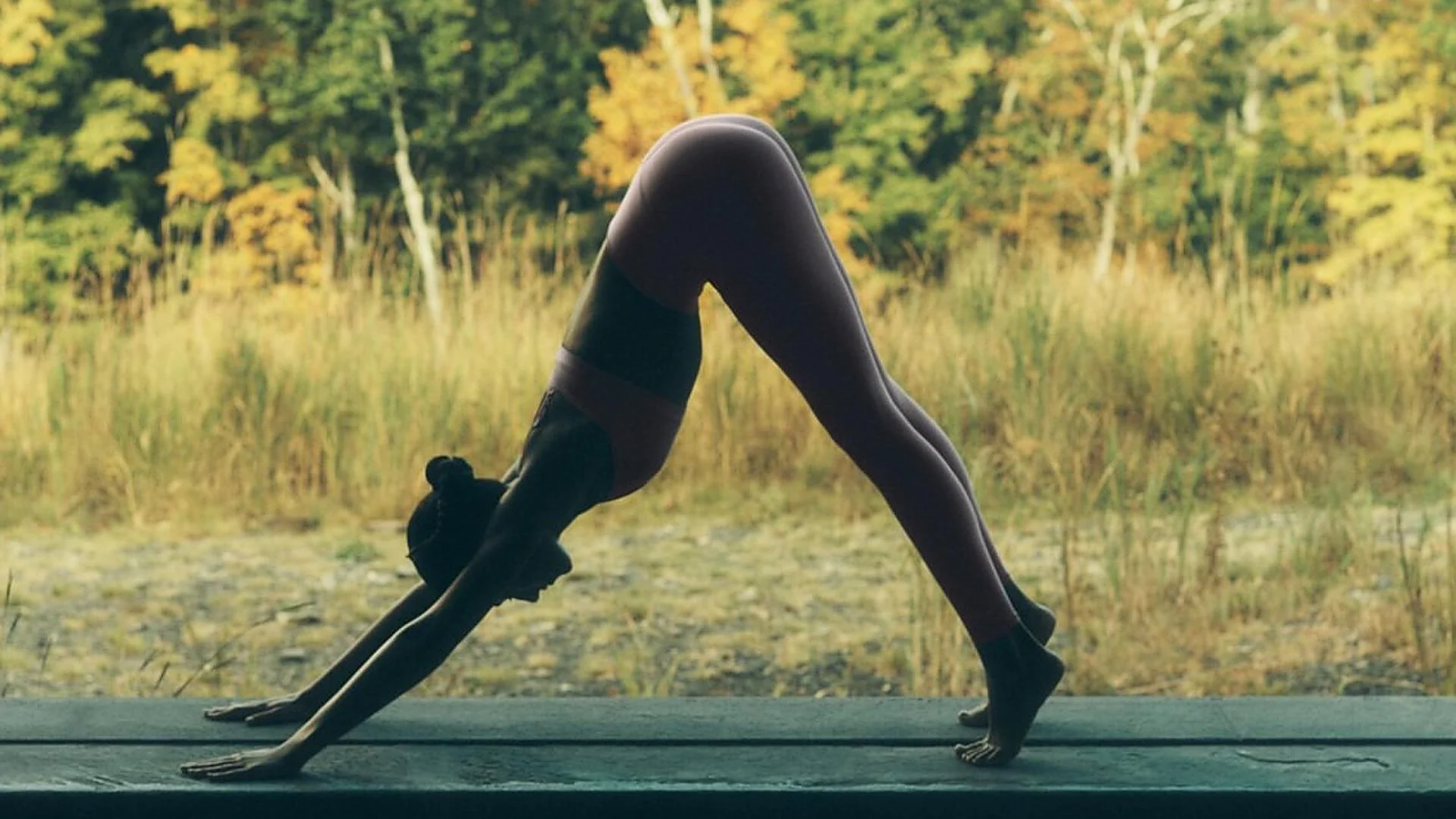
One single posture does not fix everything, and Ballesta is the first to acknowledge it. “We should lean toward a balanced practice, a single posture is not enough, but it is always better than doing nothing,” he explains. Still, if one must choose a posture to close the day, he has a clear choice: Downward-Facing Dog, Adho Mukha Svanasana in Sanskrit, one of the most recognizable poses in yoga.
“A well-executed downward-facing dog, in which lumbar and cervical elongation move in harmony, can relieve tensions. It is a pose that allows you to work together different areas of the body,” notes Ballesta. Hands and feet resting on the floor, the hips lifted toward the ceiling and the body forming an inverted V: exactly the position opposite to the one kept for hours seated at the desk.
That is its advantage over other common stretches at the end of work. Many focus on a single area, the neck or the lower back, while downward-facing dog lengthens the spine, opens the shoulders, and stretches the back of the legs at the same time. In a single gesture, almost all the areas that the chair nags at throughout the day are addressed.
Why do it before dinner
The chosen moment has a very practical reason. “It is always appropriate to practice on an empty stomach and, as the period after dinner is expected to be a time of rest, this practice helps you relax,” Ballesta explains. Before dinner, the two conditions come together: the stomach is still empty and the body begins to prepare for the night.
It is also the part of the day when the day’s fatigue has already accumulated and there is still some time before sleep. Dedicating a few minutes to this pose between the end of work and dinner functions as a transition between two very different rhythms, without the need to reserve a full yoga session or change clothes.
How long to hold it
The reference is not measured in minutes, but in breaths. “The minimum time is the one you take to perform eight cycles of breathing, although you can hold the pose for several minutes,” Ballesta notes. Within the pose, he explains, each part of the body tends in a direction, and breathing is the tool that allows you to perceive how they interact with each other.
There are clear signs that you are doing it right. “A sign that the pose is well executed is that you can maintain the direction of the hip upward and that you can align wrists, shoulders, and hips,” Ballesta explains. There are also signs to the contrary: “If you feel excessive tension in the neck or the shoulders rise, or if you notice that you fall toward the hands and feet instead of projecting from there, these are signs that something is not being done correctly.”
Can a single pose compensate for eight hours of screen time? “The greater your mastery of the practice, the greater the benefit you can receive within a single posture, especially if you combine it with pranayama. Still, it is never the same as a complete and balanced practice,” Ballesta replies. A few minutes every afternoon help and bring real benefits, but they work best as part of a broader practice rather than as an isolated remedy.