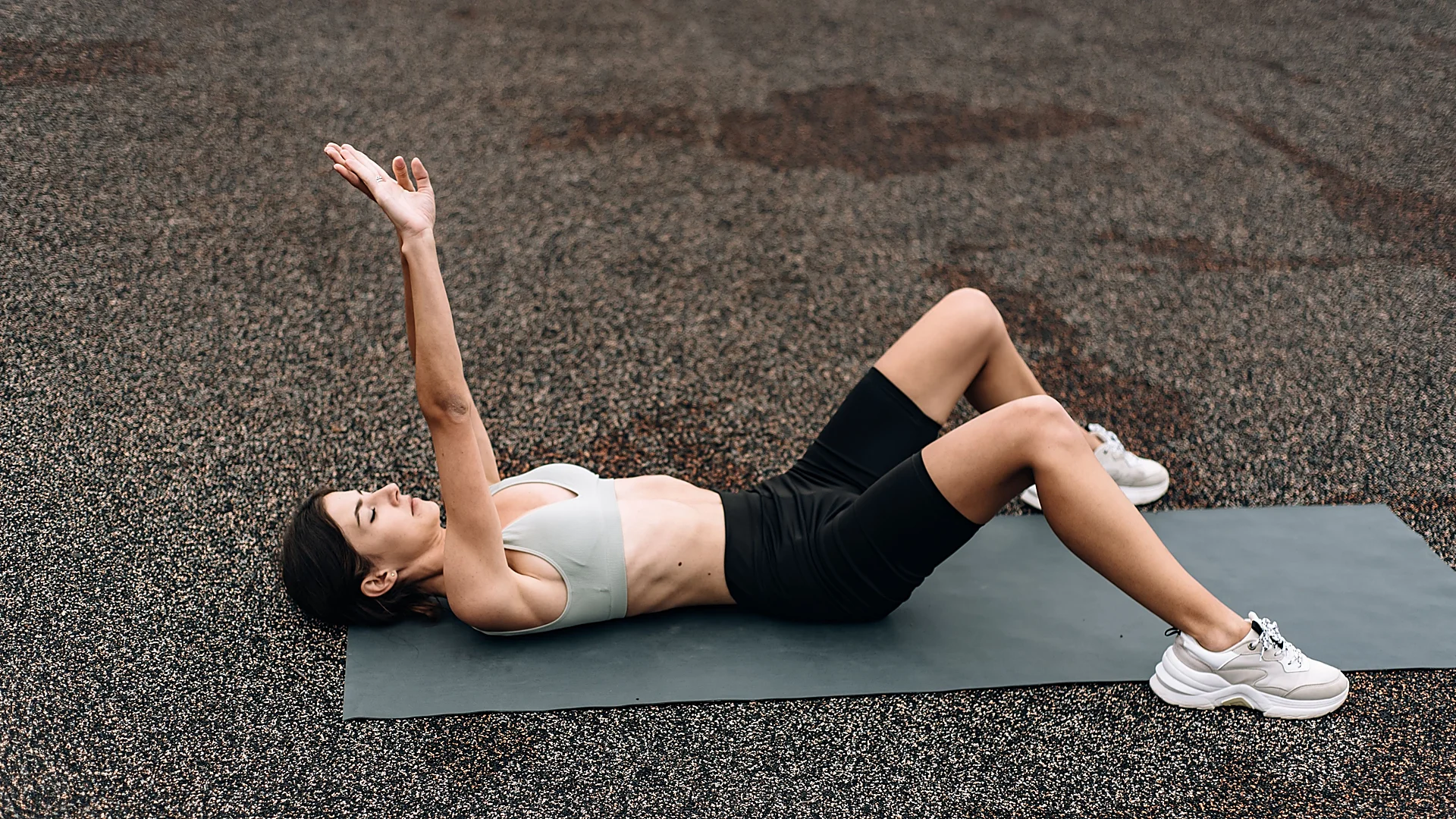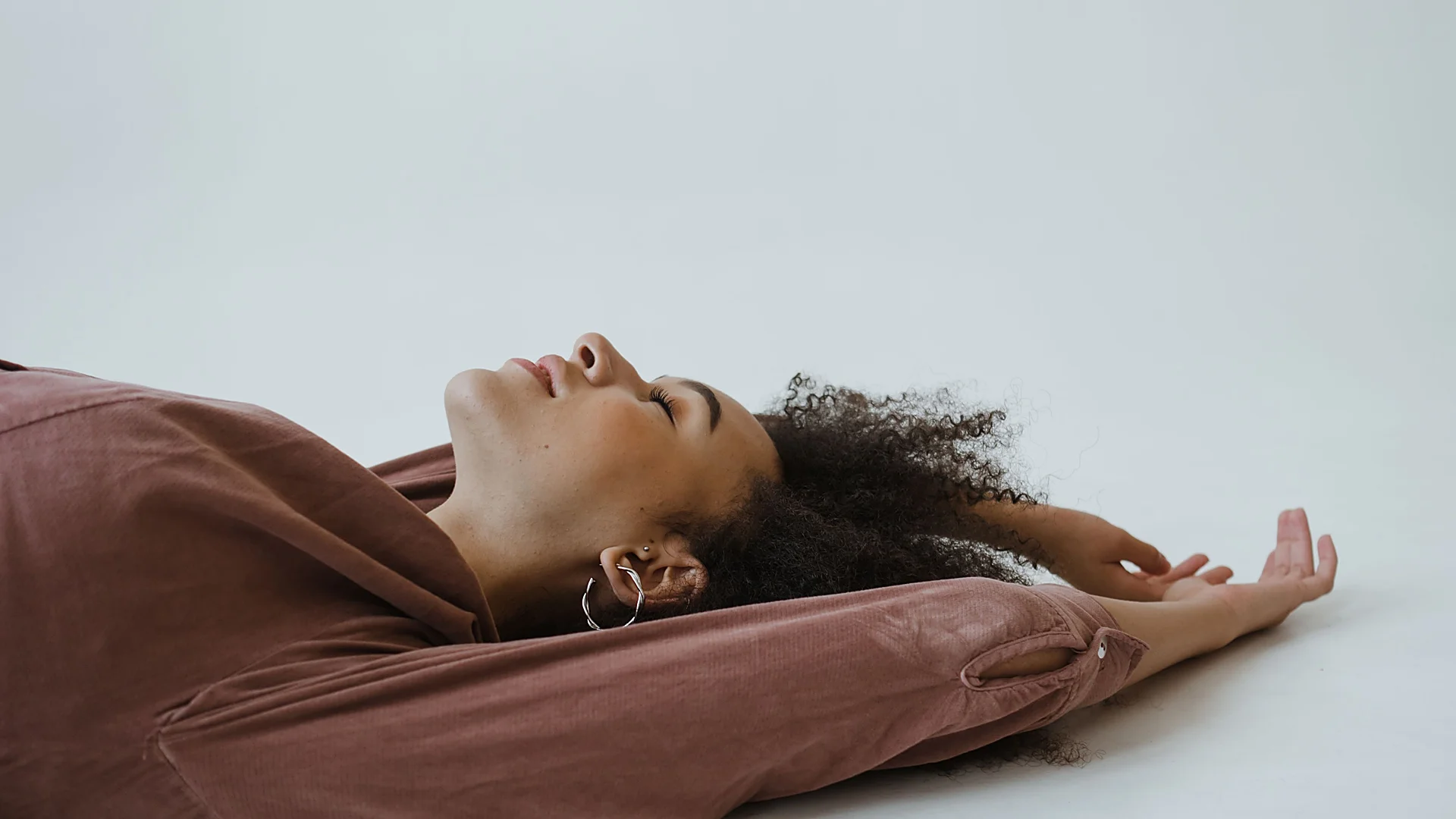
Turn off your phone, place a couple of cushions on the floor, and breathe through the nose, slowly. This starts a session that blends restorative yoga and breathwork, two practices that complement each other very well in autumn. Ale Cayo (@momentoalecayo), a physician specializing in neuroscience and breathwork and Soul Yoga trainer at KO Urbandetox Center, proposes leaving the phone out during the practice. “Doing it without screens allows us to dedicate that time to listening to ourselves, without interruptions,” she explains.
Breathwork literally means, “work with the breath.” It encompasses techniques to consciously change how we breathe depending on what we seek, whether calm, energy, or concentration. According to the expert, it overlaps with pranayama, one of the eight components of the path of yoga described by Patanjali. The difference is that pranayama has a specific philosophical and traditional framework, while breathwork is an umbrella term that brings together practices from different origins.
Together, each contributes its own. A soft and slow breath promotes the activity of the parasympathetic nervous system, the one involved in rest, and helps to release physical tension. That makes it easier to stay comfortable in restorative poses, which are supported. Exhalation, moreover, serves as an anchor. When thoughts arise, she explains, returning to noticing how the air enters and exits can help calm the mind.
Why now? For Cayo, autumn brings a change of pace. After the summer movement, regular schedules return, and with them the opportunity to pay attention to how we feel. The days also shorten, and light is one of the main signals used by the biological clock to organize sleep. That’s why some people notice less energy or lower mood at this time, though everyone experiences it in their own way.
A four-stage session
The physician frames the session as a journey that gradually prepares the body and attention for rest. In a 50-minute class, the first five minutes are for nasal breathing, slowly, slightly lengthening the exhalation if comfortable. She also invites recalling a pleasant moment. According to her, evoking a personal experience activates networks in which the hippocampus participates, a key region for memory. Her idea is that that memory brings a pleasant sensation into the present.
Then come about ten minutes of gentle movements coordinated with the breath, using each exhalation to release effort. The central part, about thirty minutes, is for restorative poses with props, held from a minute and a half to several minutes depending on each person’s comfort. When the mind wanders, she explains, noticing it and returning to the breath is, precisely, a way to train attention.
Ale Cayo practicing breathing
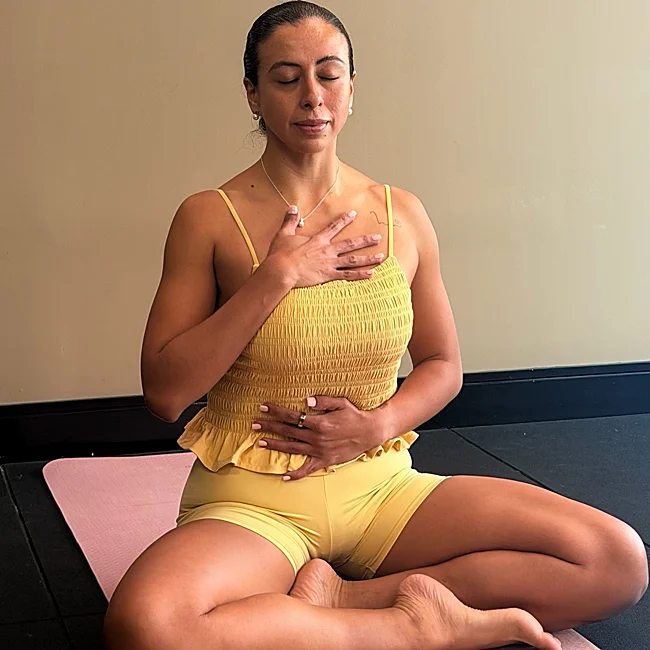
The last five minutes are for resting and comparing how you are now with how you were at the beginning: the breathing, the body tension, the head. The idea is that each person identifies what helped them so they can rely on it in daily life. According to the expert, this combination can be especially beneficial for those with a heavy mental load, who have difficulty disconnecting, or who end the day with a tense body. Also for those who train and seek a moment of recovery.
When breakwork becomes intense
Cayo emphasizes that breathwork is an umbrella term. The breathing that accompanies restorative yoga is gentle and comfortable, but there are intense modalities, such as holotropic breathwork, in which strong physical sensations and emotions can arise. Those require additional preparation and a prior health assessment. According to her, they are generally contraindicated or postponed in cases of pregnancy, significant cardiovascular disease, poorly controlled hypertension, epilepsy, or active episodes of psychosis or mania. Asthma or a history of panic require individual evaluation.
Nor is it the only way to disconnect. For some people, running, training, or dynamic yoga works just as well, the physician acknowledges. What this combination offers is another path, based on nasal breathing and resting with supports. Breathing through the nose, she adds, has little-known benefits, because the nasal passages produce nitric oxide, a molecule that participates in circulation and protects the airways. And she sums it up this way: “We don’t need to push the body harder to feel better.”