Let it be known from the outset that Lagartera, in Toledo, is the town of the famous and renowned interior designer Tomás Alía, who is the son of the embroiderer Pepita Alía (1930-2024). So little and yet almost everything has already been said. The designer was awarded in 2021 the Medal for Artisan Merit of Castilla-La Mancha, and rightly so. He has elevated craft to the heights of contemporary design. As a founding member of the Contemporary Association of Arts and Crafts and as a great ambassador of Lagartera’s artisanal crafts. He studied Interior Design, but this passion was nurtured at home.
It is known that in the 16th century there was here a prestigious school of embroiderers. And that, over time, Sorolla showed the fruit of his work in the mural Regions of Spain, which had been commissioned from him by the Hispanic Society of America. In New York, no less, Lagarterans could be seen in their traditional costumes. And from NY to the world. It wasn’t long before Josefa Alía and other women set to work making bedding and table linens. With such success that the Spanish Government commissioned in 1961 a set of napery to present to Queen Juliana of the Netherlands. A job that earned Pepita the title of Supplier to Her Royal Highness, and from there all was praise.
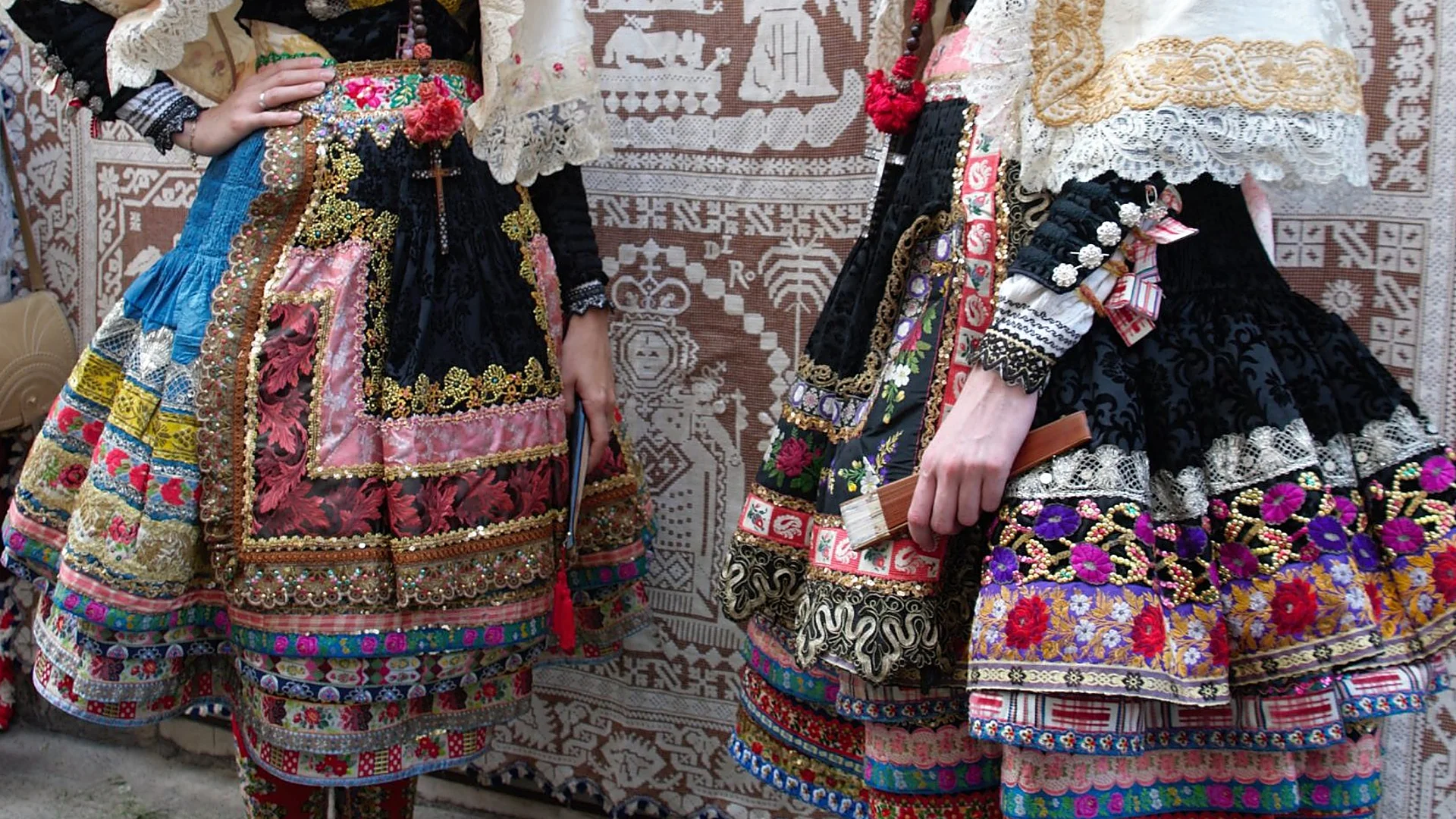
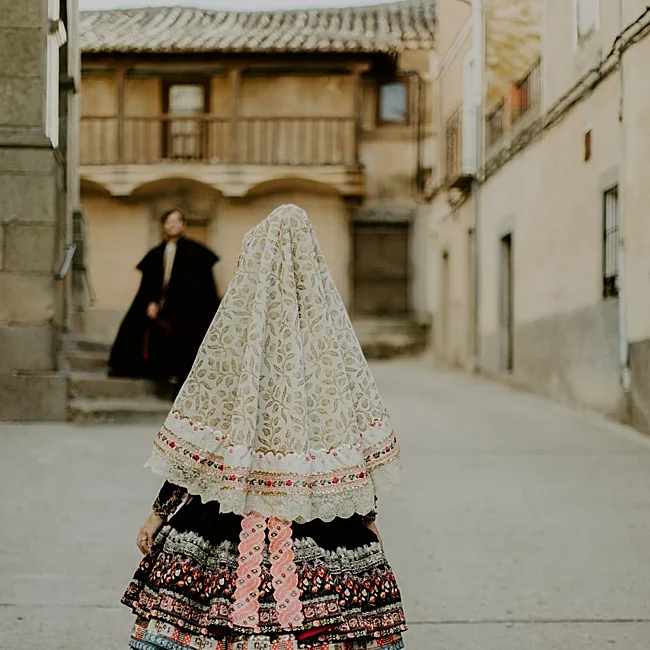
To check in situ the artistic and aesthetic level that Lagartera embroidery has reached, you must go to the Corpus Christi festival, between May and June, which is when it is shown in all its beauty and splendor. When embroidery is mentioned, carved work is also implied, and there are labranderas (they transform the fabric). On the occasion of this Regional Tourism Interest Festival, Lagartera dresses with textile treasures taken from wooden chests that adorn the altars at the doors of houses. Meanwhile, the Lagartera locals parade with handmade fabulous outfits, traditional music plays and all is bathed in the scent of thyme or fennel, gathered beforehand to carpet the path of the Custody.
What to See in Lagartera
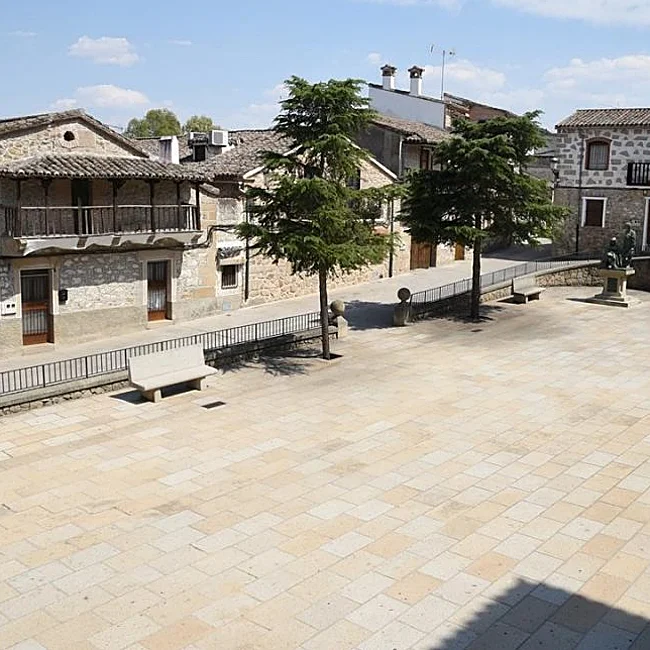
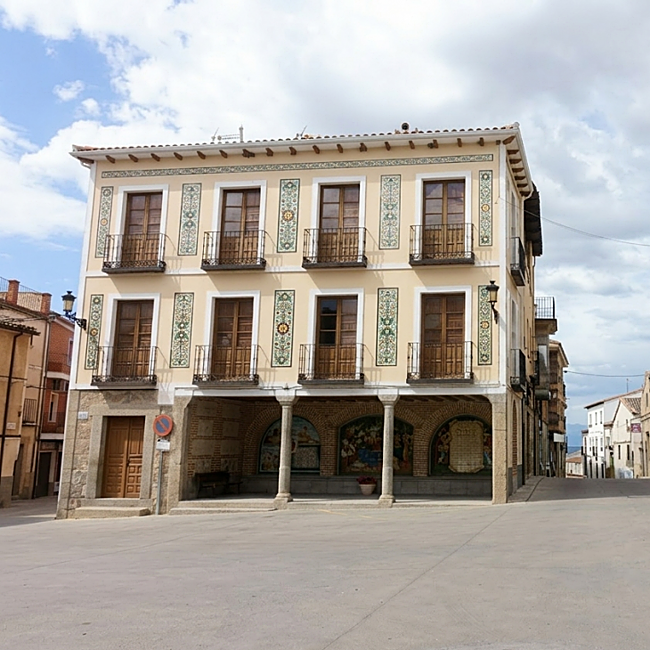
The procession, which has been celebrated since 1590, unveils Lagartera’s architectural heritage. It departs from the Church of the Savior, dating from the 15th century, with elements of late Gothic and Baroque, heading toward the Corredera de los Toros, formerly used for bullfighting celebrations and where today stands the sculpture dedicated to textile craftsmanship. It continues through streets that showcase the traditional architecture of the Campana de Oropesa region, which encompasses the municipalities between the Tiétar and the Tajo, between the slopes of the Sierra de Gredos and the valley of the latter river. It passes by Constitution Square, formerly called Commerce Square, and returns to the temple.
Lagartera has a lot of art, and not only at Corpus Christi.
We should also add the Hermitage of the Saints Martyrs, probably from the second half of the 16th century. Likewise the Calvary, a Via Crucis with stone crosses (18th c) that begins where the town houses end and climbs in a stepped fashion up to a hill crowned by what locals call the Casita del Santo, which represents the Resurrection of Christ. The views, toward Gredos and other mountain ranges, are extraordinary.
The Lagartera dress is so old that it carries a vocabulary of the richest that takes us back to medieval times. Thus one speaks of andilgue, jugón, alforda, crucetas, cuendas, ruedo, and more. It is made up of petticoats, worsted stockings, guardapieses, apron and the most sophisticated outfits. Everything is on display, beyond Corpus Christi, in the Museum Marcial Moreno Pascual, which could not be more Lagarteran.
The Embroideries and a Unique Painter
To begin with, this municipal museum is housed in a farmer’s house from the early 20th century, from which the old structure has been preserved, despite modifications to adapt it to its exhibition use. Between its walls, there is space for the work of the painter who gives it its name and for the embroideries. Around these latter, countless activities are organized, including the «talks on good dress», with live models to show every detail of each outfit, whether for brides and grooms, of trapillo, of ras, for daily wear, Sunday wear or children’s. In collaboration with the Asociación Amigas del Traje de Lagartera.
On the Corredera there is a sculpture dedicated to the traditional dress and the embroideries.
Marcial Moreno was born here in 1911 and died in Manhattan in 1983, two geographical points separated by an ocean that summarize his life. Of early artistic calling, he exhibited at 22 in Madrid’s Autumn Salon, at the Palacio de El Retiro. Specifically, his works Wedding Offering and Rest at Sunset. Then, he left critics’ mouths agape upon learning that the author was a shepherd with no formal training. Moreno never stopped painting the fabulous Lagarteran costumes, nor portraying rural life, though in 1951 he crossed the ocean and settled forever in New York. Pure Spanish costumbrismo of the 20th century.
Where to Buy Lagartera Handicrafts
Precisely, with September comes the Jornadas Vivencias en Tiempo de Marcial, in which Lagartera “looks back to its past to keep its memory and traditions alive,” as its organizers emphasize. This year, from September 18 to 20, there are talks, exhibitions and multiple workshops: on updo hairstyles with a door-knob, on felt, on zambomba, on tile painting or on jotas. Popular food, performances, and music are not lacking. Always with Marcial Moreno’s clothing and painting at the center.
The Constitution Square is the historic and social center of this Toledan town.
The textile crafts of this town, located only an hour and a half from Madrid, can be purchased at any of the family businesses that have carefully and with effort preserved the tradition. For example, Artesanía Rocío Lozano, since 1915 and run by the third generation, sells cushions, bedspreads, table linen or curtains. Artesanía Nava, since 1988, specializes in mantones, which have been reinvented by designers such as Juan Duyos to Dominnico, including Johanna Ortiz. And Paloma Suela works with all kinds of textiles, even backpacks. All of them, as one might expect, are embroidered.