Many hours in a row with hands on the keyboard do not automatically mean developing carpal tunnel, although they can contribute to discomfort in the area. Teresa Vázquez de Castro, a specialist in machine-based Pilates and head of Education and Product at Club Pilates Spain, clarifies from the outset: “Working from home for many hours or using a keyboard does not automatically mean developing carpal tunnel. In fact, the available evidence does not demonstrate a clear association between high keyboard use and the syndrome.” What matters, she explains, is the maintained position of the wrist during long periods.
«One of the aspects that is most important to control is precisely the maintained position of the wrist, since prolonged exposure to positions away from neutrality, especially in flexion or extension, is associated with a higher risk of developing this syndrome», says Teresa. Rather than seeking a single cause, she prefers to talk about a set of factors: sustained posture, repetitive load, grip strength, lack of breaks, and individual characteristics of each person.
There is no solid evidence of Pilates exercises that «release» the median nerve in a specific way. «It would be prudent to avoid stating that there are particular Pilates exercises with proven efficacy specifically for releasing the median nerve. The evidence on neural sliding exercises in carpal tunnel is limited and heterogeneous», explains Teresa. Those exercises may be a useful complement, but they do not constitute a treatment by themselves.
From Pilates, the approach makes more sense in another direction. «It would make more sense to prioritize exercises that allow movement without pain, reduce the sustained load on the wrist and improve the organization of the entire upper chain», details Teresa. Gentle shoulder mobility, scapular work, thoracic spine mobility and core control exercises are what she most recommends.
How to adapt the exercises when the wrist cannot be supported
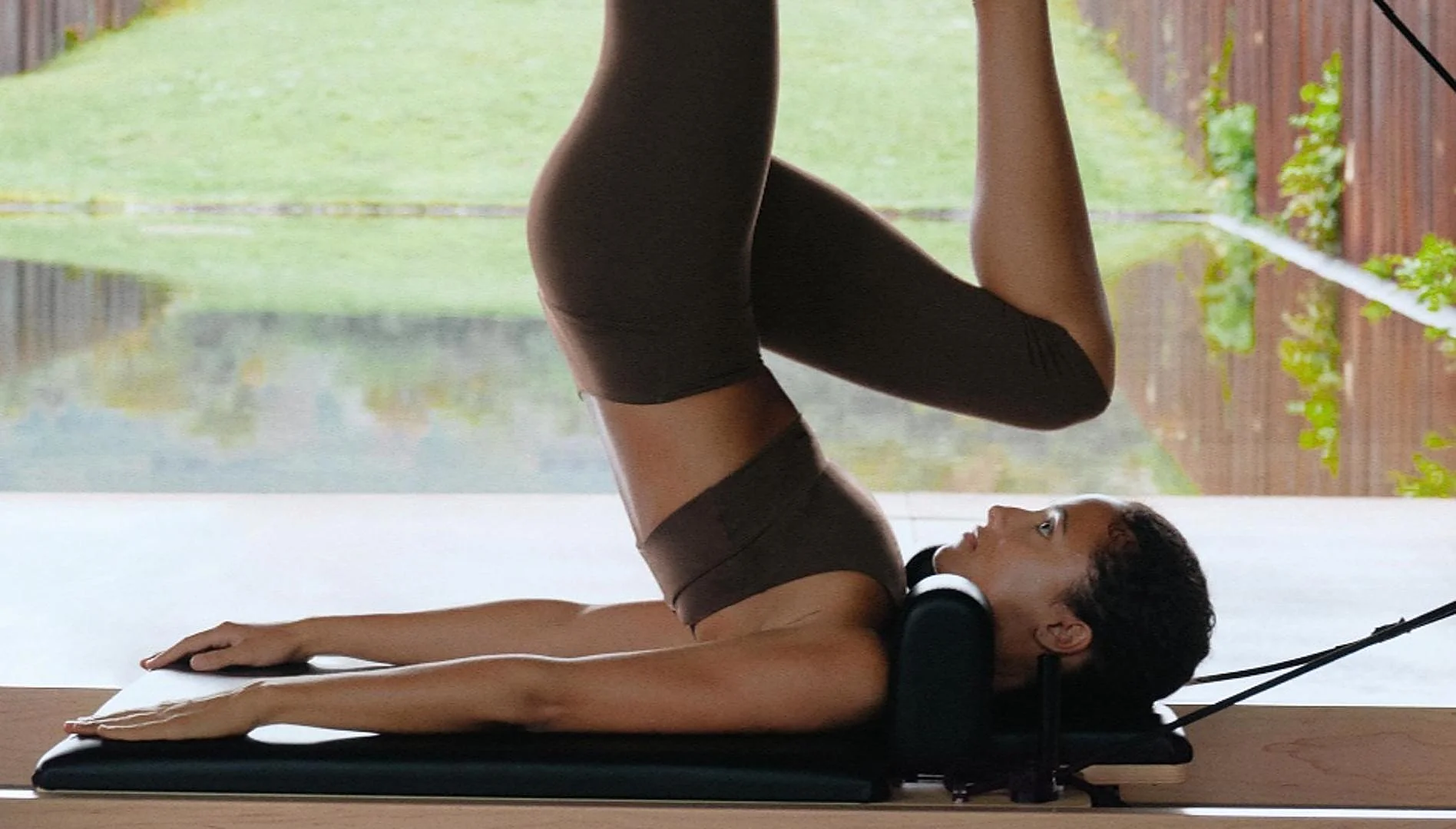
Removing or reducing the direct load on the wrist is the first modification, and it does not require stopping Pilates. “You can use exercises in supine, side-lying or seated positions, work the core without hand support, and substitute certain supports with the forearms when the exercise and the person allow,” explains Teresa. The implements and configurations of the reformer can also be adjusted to keep the wrist near a neutral position.
There is one rule that admits no exceptions: if the adaptation continues to provoke symptoms, it isn’t worth pushing it. “The rule should be that the modification does not provoke pain, tingling or increasing numbness. If an adaptation continues reproducing neurological symptoms, it isn’t worth insisting simply to complete the exercise,” notes Teresa.
When Pilates stops being enough
There are signals that mark the clear limit of what Pilates can offer. «Pilates stops being enough when the problem is no longer simply a nuisance associated with overuse, but persistent symptoms compatible with nerve involvement such as tingling or recurrent numbness in the hand, pain that does not subside, loss of strength, difficulty gripping objects or symptoms that interfere with sleep or daily activities», explains Teresa. In those cases, the recommendation is to seek a healthcare professional, without trying to compensate the symptoms by doing more exercise.
Can Pilates truly and durably relieve this syndrome in teleworkers? «It can be part of a useful strategy, but it should not be presented as a sufficient treatment nor as a cure for carpal tunnel syndrome», Teresa states. Its real benefit lies in improving overall movement, strength and control of the trunk and the shoulder girdle, as well as breaking up long periods of immobility in front of the computer.
That Pilates work should be accompanied by changes in work habits. «Alternate tasks, take breaks, avoid keeping the wrist for long periods in extreme positions, and review the setup of the workstation», summarizes Teresa. The method can be another piece within self-care, but it should never be used to delay a professional assessment when there is intense, persistent pain or neurological symptoms that are worsening.