That writing has therapeutic effects is not new. It has been shown that putting our thoughts on a blank page allows us to organize our emotions, reduce stress, and foster self-knowledge. Putting what we feel into writing is an emotional outlet that helps us understand our problems better and even strengthens our well-being. Perhaps that is why, in recent years, something as traumatic as a divorce has gained prominence in the literary proposals of well-known writers.
Manuel Vilas in Islandia, Emmanuel Carrère in Yoga, Rachel Cusk in Despojos, or Maggie Smith in Podrías hacer de esto algo bonito are among the latest examples of authors who have turned their separation into a literary work. The latest to join this list is Belle Burden, who does not enjoy the literary prestige of those mentioned above but has made the breakup of her marriage a bestseller that Netflix will turn into a film starring Gwyneth Paltrow, and today it hits bookstores.
Under the title Strangers. Elegy of a Marriage, and published by the Aguilar publishing house, these memoirs about her sudden separation have been one of the most discussed topics of the first half of the year in the United States. And the story of Burden and her separation is not to be missed.
A private life, a public divorce
Born in New York in 1970, Belle Burden is the granddaughter of Vogue editor Babe Paley on her mother’s side and a descendant of the Vanderbilt family on her father’s side. “My parents’ newlywed life was very glamorous. They had a very large apartment in the Dakota Building, hosted high-society parties or attended them, and regularly appeared in the gossip columns of newspapers, on lists of best-dressed people (…)” she reveals in Strangers.
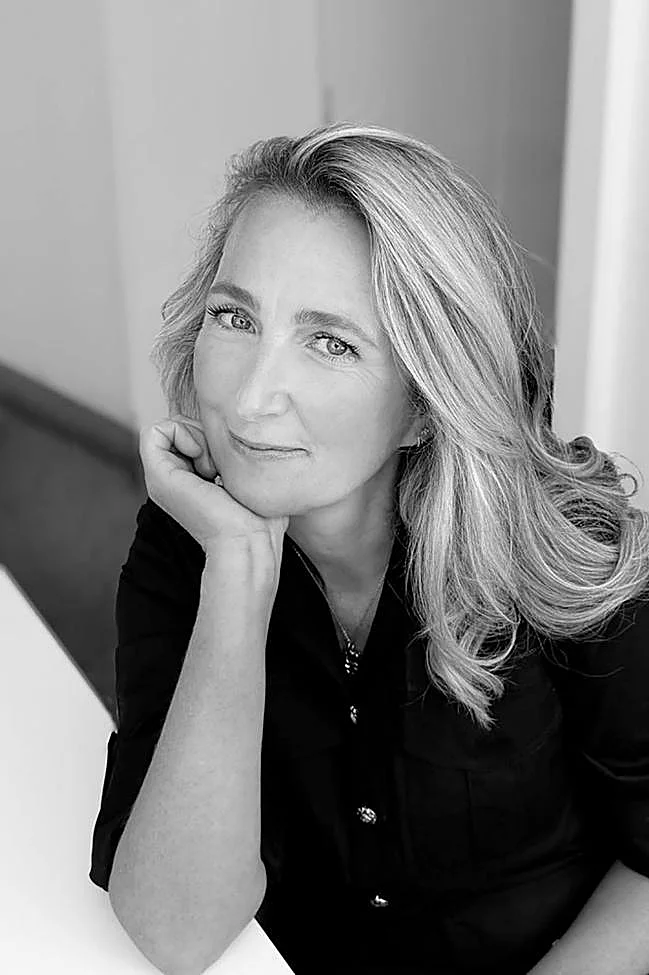
The American lawyer and writer, Belle Burden.
Perhaps that is why, when the New York Times published in 2023 in its famous Modern Love column an essay written by her and titled “Was I Married to a Stranger?”, her divorce became the talk of high society. But also among her neighbors in the idyllic Martha’s Vineyard, or among her friends, who during dinners insisted on bringing up how wonderful their husbands were as a conversation topic.
Or perhaps because the separation was so shocking that it kept generating questions. We must go back to the fateful March of 2020 to discover more about this event that has undoubtedly marked the last six years of Burden’s life. The family moved with their two daughters (they have a son who chose to spend the quarantine with some friends) to their home on Martha’s Vineyard, where the author “went out for walks, tried to keep up with the cleaning of the house, with the laundry and watched the news on television all day.” At dinnertime, they shared the table, as in the summers that at that moment seemed somewhat distant.
Leaving it all behind, literally
Everything rushed one night, after dinner, while tidying up the kitchen, she found an audio message on her phone. “I’m sorry to tell you this, but your husband is having an affair with my wife,” said a voice that, according to Burden, “sounded young, nervous.” When they met in the house, away from their daughters, her husband told her that nothing mattered. “It doesn’t mean anything. It’s over. I love you, you alone. I’m sorry. I’m very ashamed.”

Cover of Strangers: Elegy of a Marriage, by Belle Burden.
They talked about it and Burden cried in the shower, but at six in the morning, after spending the night apart, her husband told her he wanted a divorce and that he was leaving. And then he sent her a message that said: “You can keep the house and the apartment. You can keep custody of the children. I don’t want her. I don’t want any of that.” As if that were a sweater you can leave forgotten in a closet, a book you forget on a shelf, a record whose ownership was never clear.
In the following days and weeks, Burden’s life was hell. She had the unconditional support of many voices on the other end of the line, but no one could hug her, due to the pandemic and because she avoided telling her daughters the news. It was her ex-husband who did it in a visit that he used to push for her premarital agreement. Perhaps that message of letting go of the past wasn’t as sincere as it seemed, or in her newly found loneliness she had time to think about it more clearly.
The taboo of separation
Over 250 pages, Burden shares that sadness and frustration, talks about the responsibility of raising her daughters alone, and analyzes her relationship under the gaze of someone who questions everything but also writes nostalgically about her courtship or the affection she felt for the ospreys that built their nest near her summer home. But she also reveals, without flinching, her husband’s ambition, the surveillance he exercised over expenses and bank accounts, and how he became another person, shedding his shyness to try to find a glimmer of happiness.
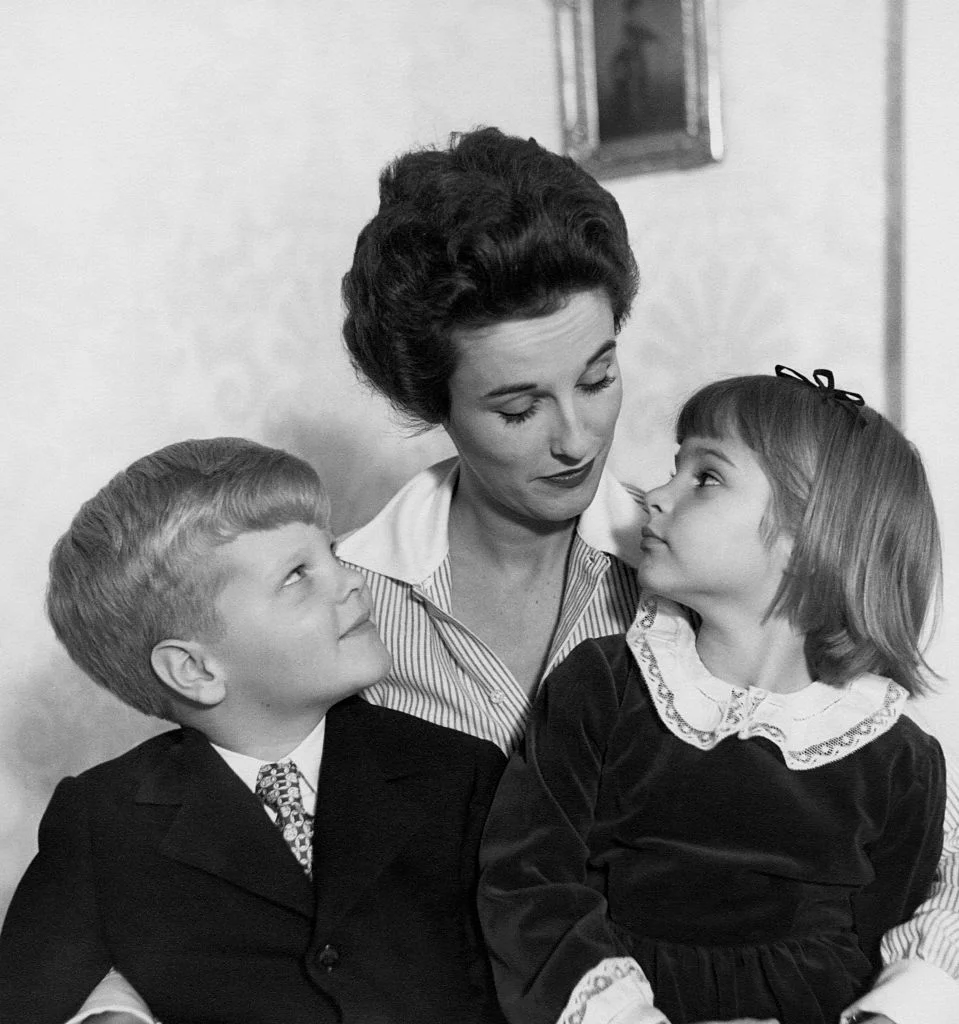
In the center, Babe Paley, Burden’s grandmother, with her children Stanley and Amanda, the author’s mother, in 1948.
In her book, Burden also seeks answers in her family tree, because, as if it were a curse, both her mother and grandmother lived through their husbands’ infidelity and she comes to write that “as a young woman I absorbed this legacy of infidelity.” “I saw my grandmother and my mother forgive those men,” she continues, “cleaning up the mess calmly and without saying a word about it.” And this is precisely what Burden wants to change, because when the quarantine ended she was honest with anyone she crossed paths with about her situation, and because she decided to resume her writing hobby that she had given up when she was young after a man told her she wasn’t good enough for it.
And that is what Strangers is, a manifesto about the need to share the frustration, sadness, and loneliness that an unexpected divorce brings, but also about the falsity of high society, or of society in general, about divorce, for which, as a friend notes, perhaps there is no own language, as there is for talking about death. And this absence carries a social void, which her husband did not experience, and the absurd belief that you must justify that you are not divorced because not all men are bad.
A therapy written with honesty that, as she herself shares, has helped others to overcome their own separation despite some who reproached that her story made them feel uncomfortable. But as her grandmother said, one must be brave, reclaim her story, “tell it. Break the cycle.”