Combining spinal mobility, hip flexion, and absolute control of the body’s center in a single movement. This is how Sara García, head coach of ARO, describes the boomerang: “It’s an advanced and quite complex exercise, for which good technique and coordination are required.” It is no accident that Joseph Pilates placed it among the last exercises of his classic series, reserved for those who already master a good portion of the repertoire.
The transverse abdominis and the obliques are the main protagonists of the abdomen during the movement. “It works the entire abdominal musculature, especially the transverse abdominis and the obliques. The hip flexors also come into play, especially when bringing the legs backward during the roll over, and the glutes, which help to control pelvic stability,” García explains. The triceps come into play during the backward phase, stabilizing the body through the push of the arms, while the scapular stabilizers and the spinal erectors support the posture throughout the entire range.
Its difficulty does not depend on a single ability, but on several combined at once. “It does not depend on a single ability, but it combines strength, mobility, balance, coordination, and control,” García explains. Knowing whether someone is prepared to attempt it has a clear criterion: “We know that a person is prepared to perform it when they can execute the movement with control and without compensations,” something that does not always align with practicing for a long time.
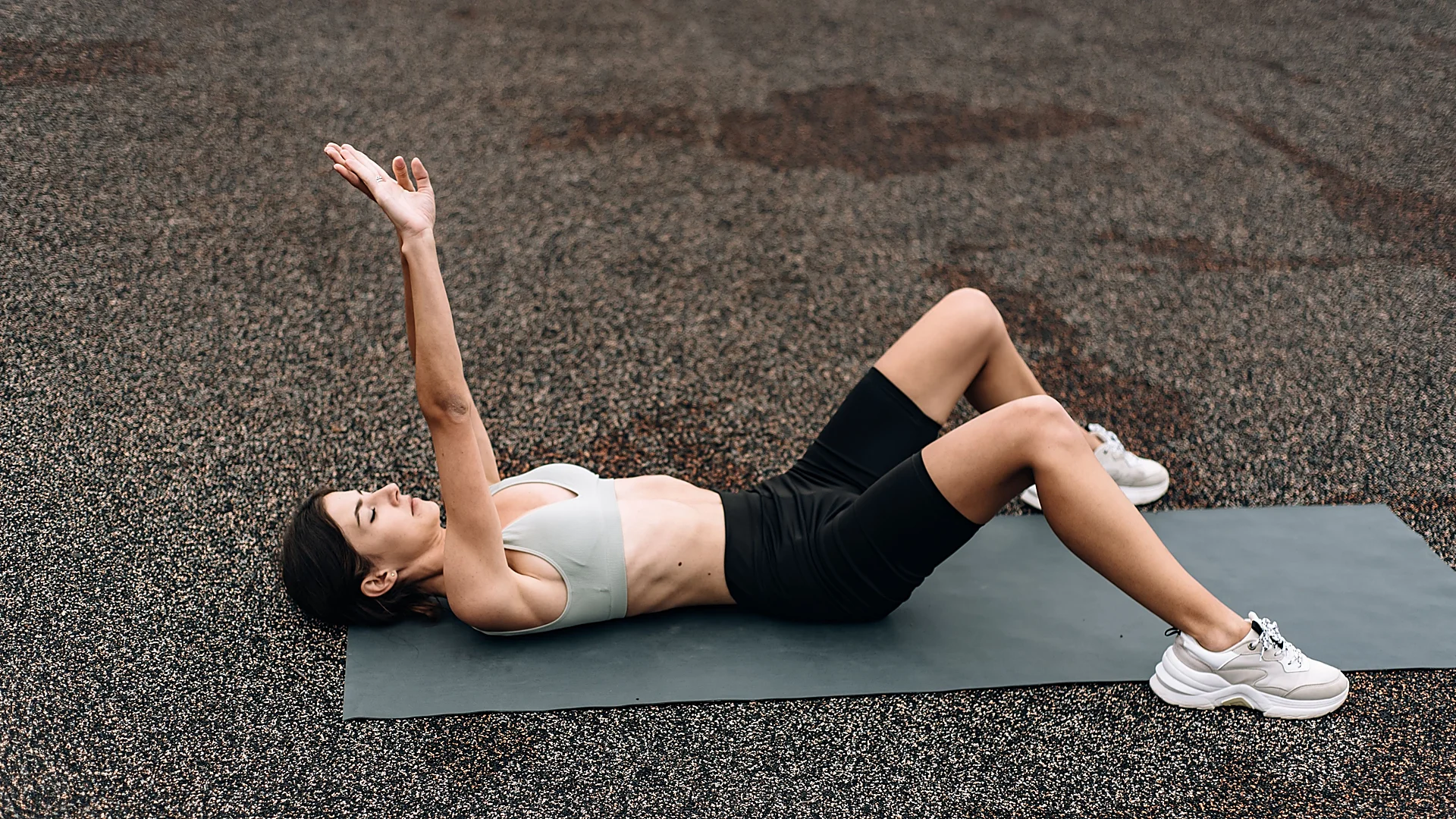
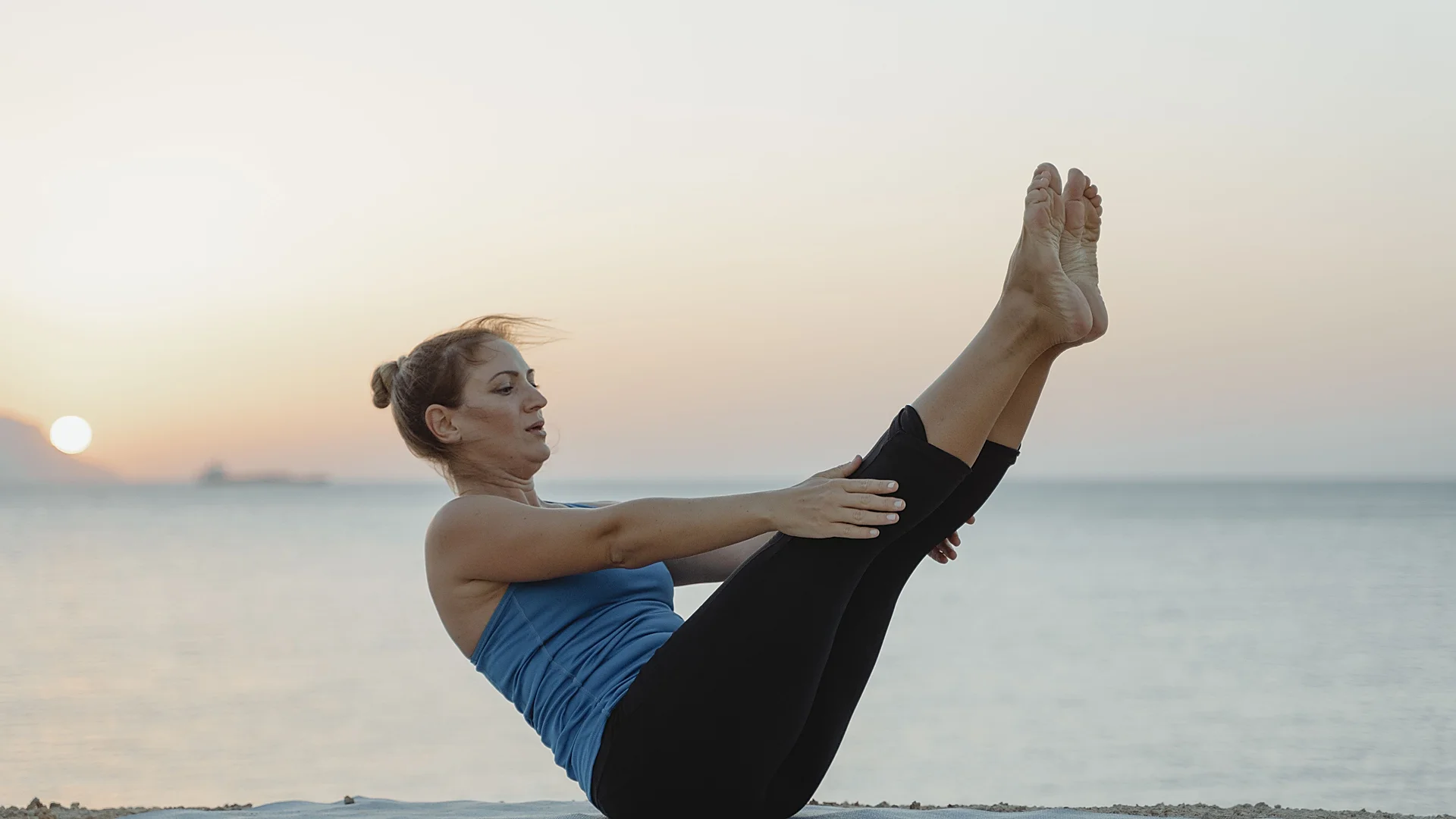
Before the boomerang you must master the roll over. “We need to master the roll over: rise and lower the pelvis over the head with control, without using momentum and without overly loading the trapezius muscles,” García notes. The teaser is the second prerequisite, maintaining the position without compensating with the lumbar area, two exercises that on their own already demand quite a bit of control.
The Essential Preliminary Exercises
If pain, pressure, or a need to push appears during these preliminary exercises, the conclusion is simple. “It means that the person is not yet ready to perform the full exercise,” warns García. There are no shortcuts: without that foundation, the boomerang becomes a forced movement rather than a well-executed exercise, and pushing it too soon often yields more frustration than real progress.
The Most Common Mistakes
Feeling too much tension in the neck and shoulders is the most common sign that something is going wrong. “The most frequent errors are feeling too much pressure or tension in the neck and shoulders, losing balance, not being able to keep the legs lifted, or needing too much momentum to complete the movement,” García lists. Any of these signals indicates that the technique is losing its control, and it is advisable to work the failing parts separately before repeating the full sequence.
Is the boomerang the best indicator of a student’s real level after a year of practice? “Yes, it is a very useful exercise to assess our students’ level, since it allows observing jointly their mobility, control, strength, balance, coordination, and integration of the movement,” García states. Few exercises in the repertoire bring together so many abilities at once in a single movement.
Analyzing exactly at which point in the sequence the quality of execution is lost allows us to know what to work on next. “From there we can identify what needs work, return to more basic exercises, or progress within their routines,” García explains. The boomerang works, in that sense, as an excellent thermometer of how much the method’s technique has truly integrated over a year of practice.
Reaching it with control is not just about overcoming a difficult exercise: it is proof that the body has learned to coordinate strength, mobility, and balance at the same time, something no isolated exercise can teach separately. It is, in a sense, the best confirmation that a year of consistency on the mat has been worth it.