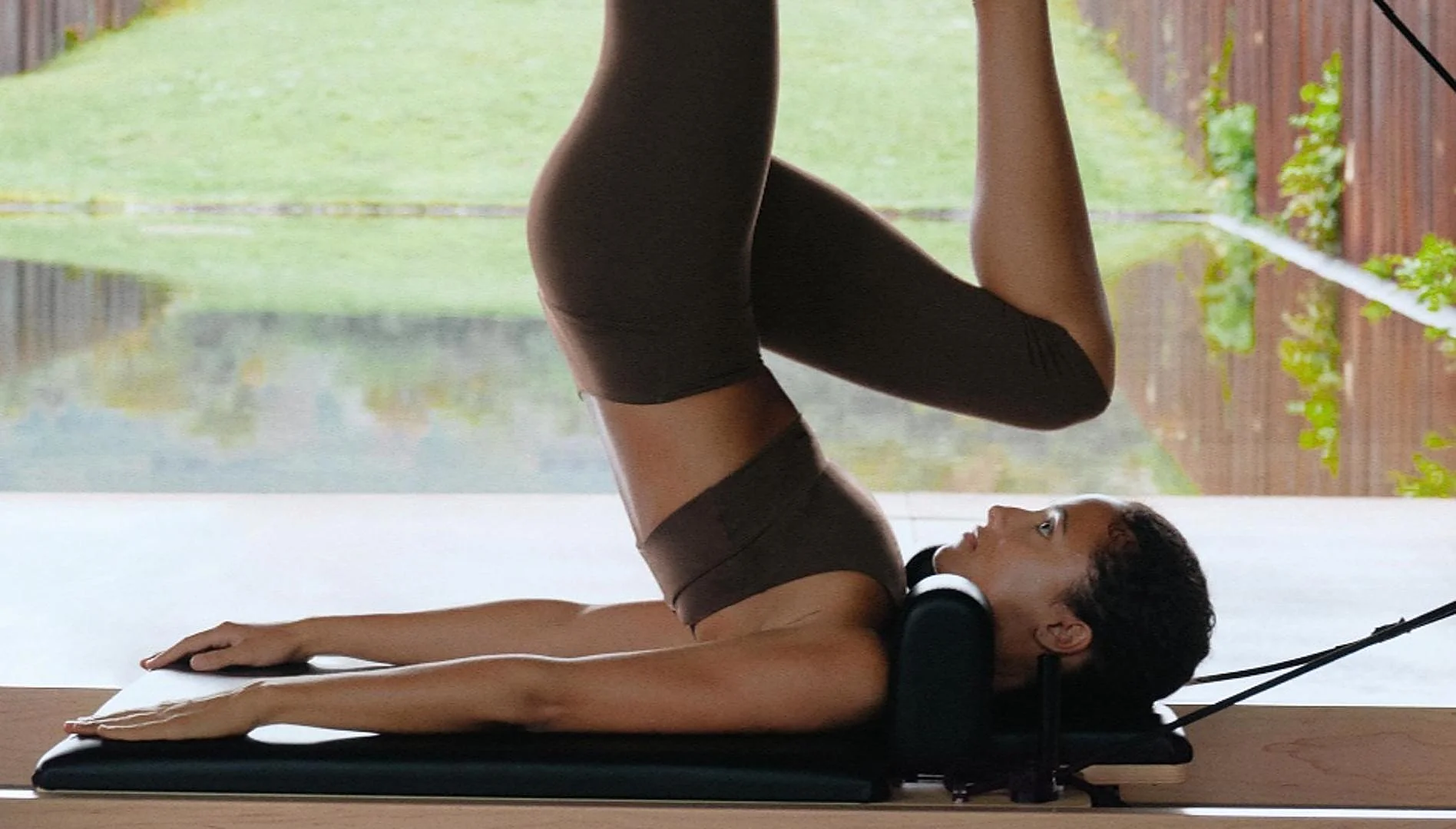
Actively controlling the range of motion of a joint. This is how Rubén Río, director of RRSalud and sports physical educator defines mobility training. “It’s not straightforward since it requires a combination of strength, stability, and neuromuscular control in unconventional positions,” he explains. It has little to do with traditional stretching, even though in many people’s minds they are the same.
The difference lies in the objective. “Conventional stretching seeks passive lengthening of muscle tissue without generating force in that position, while mobility teaches our body to recruit fibers and maintain stability in those ranges,” Río details. It also changes the effect on the body: “Traditional stretching acts superficially on the tendons and can temporarily inhibit muscle strength, while mobility strengthens the joint, stimulating synovial fluid production and creating lasting structural adaptations.”
Autumn brings two concrete biological changes that make this work especially necessary. “Lower temperatures cause peripheral vasoconstriction and increase the viscosity of synovial fluid. This could translate into a moment when joints become stiffer and offer more friction, increasing vulnerability to micro-injuries,” explains Río. That first change directly affects the joint even before any physical activity begins.
Returning to the work routine has its own effect on the body, and it is the second of those changes Río mentions. “The return to long days at the office shortens the hip flexors, deactivates the posterior chain, and keeps the spine in a prolonged flexed position due to those long days seated in a chair,” he notes. Mobility, he explains, helps slow down that negative adaptation process before it becomes established.
Rubén Río performing unilateral weighted exercise.

The four areas to prioritize in autumn
The hips, to reverse gluteal amnesia and the shortening of the psoas from sitting, releasing load from the lumbar region. The thoracic spine, because the lack of extension and rotation in the upper back blocks posture and causes compensations in the shoulders and lower back. The ankles, working dorsiflexion, essential for a clean stride when walking or bending. And the shoulder girdle, to recover the full range of motion above the head without discomfort.
There is no need for an exact moment of the day to introduce this work. “It can be at various times of the day and in different ways,” explains Río. Spending between five and ten minutes upon waking to perform joint rotations is one option; using that same time as dynamic warm-up before strength or cardio is another. It can also be incorporated in small blocks during breaks between sets in a regular training routine.
Does this work make a real difference, or is it one of those tips everyone gives but no one keeps up? “This is a fact. We will make a real difference because it expands the active range of motion that the brain recognizes as safe, so I can demand more from ourselves in every repetition,” says Río. When faced with an unexpected twist, the body reacts by stabilizing instead of getting injured.
The reason it is often abandoned has to do with how it is framed from the start. “It is usually abandoned when it is approached as a passive or relaxing stretch instead of being treated with the rigorous character and progressive overload that joint-strength work requires,” warns Río. That confusion, treating mobility as a moment of relaxation rather than as real training, is the root of the problem according to his experience.
“Ultimately, as in any part of our training, we must gradually increase the difficulty and demands of each mobility work we perform in order to keep progressing and improving,” Río summarizes. Treating it as just another training session, with real progression, is what makes the difference between genuinely incorporating it into the autumn routine or abandoning it after a few weeks.