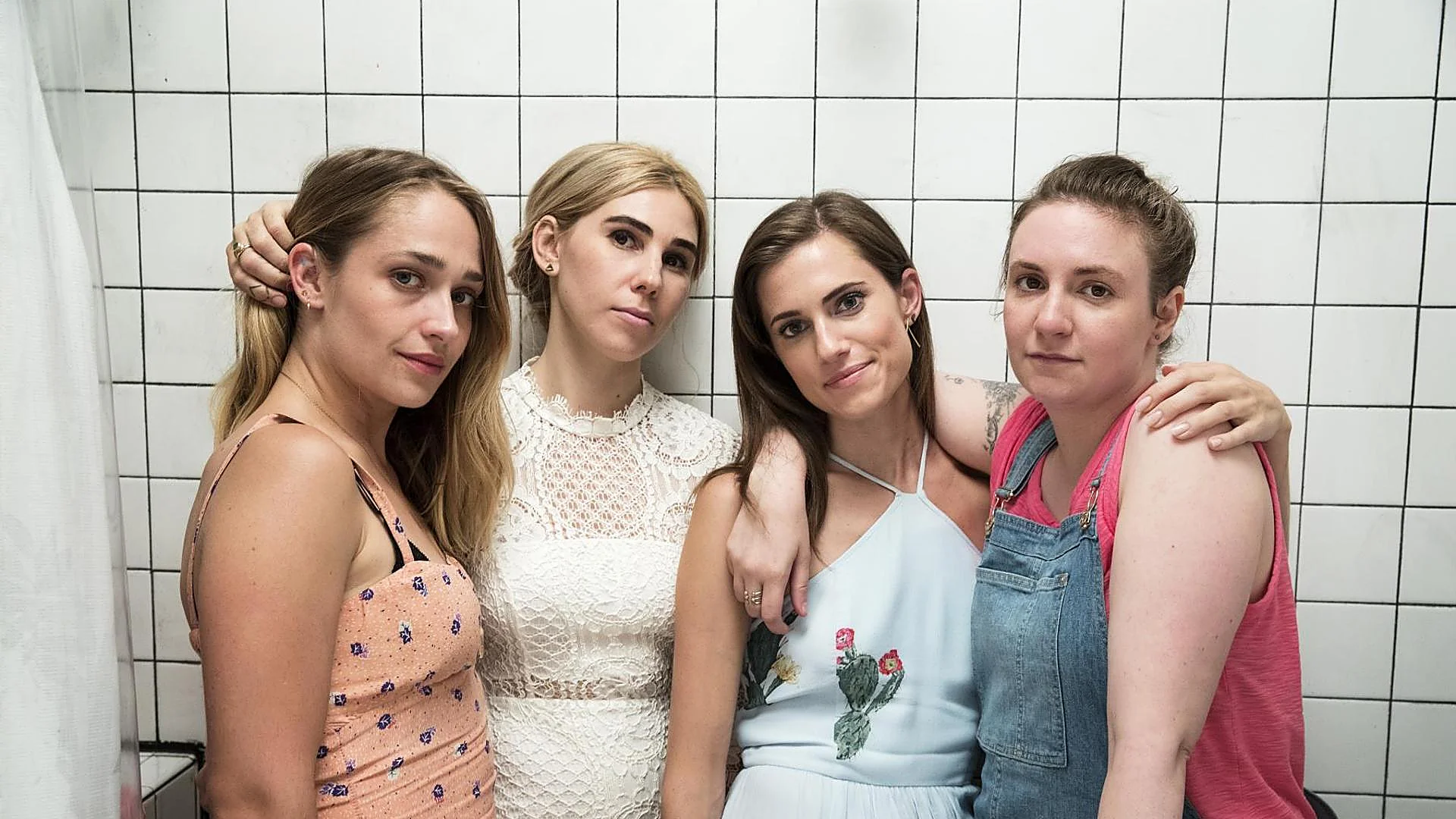
Ten years after its end, Hannah, Marnie, Jessa, and Shoshanna will return to our screens. Girls, the series created and starring Lena Dunham that depicted the contradictions of growing up in New York, will have a new season on HBO Max. It will be five episodes that will pull back much of the original cast and will arrive after the protagonists have spent a decade away from the characters that defined their careers. The news has stirred nostalgia among those of us who grew up with the show, but it comes at a moment when Lena Dunham’s public image is undergoing a particularly controversial phase.
The announcement was made on Tuesday, October 13, via a video in which Lena Dunham, Allison Williams, Jemima Kirke, and Zosia Mamet reunite by video call. Andrew Rannells, who played Elijah, will also be involved. All of them will reprise their characters and participate as producers, while Dunham will once again lead the series. At the moment, no release date has been announced, although filming is scheduled for 2027.
The new installment will be a limited continuation, framed as a one-season five-episode run. The idea emerged when Dunham turned 40 and began to imagine what those women would be like at this stage of their lives. According to the creator, for a long time she hadn’t managed to visualize her characters in the present, until she revisited a story that deserved to be told.
Although the announcement has taken many viewers by surprise, the return of Girls arrives after a few months in which Lena Dunham has again placed herself in the public eye thanks to the publication of Famesick, her memoirs, in April of 202. In the book, the writer and director recounts her rise to fame, the consequences of becoming a public figure, and the personal and professional experiences that have shaped her career. And, of course, the first part of the book is full of anecdotes about the years she spent filming Girls.
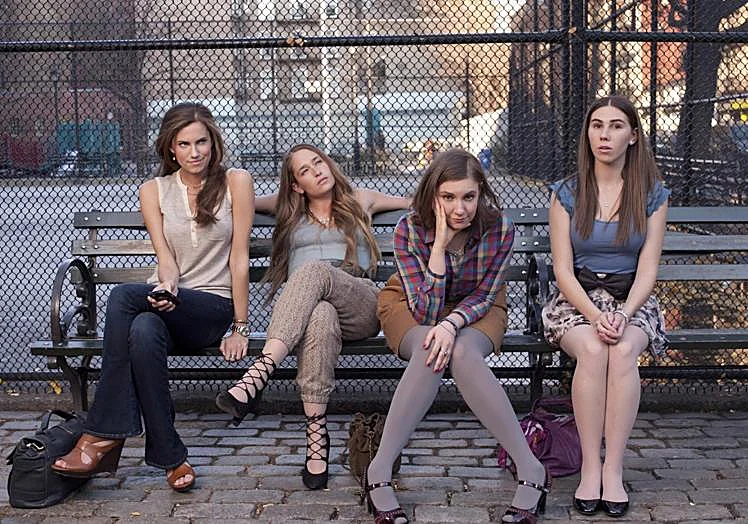
Promotional photo of Girls
The promotion of the book has led Dunham to grant interviews again and to speak openly about her past, her mistakes, and her relationship with fame. In that process, Girls inevitably occupies a central place: it was the series that made her one of the most recognizable voices of her generation and the project with which much of her creative identity remains associated.
The Return of Girls Amid Controversy
That the announcement of a new season of Girls arrives precisely now is, at the very least, striking. Just a few weeks ago, Lena Dunham announced that she had given birth to a girl through surrogacy, a news that rekindled criticism toward the creator and opened a new debate around her public contradictions and her feminist discourse. Now, the return of the series that made her a cultural icon places her again at the center of the conversation for professional reasons. Could this comeback help repair her public image? It’s an inevitable question, though there is no evidence that that is the intention behind the announcement.
Last September, Dunham shared the news of her motherhood in an article in which she described the process she had undergone to form a family with her husband, the musician Luis Felber. After years of fertility problems and having undergone a hysterectomy, the director turned to surrogacy to fulfill her desire to become a mother. A personal decision that, however, quickly transcended the private realm and generated an intense debate, especially among those who question this practice from feminist positions due to the ethical implications and the inequalities it poses.
In this context, reviving the series that marked her career has a dimension that goes beyond television nostalgia.Girls remains the project with which Dunham became one of the most recognizable creators of her generation and a fundamental work for understanding television in the 2010s. Its return brings that artistic facet back to the foreground just as her personal life returns to make headlines.
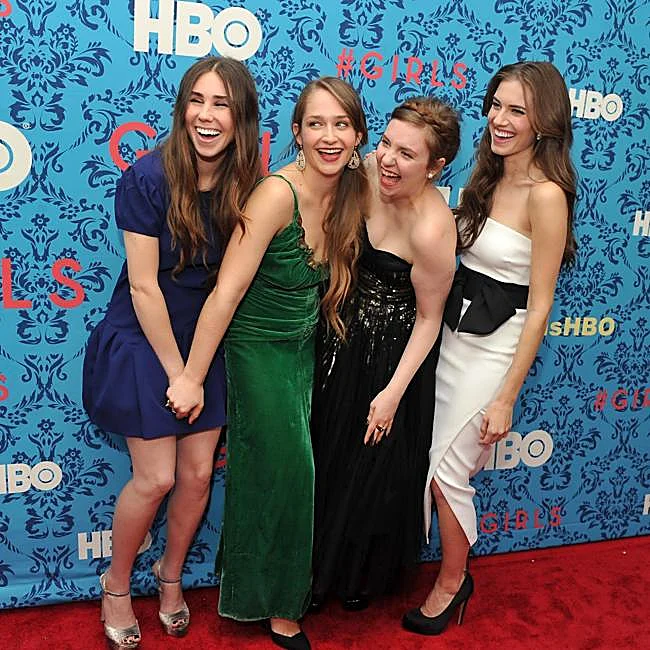
Still, there is something hard to deny: the news of the return of Girls fills us with excitement. For many women who grew up with the series, Hannah, Marnie, Jessa, and Shoshanna were more than four fictional characters. They represented a way of living the twenties that rarely appeared on television with such rawness: friendships full of tensions, disastrous romantic relationships, precarious jobs, physical insecurities, and a constant sense of not measuring up to the adult life we were supposed to build.
Premiered in 2012, Girls became one of the most representative fictions of its era. Its protagonists were not particularly exemplary, nor always likable, nor models of conduct. They were selfish, contradictory, sometimes unbearable and, precisely for that reason, recognizable. The series dared to show that growing up did not necessarily consist of learning to make good decisions, but of repeating some mistakes while we tried to understand who we were.
Perhaps that is why its return awakens mixed feelings. We can question Lena Dunham, disagree with her decisions, and not share some of her positions without having to renounce what her series meant. A work can be part of our sentimental education without obliging us to defend its creator in everything she does. Ten years later, returning to Girls will also be a way to look at those women —and at ourselves— from another place, with the perspective that time provides.