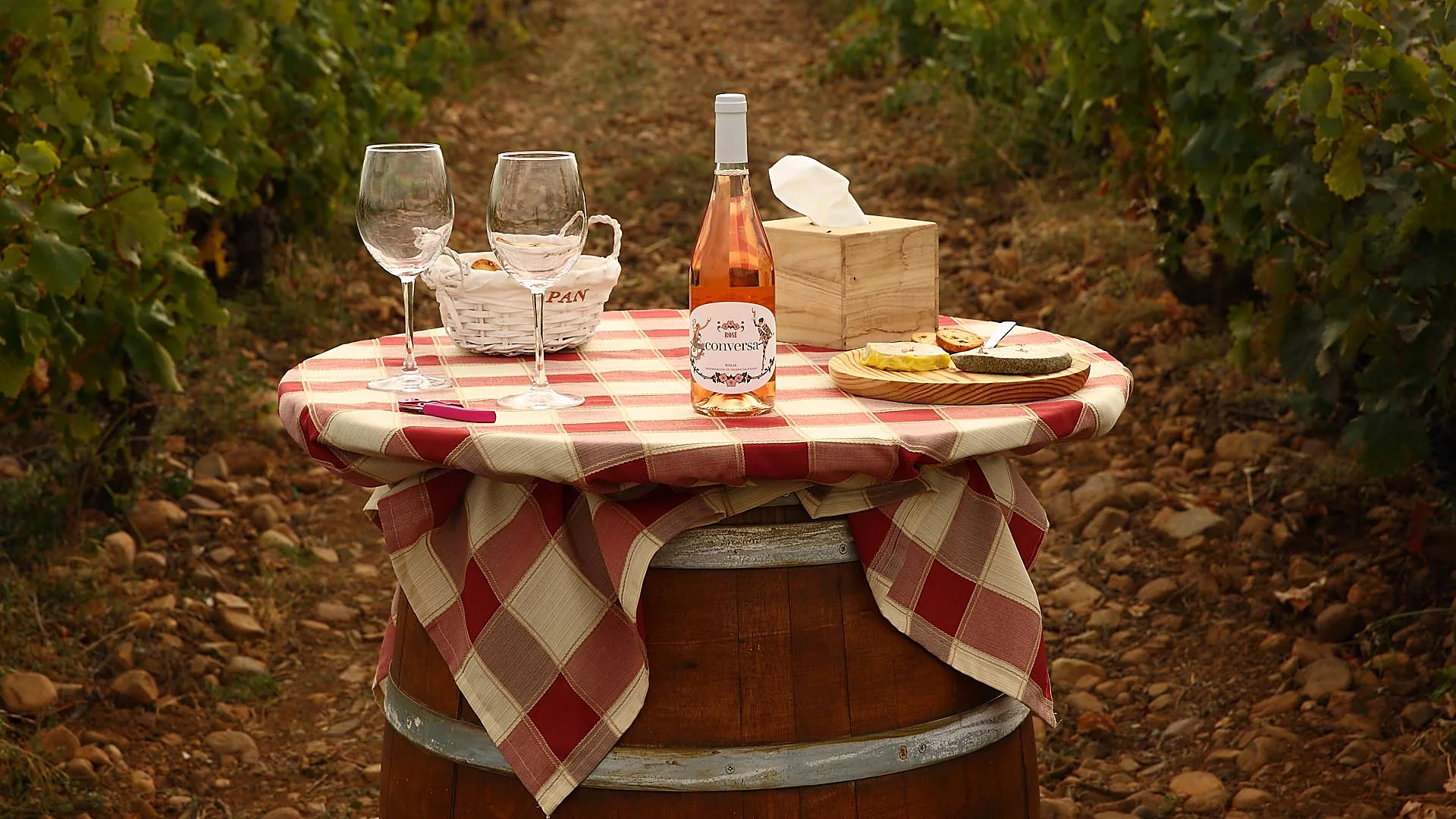
The east of La Rioja tastes of ripe Garnacha, colors its landscape to the rhythm of the seasons, and guards centuries of history in its streets. Here wine recalls the heritage that arrived in Roman times and has become the tradition that fathers and sons venerate with the affection that only is given to what is known to be their own. A drink to visit, to understand, to savor and to share. And there is no better way to do it than by embarking on the Rioja Oriental Wine Route, part of the Spanish Association of Wine Towns (ACEVIN), a journey through the purest essence of this territory which, with Arnedo as its most visible flagship, gradually reveals a whole network that has historically grown around the harvests and is reflected in its legacy, its culture and its gastronomy.
The journey begins in Aldeanueva del Ebro, ACEVIN’s Wine City, where winemaking culture marks generations. Its Wine Museum offers the thread that runs through this route, but if there is a place to experience firsthand the passion awakened by the essence of the grape, that place is Fincas de Azabache, which, together with its parent company, Bodegas Viñedos de Aldeanueva, are intimately linked to the town’s history. The crowning moment of this first stop is the views of the Sea of Vines from its viewpoint, the perfect setting to enjoy the first glass.
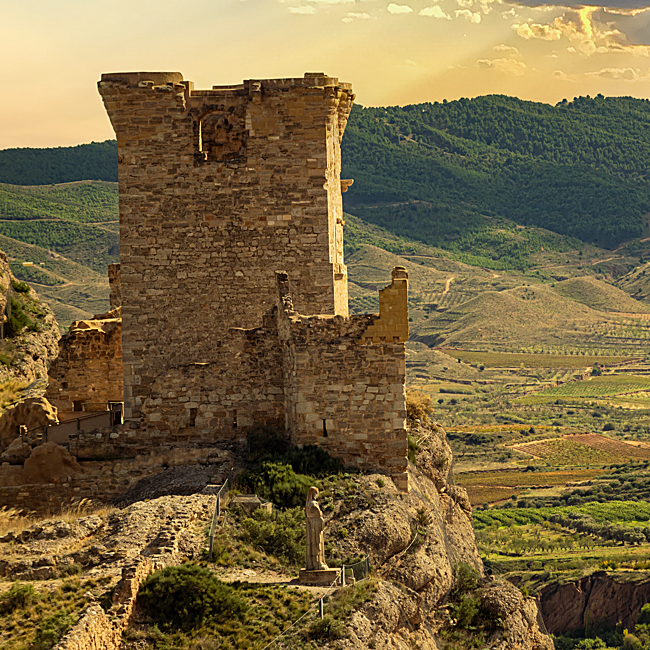
The town of Quel invites visitors to immerse themselves in the intricacies of the idyll between Rioja Oriental and the world of wine through its winery district, formed by more than three hundred caves carved into sandstone where this wine was once produced and that today guard centuries-old barrels. A walk through its steep streets also offers a unique panoramic view of the Cidacos Valley and the Castle of Quel, which from the top of its crag has for centuries witnessed the history of the place.
Castillo de Quel
Very close, in Pradejón, another underground cavity became the stage for one of nature’s great gifts to Rioja Oriental: its traditional cave-wineries that gathered perfect conditions for mushroom cultivation, something the Gil Merino brothers knew how to take advantage of by trying their luck planting seeds brought from Barcelona with an excellent result. So much so that the mycological tradition and fungiturism have become the town’s hallmark, a pioneer in this industry.
Arnedo is not only the natural capital of the comarca: it is also the place where the Caves of the Hundred Pillars, an ancient rupestrian medieval monastery excavated under the Cerro de San Miguel, are located. These caverns fulfilled roles as a place of prayer, a pharmacy, and, of course, a winery, thus enriching the region’s wine tradition. At their feet lies the Sopitas restaurant, housed in one of them and committed to the local gastronomic tradition, where you can not only taste its wines but also crown the itinerary with zero-kilometer products of excellent quality.
Mirador de las Viñas, Aldeanueva del Ebro

Alfaro, Autol, Tudelilla, El Valle de Ocón or Calahorra are other towns that complete the route and share with the rest the respect for the tradition and authenticity typical of a region that does not seek the glare of fame, but the slow delight of tasting a glass sip by sip, a visit step by step and a history year after year. If there is one thing Rioja Oriental promises, it is to win over visitors through all the senses.
Beyond the Vineyards
The Rioja Oriental route starts from a wine tourism proposal, but includes many other experiences that explore different realities of the region that complete its identity. It is worth stopping at the Almazara Riojana in Aldeanueva del Ebro, to learn about the olive oil production process and the importance of the olive tree in the area, the centennial Molino de Ocón, the route’s heritage emblem, or the Museo de la Verdura in Calahorra, housed in a former convent, where pieces as unique as dresses made from vegetables are exhibited.
Molino de Ocón
-kBAG--650x650@Mujer%20Hoy.jpg)
The Origin of White Tempranillo
Rioja Oriental is also the cradle of the white Tempranillo grape, which was born by chance in 1988. The viticulturist Jesús Galilea Esteban discovered white clusters on a red Tempranillo vine in Murillo de Río Leza. This genetic mutation that caused the skin of the grape to lose its color became the only native white grape variety of La Rioja.