A few days ago, Radhika Jones, who describes herself on Substack as “a writer, editor and voracious reader,” wrote an opinion column in The New York Times in which, aware of the controversy it arouses, she advocated for literary prizes because they are a reading guide for those who, even though we wish, “we cannot read books all the time.” And she extended their recommending value to critics, “the family bibliophile, the Substack user or Booktoker” and “Dua Lipa’s reading club.”
The singer does not need, at this point, a new vote of confidence; her recommending track record is more than proven. But I must admit that, for me, it was the nudge I needed to encounter what has ended up being one of my favorite books this year. Published in 2023 in Spain by Anagrama, I added it to the folder named “want to read” on Goodreads a few months ago, after in the Instagram reels of this report dedicated to celebrating World Book Day they were recommended by influencer and bookseller Ariane Hoyos and editor Virginia Fernández.
A dear friend who cares for me and peeked at my reading app gave it to me on April 23. Since then it inhabited my crowded shelves, in the space of “readings desired but with no date (and no rush).” And then Dua Lipa arrived with her famed book club. To all of them, from my dear reading friend to the music star, passing by Hoyos and Fernández, I am very grateful. Because I have found in Libre a work as interesting as it is moving and in Ypi a writer I want to keep discovering through her works.
An event that changed her life
In Libre, the writer and professor of Political Theory at the London School of Economics describes how she lived, at age 11, the fall in 1990 of the communist regime in Albania, the last bastion of Stalinism in Europe and her homeland. The first thing that astonishes about this novel, her debut beyond her political work, is Ypi’s ability to convey the events she relates with the innocence of the girl she was and who, abruptly, ceased to be.
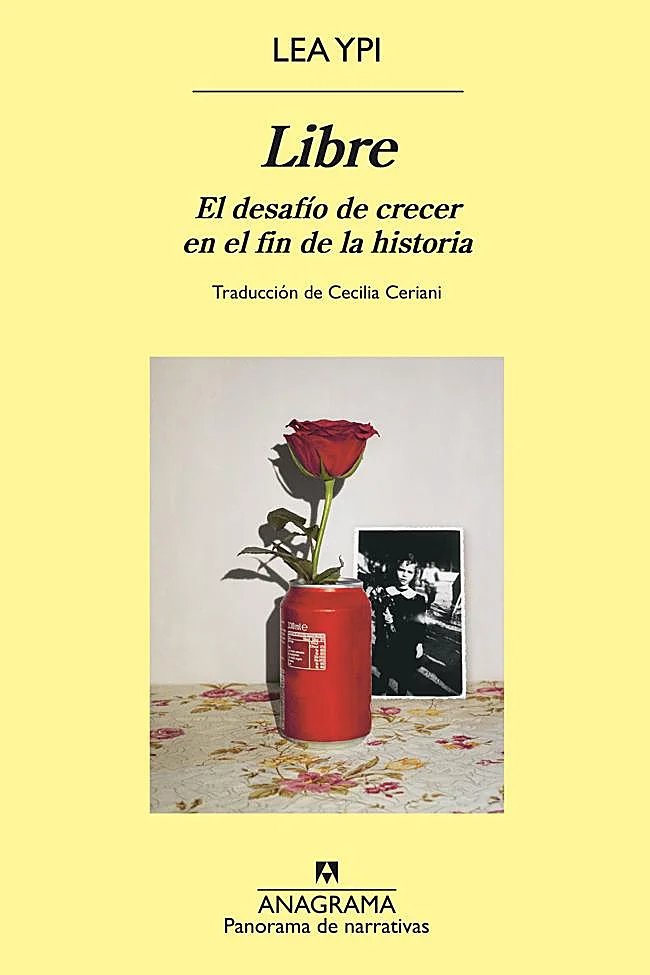
Portada de Libre, la novela de Lea Ypi recomendada en el club de lectura de Dua Lipa.
For little Ypi, the end of communism meant the end of everything she had been taught at school, the end of what her parents had told her to believe, the end of life as she knew it. “I believed in that. I did not know anything else. And suddenly I was left with nothing, except fragments of the past, small and mysterious, like a few notes from an opera lost in time,” she notes, after explaining with humor and a certain bitterness how life was before that steel curtain fell behind which she lived.
Libre is, in fact, a coming-of-age novel, when the learning is, practically, a reset, a clean slate and a restart of everything you have known and everything you have been told. The “family biography” that had caused her so many headaches, due to her family, was actually a sham. And of course, all those novelties provoked unexpected feelings in her. “Not only did my questions about the country go unanswered, but I also began to wonder what kind of family I had been born into. I doubted them, and by doing so, I began to doubt who I was.”
When the political is personal
Traveling through the eyes of a girl who had never left her country, the adventure of going shopping at nameless supermarkets and without the possibility of stepping outside what the list dictated, which in reality was what the government allowed, the fervor for the leader of the moment at any time and place, or the disappearance of places of worship, and the cult, are some of the issues the Albanian author describes over a little more than 300 pages. But also everything that remained after “the end of the story,” as the subtitle of the novel notes.
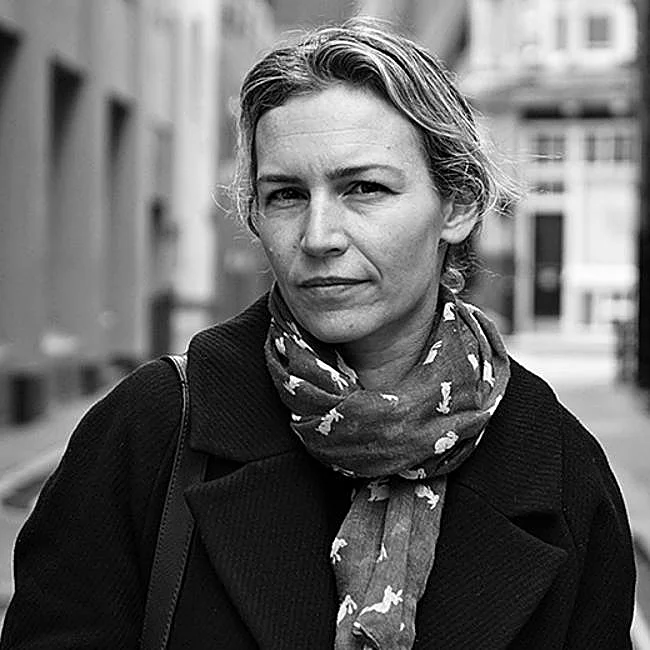
La escritora albanesa, y profesora de la London School of Economics, Lea Ypi, autora de Libre.
Because the changes arrived during adolescence, and after assuming that democracy and capitalism set the rules of the game, Ypi had to see how her country fell apart due to a civil war provoked by the collapse of the financial system. And when she recounts how panic spread, and lived through the separation of her family, Libre becomes reality, a mirror of the present. Because those who could leave did, but the citizen avalanche was such that no one wanted to welcome them.
“The West spent decades criticizing Eastern Europe for closing borders, funding campaigns to demand free movement of citizens, condemning the immorality of states that restricted the right to exit. Our exiles used to be welcomed as heroes. Now they were treated as criminals,” she describes. So Libre is not only a deeply personal and tender account of an exceptional life moment; it is also a chronicle of the personal and universal implications of something, at times as vague as politics, regardless of whether it concerns the old regime or the new, whether freedom had a broad or narrow sense. Because behind all of that, there are always human beings.