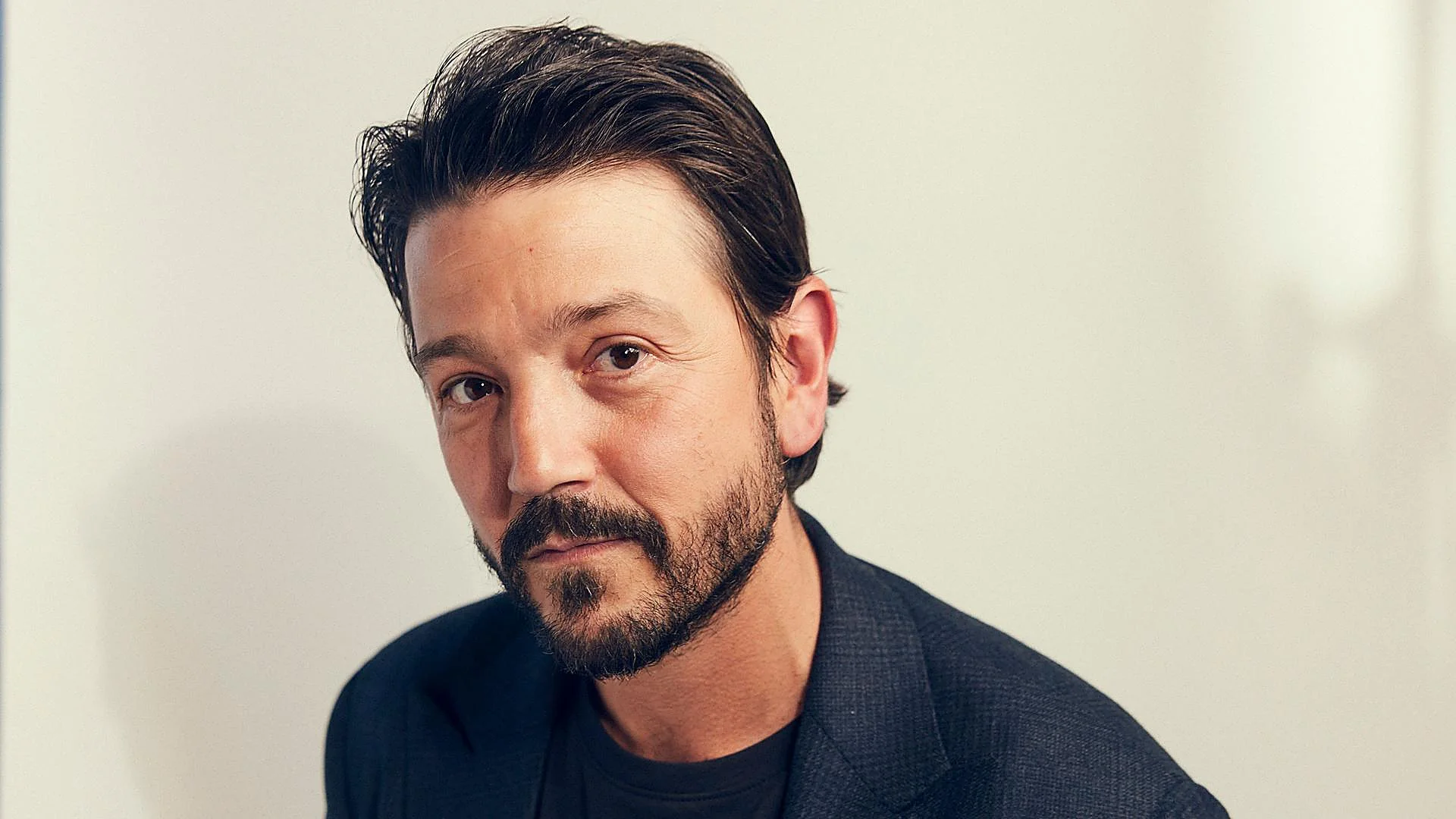
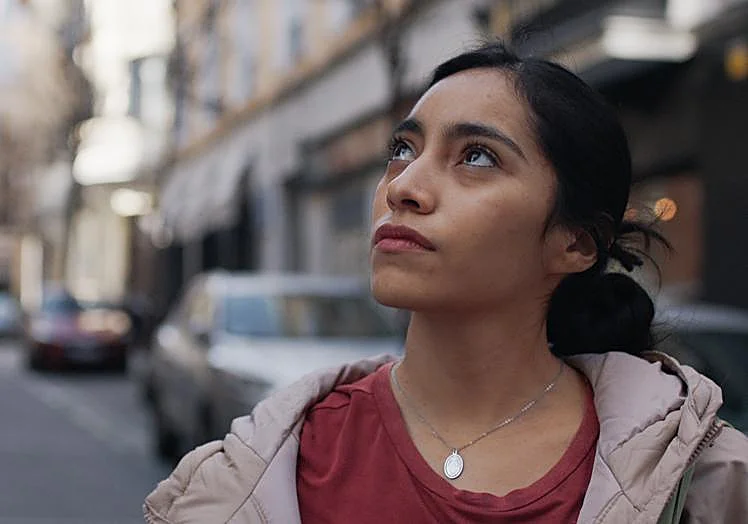
This Friday, October 9, Ashes in the Mouth, the new film directed by Diego Luna arrives in Spanish cinemas. Adapted from the homonymous novel by Brenda Navarro, the film follows Lucila (Anna Díaz), a young Mexican woman who travels with her brother Diego (Sergio Bautista) from Mexico to Madrid to reunite with her mother, Isabel (Adriana Paz), who emigrated years earlier to Spain in search of a better life. The reunion, however, is far from what is expected, and Lucila will have to face uprooting, the difficulties of migrant life, and a family marked by absences.
Between Madrid, Mexico, and Barcelona, Ashes in the Mouth focuses on the experience of those who leave their country behind to try to build a new life, but also on family ties, caregiving, and identity. The film, Luna’s fourth feature-length fiction, also features in the cast Irene Escolar, Luisa Huertas, and Guillermo Ríos. After its run at Cannes and the San Sebastián Festival, where it was presented in Horizontes Latinos, it now arrives in Spanish theatres.
In connection with the release, from MUJERHOY we spoke with Diego Luna about the adaptation of the novel, the migratory experience, the bonds formed when arriving in a new country, and the personal story he found within Lucila.
How did Brenda Navarro’s novel reach you, and what did you find in it to want to bring it to cinema?
A dear friend—who is also the editor of the novel—handed it to me. When I read it, I wasn’t thinking about making a film. I simply wanted to approach Brenda Navarro’s work, an author I already liked. I had read her previous book, and this story struck me deeply.
Although it speaks of a migratory experience that I didn’t know firsthand, I felt there was something deeply personal in it. At its core, it is a story about maternal absence, and that is an absence I know very well. I lost my mother when I was two years old, and, in a way, much of my life has been spent trying to understand what that absence means.
Image from the film Ashes in the Mouth
Did you feel you were reading a story that, in some way, also spoke about you?
Yes. My relationship with my father, for instance, I don’t understand it without that absence. Also my relationship with care and with the people who accompanied me, those networks that welcomed and embraced me when my mother was no longer there. All of that has to do with the impact she left. When I found that connection with the story, I thought: “I want to do something with this.”
The film talks about migration, but from a perspective different from what you have known in Mexico. What interested you in telling this story?
I was interested in reflecting on a migration that had not yet been looked at closely: that of Latin Americans, and increasingly that of Mexicans, toward Europe and, in particular, toward Spain. Spain is becoming a doorway, a safe harbor of sorts.
I have been very exposed to another migratory reality: that of Latin Americans who traverse Mexico in search of reaching the United States and that of Mexicans themselves who leave the country seeking opportunities or to escape conditions that are impossible to bear. Suddenly, this film allowed me to pause on another reality and ask what stories lie behind those who arrive in Spain.
And there is one of the particularities of Ashes in the Mouth: it is a story about someone who has already arrived, not just about the journey.
Exactly. I like it because it is the story of someone who has already arrived. Of the everyday life of someone who migrates, of what it means to attempt to build a life in another place. And also of a woman who is reclaiming her right to be, to have a space, and to be able to develop herself.
What did you discover about Lucila during the process of taking her from the novel to the screen?
She is a very interesting character because she has many layers. And we ended up shaping her together. It wasn’t a process I did alone: first there was the writing and then the work with Anna, who plays Lucila. Between the two of us we gave the character form and depth until we found who she really was.
The film is opening now in Spain and places the viewer before a reality that is very close us. What would you like people to ask themselves after leaving the cinema?
I’d like us not to lose curiosity about each other’s stories. The film invites you to put yourself in Lucila’s shoes, to experience the story from her perspective. Very often we pass judgment or make decisions without asking what circumstances led someone there. If we had that curiosity, if we tried to understand others a little more, we could make smarter and more coherent decisions with the world we live in.
Image from the film Ashes in the Mouth
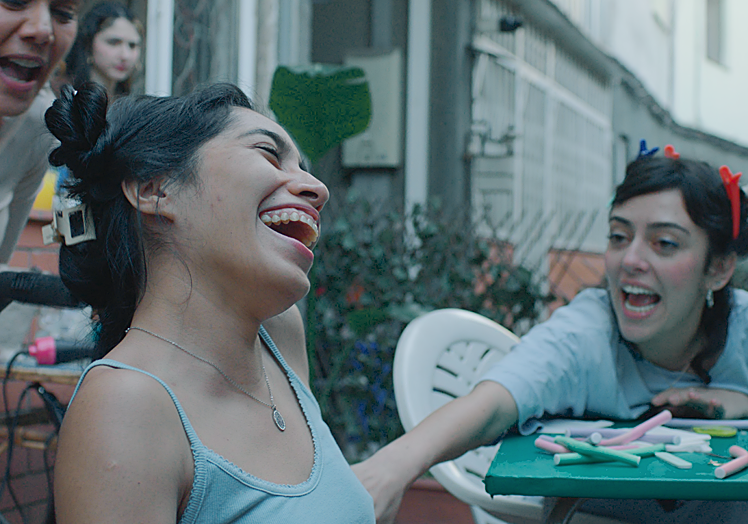
Sometimes we let fear and ignorance win out too quickly. In the face of that, curiosity, understanding, and, at least, the desire to understand the other can place us in a far better position. The film speaks of those who move and those who have already arrived, but also of those who receive. In a way, it ends up holding a mirror up to you.
And that mirror also shows a part of migration that perhaps is told less: the networks created between those who arrive and those who receive them.
Yes. I was interested in showing those beautiful things that also happen with migration: the networks that form naturally, the women who help each other, the gestures of affection. A friend once told me: “I left Mexico as Mexican and here I understood myself as Latin.” I find that phrase very powerful because it also speaks to what we discover when we are outside our country. Suddenly, distance allows us to recognize what we have in common.
Latin America is a very disjointed region, and cinema is a good example. In Mexico we make cinema in very diverse communities, but our cinema does not travel far enough. We don’t see Argentine, Chilean, or Colombian cinema; nor do they necessarily see Mexican cinema. We don’t travel, we don’t tell our stories. Perhaps music has managed to do it better, but cinema has not yet. That’s why I find migration so interesting: its ability to find what connects us and to give it priority.
In the film, Lucila finds precisely a community when she arrives in Barcelona. What does that community represent to you?
It represents what we should be telling and celebrating about migration. When Lucila decides to leave behind the backpack she has been carrying and begins to build her life in Barcelona, she finds a community that welcomes her. There is also the relationship with a woman who receives care and who, at a moment, is willing to care. For me, there you see signs of the world I would like to live in, of the people with whom I would like to build community.
What has been the most beautiful part of making this film?
Undoubtedly, the community we formed both in Spain and in Mexico. That sense that we can do many things together, with teams that bring different perspectives and viewpoints. I learned a great deal during the process.
And what has been the most difficult?
We undertook, in a certain sense, the same journey the character makes, and that implies enormous complexity. There are all the unforeseen events, accidents, and things that happen during a shoot that you have to solve on the fly.
Moreover, it is cinema whose richness lies precisely in the creativity and the ability of a team to respond. Not necessarily in having abundant financial resources: the film was made with just enough. And I think that need to find solutions also gave it a vitality that you can feel on screen.