There are films that, even before they begin, seem to command respect. The Odyssey is one of them: almost three hours of footage, a classic of universal literature as a starting point, and Christopher Nolan’s signature behind the camera. Yet, as the cinema lights go down and the film begins, doubts disappear. What could have been a dense experience ends up becoming an absorbing journey that makes time pass almost without you noticing.
What is surprising about Christopher Nolan’s adaptation is not the respect with which he approaches Homer’s text, but the ease with which he demonstrates that his themes still make sense today. It is not necessary to know Homer’s poem to enjoy it. Nor to be an unconditional Nolan fan. In fact, that is probably one of his greatest virtues. The film manages to make a story that forms part of the foundations of Western literature feel close, thrilling and surprisingly easy to follow, even for those who arrive at the cinema with barely any prior references.
A Classic That Still Speaks to the Present
Written toward the end of the 8th century BCE, The Odyssey has endured almost 2,800 years because it was never just a tale of heroes, gods, and war. Nolan understands that idea well and builds an adaptation that finds its strength in all that lies behind the adventure. Beyond Odysseus’s journey, the film speaks of power, war, identity, home, and the price violence exacts on those who endure it. It does not do so through an overt sermon and leaves space to reflect on issues that remain very current. In the end, one realizes that, even if the settings change, there are questions that have accompanied human beings for centuries.
Especially interesting is the way it tackles war. Rather than stopping only at the epic of battles, the film focuses on everything that happens after: the weariness of those who return, the uncertainty of those who wait, and the difficulty of finding a place again after having spent so long away from home.
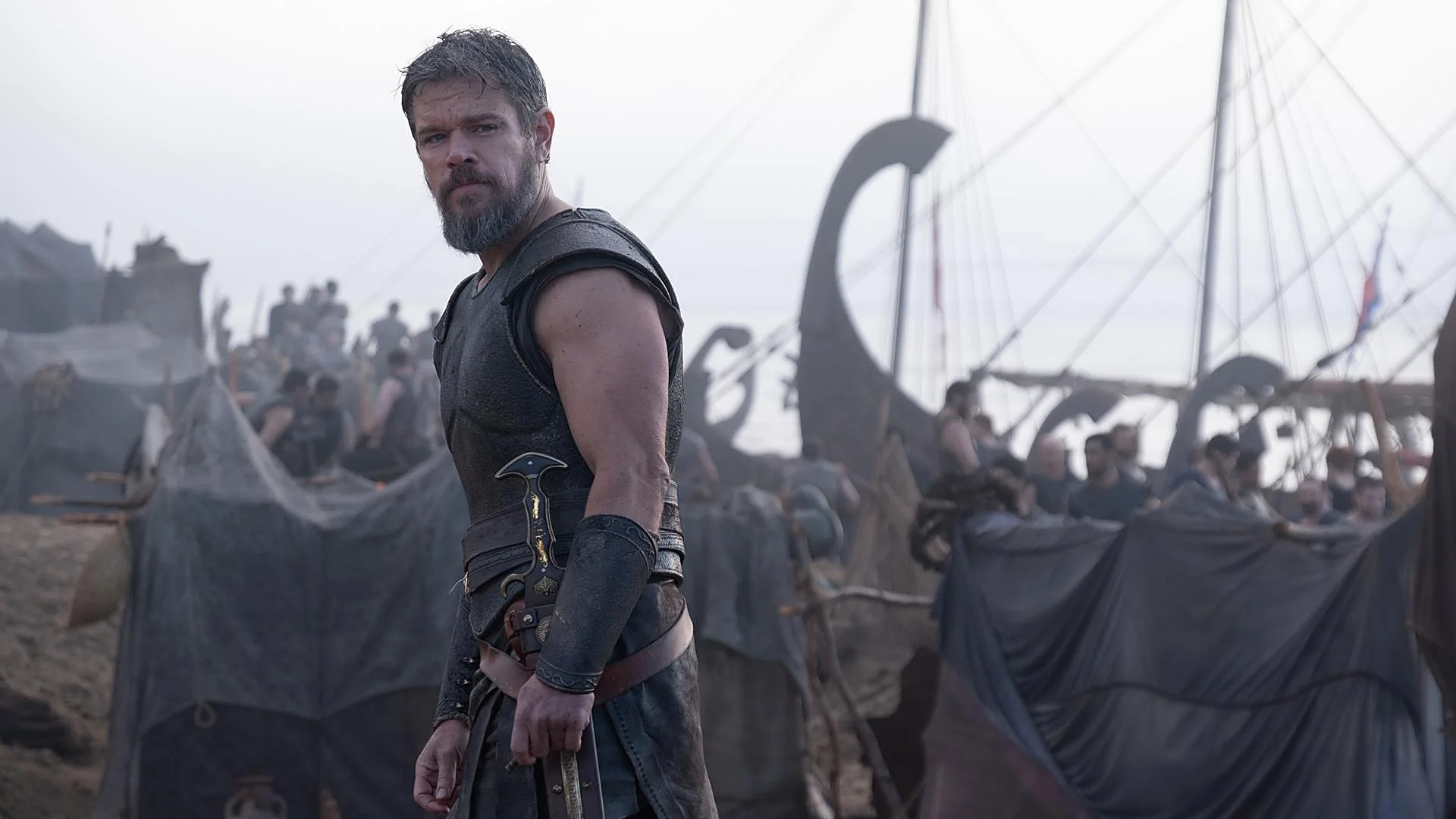
Frame from Christopher Nolan’s Odyssey
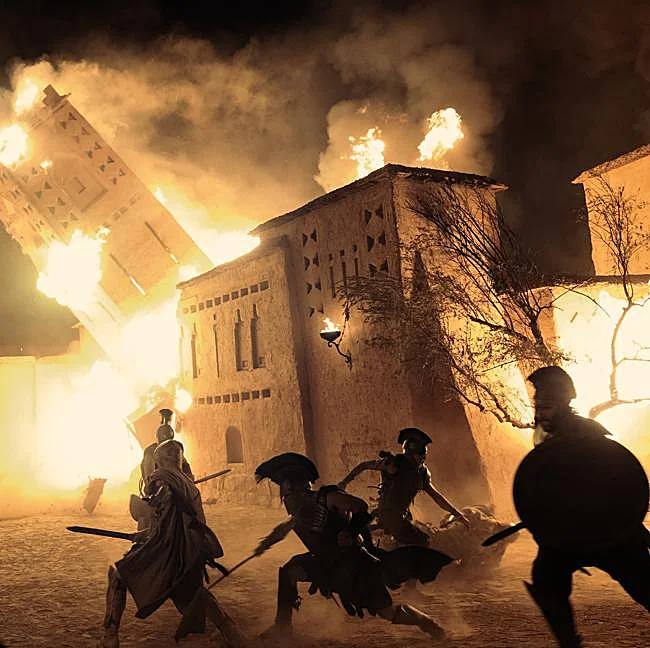
There is a particularly revealing conversation toward the end of the film in which Odysseus reflects on what the fall of Troy meant. Beyond victory, what he recalls is not military triumph, but the sense that that war had broken boundaries that should never have been crossed. The idea is especially timely today, in an international context marked by armed conflicts that once again bring to the table how far violence can go when dialogue and diplomacy disappear.
A narrative puzzle that never loses its pace
Far from betting on a linear narration, Nolan again proves that he moves comfortably within complex structures. The film alternates three timelines that help the film’s rhythm become much more dynamic: Odysseus’s present during his long return to Ithaca, the memories of the Trojan War, and what happens, at the same time, with Penelope and Telemachus as they wait for his return.
On paper it could seem like a complicated structure, but it is exactly the opposite. The constant changes of time keep interest alive throughout the runtime and allow a better understanding of both the protagonist and those who have waited twenty years for his return. It is a narrative device that adds rhythm and makes a nearly three-hour film never feel heavy.
Frame from Christopher Nolan’s Odyssey
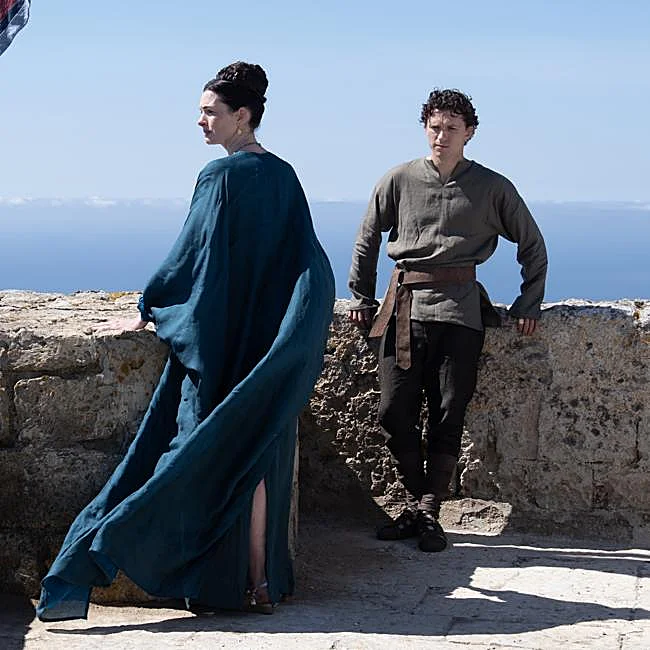
If there is one thing that deserves special mention, it is the technical department. The cinematography has enormous visual force and turns every location into an almost hypnotic setting. Added to that is a sound design that multiplies the intensity of many sequences and makes the viewer feel completely inside the journey.
In an era when many films end up being watched at home just weeks after their release, The Odyssey reminds us why it still makes sense to go to the cinema. It is one of those productions that gains when enjoyed in a darkened room and on a big screen, where image and sound are part of the experience as much as the story itself.
A Cast That Sustains the Epic
Much of that immersion also owes to a cast in peak form. Matt Damon again proves that he is one of those actors capable of sustaining a blockbuster without ever losing naturalness. His Odysseus conveys determination, exhaustion, fear, and hope with the same credibility, building a protagonist who is as heroic as he is deeply human. Tom Holland again shows that he can deftly handle more restrained characters. His Telemachus brings balance to a story dominated by epic scope and large-scale battles.
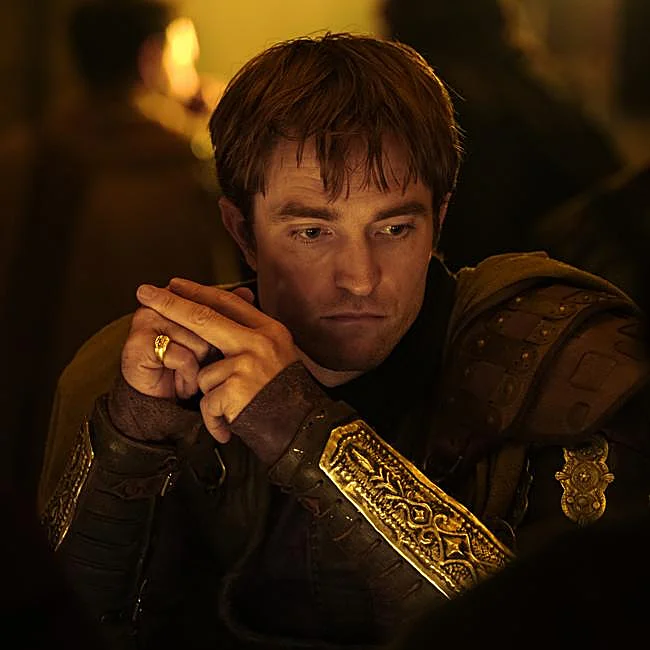
Anne Hathaway delivers some of the film’s most emotional moments thanks to a Penelope who turns waiting into a form of quiet resistance. Robert Pattinson demonstrates once again his interpretive versatility, giving life to the film’s main antagonist. Used to seeing him in very different registers, here he convinces with a character that adds constant tension to the narrative.
Frame from Christopher Nolan’s Odyssey
The only slight thorn is Zendaya. Her appearances are brief, but they carry enough force to leave you wanting much more. Far from being a critique of her work, it is precisely the opposite: each scene confirms the magnetism she has on screen and it is inevitable to think that the film would have benefited from a greater presence of her character.
Perhaps The Odyssey impresses with the spectacularity of its imagery or with the ambition of its staging, but it would be unfair to stay with only that. What truly remains when the credits roll is the sense that one has witnessed a story that continues to make sense almost three millennia after it was written.
Although Christopher Nolan again relies on a fragmented structure and a massive technical deployment, on this occasion the narrative complexity never eclipses the emotion. Compared to other films in his filmography where craft takes center stage, here the story and the characters ultimately prevail over the spectacle.