
Thirty-four years have passed since Evelyn Lauder, daughter-in-law of Estée Lauder’s founder, began her movement to raise awareness about breast cancer, which she symbolized with a pink ribbon. Since then, this color has become a universal icon in the fight against a disease that each October seeks to highlight the importance of early detection and prevention. But behind the ribbon there is a reality worth facing: in Spain, breast cancer is the most common tumor among women, according to the Spanish Association Against Cancer (AECC). Its incidence has risen and every year around 38,000 new cases are diagnosed, of which men are affected by only between 0.5% and 1%, according to the World Health Organization.
Although it remains a very common disease, it is also one of the ones that has evolved the most, and we no longer talk about a single breast cancer, but about different subtypes, behaviors, and responses to treatment. In recent years two things have changed simultaneously: the disease itself and our ability to detect it, explains Dr. Silvia Pérez Rodrigo, head of breast radiology at MD Anderson Cancer Center Madrid-Hospiten. “On one hand, we observe a progressive increase in incidence and, notably, among younger women. Although most tumors are still diagnosed after a certain age, in young patients we more often find some subtypes with more aggressive behavior, such as triple-negative cancers or certain HER2-positive cancers. In addition, some may have an appearance that is misleading in imaging tests. They can also grow rapidly, which makes early diagnosis in this age group especially important.”
The screening programs have also evolved and it is recommended to “start earlier and tailor it more and more according to age, personal risk, family history, and breast density, which, in itself, poses a higher risk of developing the tumor,” she notes. Moreover, diagnostic tools have improved: “Years ago we had mammography and ultrasound; today we have 3D mammography, advanced ultrasound systems and, above all, techniques that incorporate contrast. Thanks to this we can detect very small tumors and determine the extent of the disease more precisely.” The doctor appreciates artificial intelligence: “In mammography it helps to point out subtle alterations that could go unnoticed by the human eye, and in ultrasound it can aid in characterizing lesions that are not clearly benign or suspicious.”
New Therapies That Boost Hope
Discovering the multiple facets of the disease allows to find timely treatment. “We increasingly understand the tumor’s biology, which allows us to identify new therapeutic targets and select specific treatments,” says Dr. Elena López Miranda, an oncologist specializing in breast cancer at the Hospital Universitario Ramón y Cajal.
Among the most notable advances, she notes drug-conjugated antibodies, “which act as a Trojan Horse”: the antibody recognizes a specific feature of the tumor cell and carries a powerful drug that is delivered to the tumor environment in a selective manner. She also highlights hormone therapy: “New drugs that act on the estrogen receptor have appeared and give us new options when the tumor develops resistance mechanisms to endocrine therapy.”
Alongside other targeted drugs, immunotherapy finds its place especially in triple-negative cases. Not forgetting the classic chemotherapy and radiotherapy, pillars fundamental in treating this type of tumor that, the oncologist notes, “have contributed greatly to improving survival.” Where are we heading? “Towards a medicine that is increasingly precise. To make better use of the tumor’s molecular information, to identify what each patient needs and when, avoiding unnecessary processes when we know they will not provide benefit,” she concludes.
Emotional Support
Treatment does not end with medication. How to cope with the process from an emotional standpoint takes on an essential dimension. A meta-analysis published in 2026 estimates a 35% prevalence of anxiety and 26% of depression. Beyond the disease itself, emotional ups and downs, changes in self-esteem, physical and image-related aspects come into play. Psychologists, nurses, nutritionists, and trainers weave a solid and essential professional support network.
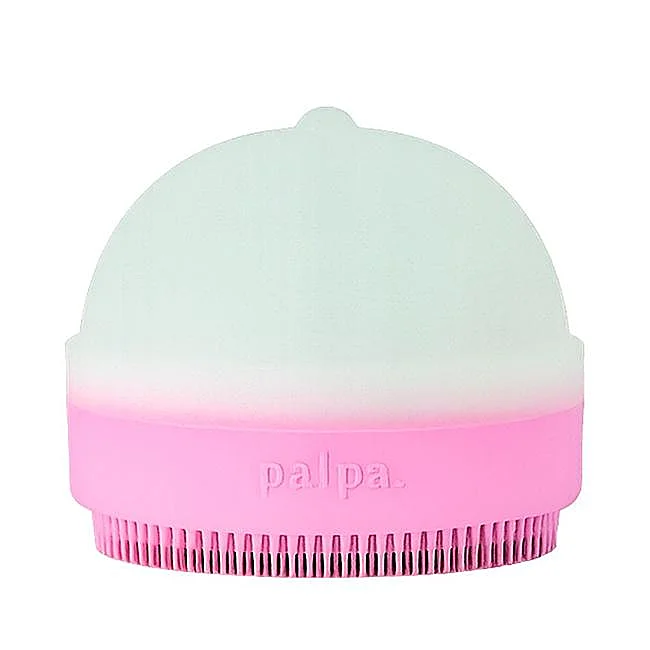
The Palpa educational device imitates the density of the breast and contains inside it a simulation of a malignant tumor; by filling it with soap in the shower, it allows learning to recognize an anomaly by touch (€35.76).
How to perform the self-exam at home: Dr. Silvia Pérez Rodrigo explains the keys
• Self-examination can be done once a month. If you have your period, it is better to do it in the following week. If not, any fixed day each month.
• You should stand up, in front of a mirror, and look at the breasts first with arms relaxed and then raised. Changes in size or shape should catch your attention. Also watch for skin retractions or depressions, nipple changes or asymmetries.
• Next, palpation can be done lying down or in the shower. Soap and cream help to slide the fingers, but they do not make the examination more effective.
• It is performed with the flat part of the three central fingers, in small circular movements, first with light pressure and then somewhat deeper.
• We will observe the nipple and the areola. If clear or blood-tinged discharge appears, especially if it is in only one breast, you should consult a doctor.