The new novel by Rodrigo Cortés, Raquel Zas’s literary debut, or the latest from Matt Haig, the author of the literary phenomenon surrounding the Midnight Universe. The return from vacation has been easier to bear thanks to the publishing novelties that have arrived in bookstores in the last few weeks. And among them, I have found two of my three favorite books of September. The other has been a classic because, among so much literary news, it is important to make room for works that have entered literary history and that we have not yet had the opportunity to enjoy.
The chosen ones came preceded by well-deserved fame, whether because they have occupied privileged places in bookstores for over 70 years or because the English-speaking critics had placed them among their favorites when they were published, a few months ago. The first corresponds to a genuine Pulitzer Prize winner, the other two are signed by authors who have won the Booker Prize, one in 2020, the other last year with the novel that has now arrived in our bookstores.
But above all, this highly personal selection comes because they have become that literary refuge that we all need on difficult days, because (as Virginia Woolf experienced) reading was everything I wanted to do on the day ahead, because they made me forget the noise of the subway, the endless waits for the bus, or to enjoy that moment of the day, or rather the night, before the rest when all you need is a good story well written.
East of Eden. John Steinbeck. Austral.
In this fever we live in, to record everything (what we see, what we run, what we read) I joined Goodreads, more to remember titles than to compete with anyone. Last year I read 60 books and this year I set my goal at 50. I am at 60% of that figure and I don’t think I will reach it, because no matter how keen a reader you are, life is what it is. The thing is that a reading friend advised me to go for short novels, so that within fewer pages I could accumulate more titles. I took up the challenge, I was moved by Audrey Magee’s The Engagement, and, as I was preparing to choose a new short title, Netflix released the teaser for East of Eden, the miniseries that premieres in a few days.
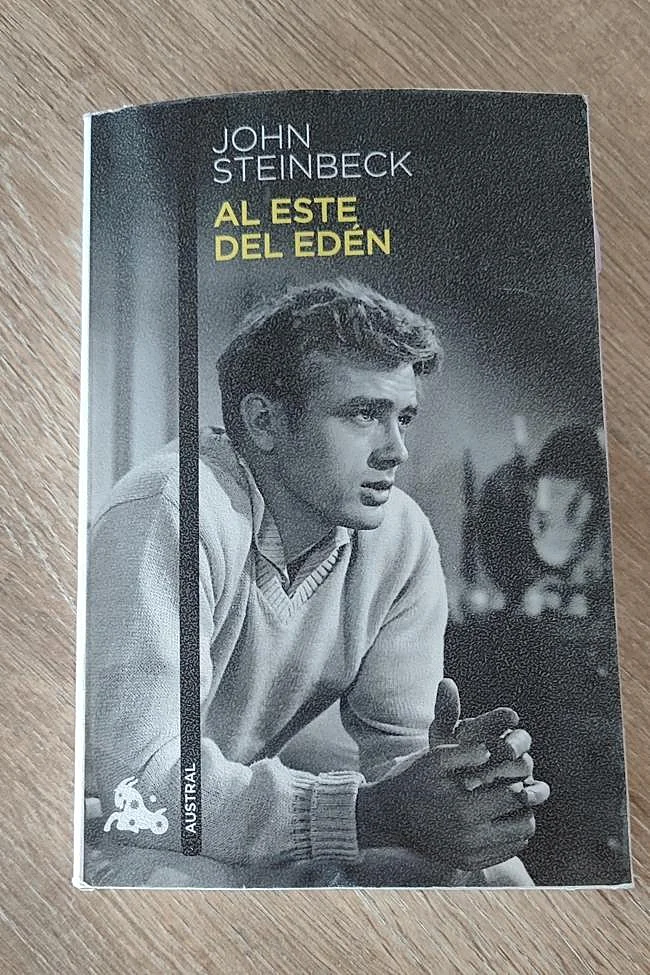
My copy of East of Eden, clad and after surviving a tumultuous week.
I forgot about my friend and her advice and rushed to a bookstore to buy the paperback edition of John Steinbeck’s book. 684 pages. It didn’t matter, because it lasted a week in which there was plenty of leisure time and an exciting story ahead that, without a doubt, is already among my favorite books. But always, since forever, not just this month. I acknowledge that the California writer’s passion for his land initially felt heavy. But then came wonderful characters. It didn’t matter whether they were evil like the patriarch Cyrus or the incomparable Cathy Ames, sufferers like Adam, wise like Mr. Hamilton, or endearing like Lee; the beings Steinbeck created from his life and imagination will stay with me forever.
«If the Germans had known Olive and had sensitivity, they would have tried not to stand in her way and not displease her.»
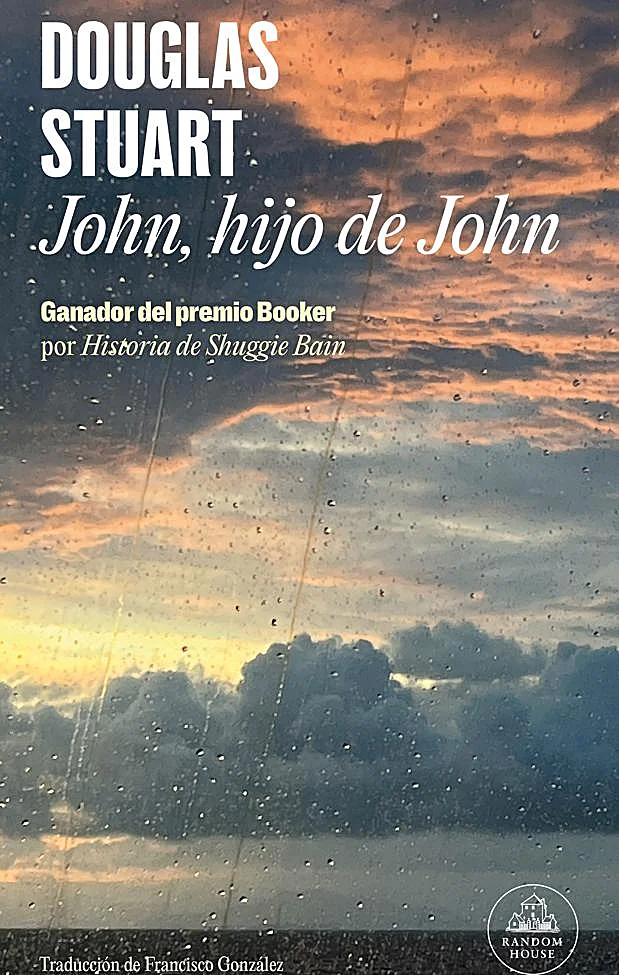
Cover of John, Son of John, Douglas Stuart’s novel.
John, Son of John. Douglas Stuart. Random House.
The successor to one of the great American literary classics takes the form of a novel set on a remote Scottish island and starring a young man who returns there, to the family home, when the professional path he has chosen offers no possibilities in the beautiful Edinburgh. But it is not the story of a personal failure, although that is its starting point, but rather a precious father-and-son portrait of the contradictions of humans, but also of love and respect, of faith and youthful disillusionment (aspirational more than amorous).
Across its nearly 500 pages (I haven’t forgotten my friend’s advice but it isn’t a good moment to put it into practice), the new novel by Douglas Stuart, who won the Booker in 2020 with Shuggie Bain, oscillates between the intimate, sometimes uncomfortable, sometimes violent of the MacLeods, and public, communal life, with the church at the center of it all, of the good John, son of John, whom everyone calls Cal. The ‘small-town hell’ of Metalious brought to an island setting, with few professional opportunities and with faith as a guide, as if they lived anchored in the 19th century.
Stuart’s mastery in描? at depicting environments where complications of any kind shake the lives of people who do not seem willing to surrender is well proven. But this time, he has played with the moral suffocation of a man who has been made to understand what sin is: the place where the river of desire ends. And while he worries more about what his neighbors think than about his son, the latter also resists allowing himself to be carried along. Until an unexpected event places them before the doubt of whether it is worth distracting themselves with things that, in truth, are not synonyms for happiness. And there is also Grandma Ella.
«- It is a sin – he said. Today is not a day to work, Ella.»
Ella held his gaze without blinking.
– I can do what I am doing or I can get drunk, whichever you prefer».
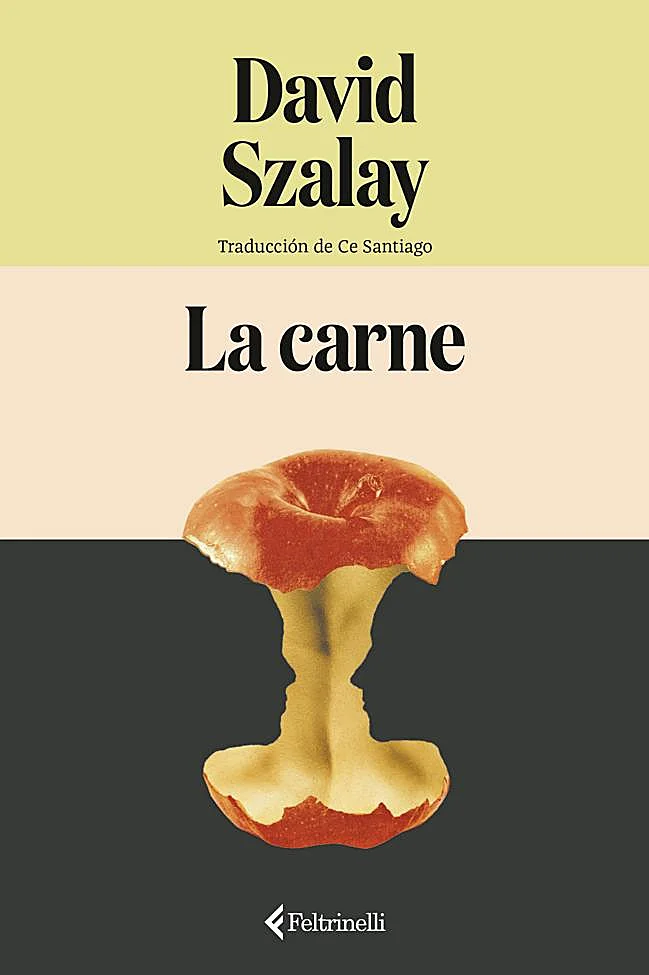
Cover of The Flesh, the Booker Prize-winning novel 2025.
The Flesh. David Szalay. Feltrinelli.
If one had to pick a word to define the Booker Prize-winning novel of 2005, it would be antiseptic. But not as a flaw, rather as a faithful reflection of its protagonist István’s personality, a young man who, at the start of the story, is 15 years old. Recognized with the Booker Prize in 2025, it traces the protagonist’s story from when a neighbor decides to make him a disposable lover, an act that will have fatal consequences, until, years later, he moves to London and fate places him in a setting he could hardly dream of.
Between these events lie youthful failures, the indolence that forces difficult decisions, a paid stay in a meaningless war and the absence of a father who, though not named, is also relevant to István’s development, both in his youth and when he himself must assume that role.
With a brisk and direct narration, devoid of adjectives and light on deep thoughts, the sixth novel of the British-Hungarian writer is a minimalist fiction about contemporary masculinity. And it does so through a protagonist devoid of feelings, almost automatonic, perhaps amoral, who goes through life with awkwardness and passivity, as if once his adolescent longing was thwarted he had no strength to care about anything else. A book that has little chance of becoming anyone’s favorite novel, but that does not leave anyone indifferent.
«The fact is that István enjoys his visits. The sex is undeniably intense and exciting. Partly it’s because of the sense of transgression, he thinks, the feeling that they shouldn’t be doing this. A feeling that is intensified further by the fact that István does not find her particularly attractive, that sleeping with her is not something he particularly desires.»