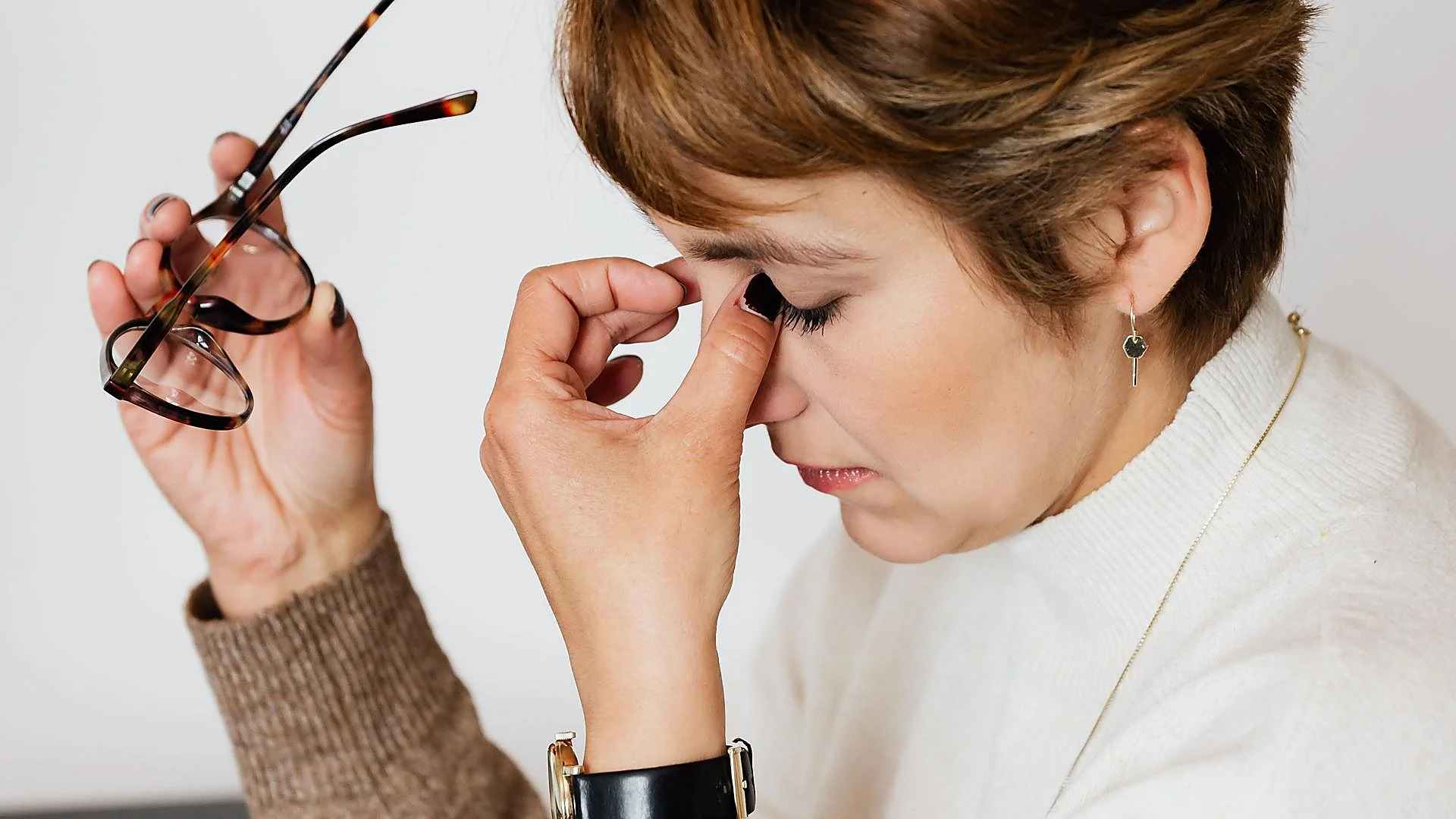
Going blank while looking for a word or waking up in the middle of the night for no apparent reason. Many women over 40 attribute it to work or to a rough patch, and they keep going. Mariel Silva, Director of Medical Services and specialist in Healthy Aging at SHA Spain, asks not to settle for that first explanation. “Sleep problems, persistent fatigue, irritability, anxiety, low mood and difficulty concentrating are especially easy to attribute to stress,” she explains.
One of the symptoms that recurs most is what many people call mental fog. “Many women describe that difficulty as ‘mental fog’: they forget words, lose track, or need more effort for tasks they used to handle with ease,” Silva says. Since each symptom by itself seems minor, it’s easy to downplay it. But the impact exists. “These symptoms can affect work, relationships and quality of life,” she warns.
Why is it so hard to link them to perimenopause? “The problem is that all these symptoms can also appear for other causes and, moreover, they often coincide with a period of heavy work and family demands,” she notes. With the schedule full, fatigue seems to have an obvious explanation and it’s easy not to look further. That’s why the specialist proposes broadening the focus. “I consider fundamental to look at the whole picture, when they started, how they evolve and whether they are accompanied by changes in menstruation, hot flashes or night sweats,” she explains.
Her most important warning has to do with the period. “It’s important to understand that you don’t have to wait for the period to disappear to think about perimenopause,” Silva stresses. That menstruation continues, even if more irregular or different, does not rule out that the body is already in that transition. And there’s a good part of the confusion, because many of these signals appear when menopause is not yet being considered.
What happens in the brain
The explanation lies, in part, in how hormones act. “Ovarian hormones also act on the brain. During perimenopause, their levels can fluctuate irregularly, and these changes can influence mood, sleep and the response to stress,” explains Silva. That helps to understand why each woman experiences it in a different way. “Not all women have the same sensitivity to these fluctuations,” she adds, and that’s why some barely notice changes while others go through it especially badly.
The symptoms, moreover, drag on from one to another. “If a woman sleeps poorly, the next day she will have less energy, less ability to concentrate and more difficulty handling situations she previously tolerated better,” she explains. That does not mean everything is about hormones. “The existence of hormonal influence does not mean we can discard a psychological problem. Perimenopause can increase vulnerability to depression, and both situations should be evaluated together,” she warns.
That is why she clarifies that receiving treatment for depression at this stage “does not necessarily imply an incorrect diagnosis.” She does not set a timeframe for how long it takes to identify perimenopause either: “We do not have a sufficiently reliable and generalizable average figure to answer with a number.” What is clear is the impact. “These symptoms can profoundly affect quality of life, rest, professional performance, relationships and self-confidence,” she notes.
The questions that help distinguish it
The first question she proposes is simple: “What has changed compared to how I felt before?” From there, it’s worth reviewing whether the period has become more irregular or different, whether there have been night awakenings, hot flashes or sweating, and how mood and concentration are. It also matters how much all that interferes with daily life. “A simple record of menstruation, sleep and symptoms can help organize that information,” she recommends.
In the consultation, Silva would pose two questions: “Could I be in perimenopause?” and “What other causes should we consider?” Fatigue, for example, can also be due to anemia, thyroid problems, sleep disorders or depression. And remember something to know before requesting tests: “In women over 45 with typical symptoms, the diagnosis is usually clinical. An isolated hormonal analysis does not always clarify the situation, because hormones fluctuate during this stage.”
For the specialist, the change must also reach the consultation. “If we ask only about hot flashes and the date of the last period, we may overlook an important part of the experience, such as pain, sexual difficulties, urinary discomfort, mood changes or concentration problems,” she explains. And she sums it up like this: “That it is a natural stage of life does not mean it should be endured with pain, exhaustion or difficulties that could be improved with attention