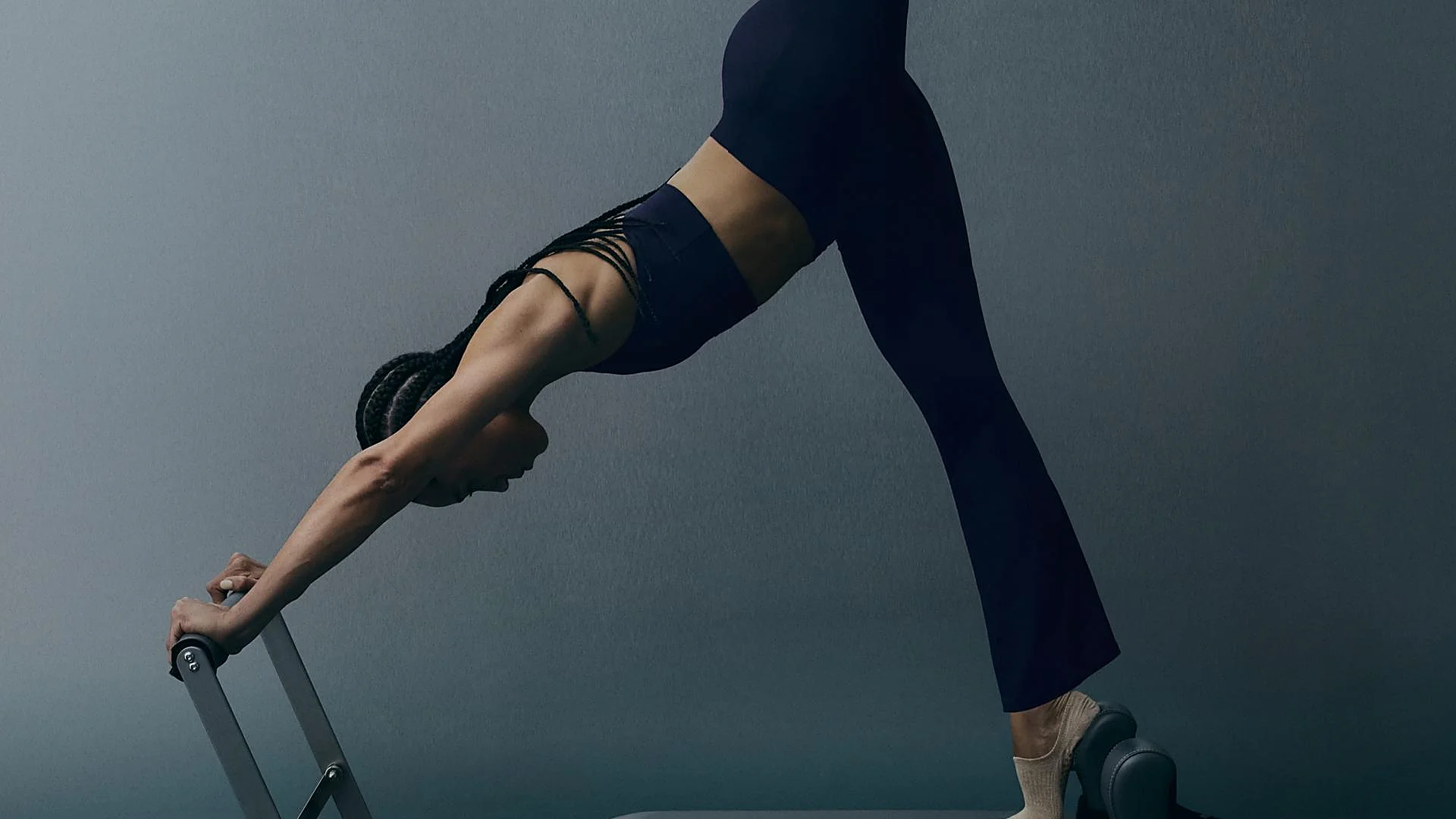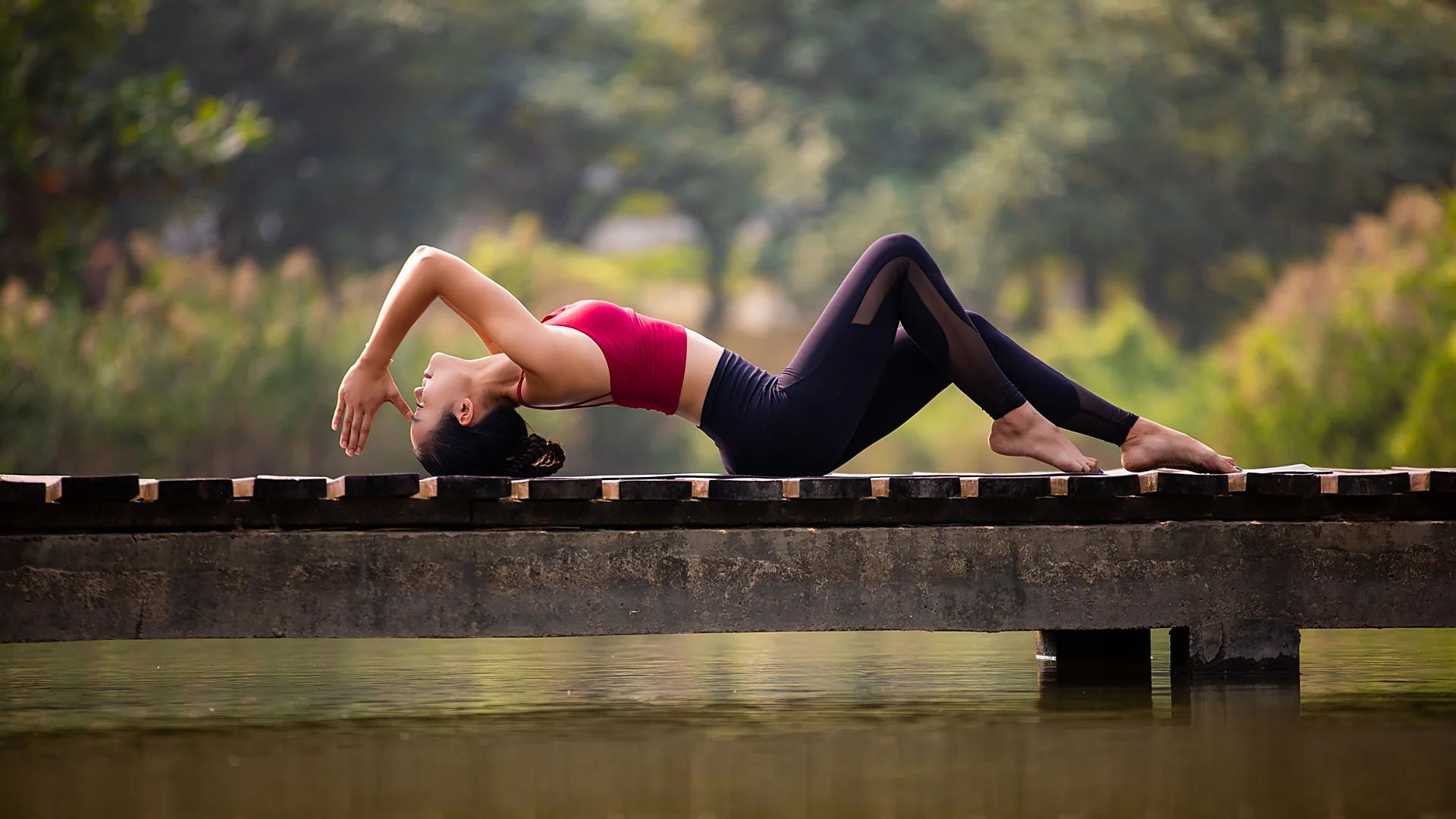
The Fish Pose belongs to a family of asanas known as chest openers. Becca Alonso, yoga and reformer Pilates instructor at Floor Studio (@floorstudioreformer), Getafe, explains its function: «It has a full activation of the pectorals that open, also opening the diaphragm, it activates the lats and trapezius to hold the pose and with that a full opening of the ribs which with proper breathing allows us to expand and improve our lung capacity». It uses both the anterior and posterior parts of the trunk.
Although it seems simple to execute, it remains a technique. «It remains a technique and correct execution lets us enjoy its benefits without pain or risk of injury», states Alonso. There are also variations that reduce neck tension, especially indicated for those who have cervicalgia, high blood pressure or tension-type migraine.
Proprioception is what determines whether the execution is correct. «Extending the spine vertebra by vertebra, retracting the shoulder blades, opening and lengthening the sternum and keeping the active musculature during the execution», details Alonso. It is not a passive movement: it requires active muscular control throughout the range, a principle that also governs Pilates, where the precision of the gesture matters as much as the gesture itself.
A block between the shoulder blades is one of the most useful adaptations. «We can place a block between the shoulder blades, adjusting it to the student’s needs, letting the shoulders, arms and head drop. We seek less elongation to generate less tension in the musculature», explains Alonso. This type of block or cushion supports is common in therapeutic yoga to adapt demanding postures without renouncing their benefits.
How to Avoid Neck Tension
A poorly executed hyperextension can cause exactly the opposite of what is sought. «Normally a poorly executed hyperextension, with a cervical lordosis, without the correct placement of the elbows in any version, can cause unnecessary tension in the neck, potentially leading to cervicalgia», warns Alonso. The placement of the elbows and the absence of cervical lordosis mark the difference between a therapeutic posture and one that generates discomfort.
Postural kyphosis, so common in office work, driving or long hours of study, is one of the main goals of this posture. «Yes, with nuances. In the case of postural kyphosis, with an adequate practice not only of Matsyasana, but of an adapted sequence, it can improve and reverse the posture», says Beca (@beca.yoga). It is not about an immediate effect from a single session, but the result of integrating it into a broader practice.
That adapted sequence is key for those who spend many hours hunched in front of a screen. The Fish Pose, by itself, does not compensate for years of accumulated poor posture, but it does form part of a real strategy when practiced together with other thoracic opening and scapular control exercises, something that in Pilates is usually worked on through scapular retraction exercises and strengthening the dorsal musculature.
After 45, when thoracic stiffness and the tendency to slouch tend to become more pronounced, properly adapting this pose with the necessary supports, rather than forcing the most demanding version from the start, is what allows you to enjoy its respiratory and postural benefits without risking the neck. That progressive adaptation is, according to Alonso, the difference between a safe practice and one that can cause discomfort instead of relieving it.
The combination of chest opening, activation of the dorsal musculature and improvement of lung capacity makes Matsyasana one of those poses that, when well executed and adapted to each body, directly compensate for the accumulated effect of so many hours in front of the computer. Few gestures as simple as this manage to work on breathing, posture and the upper back musculature all at once.