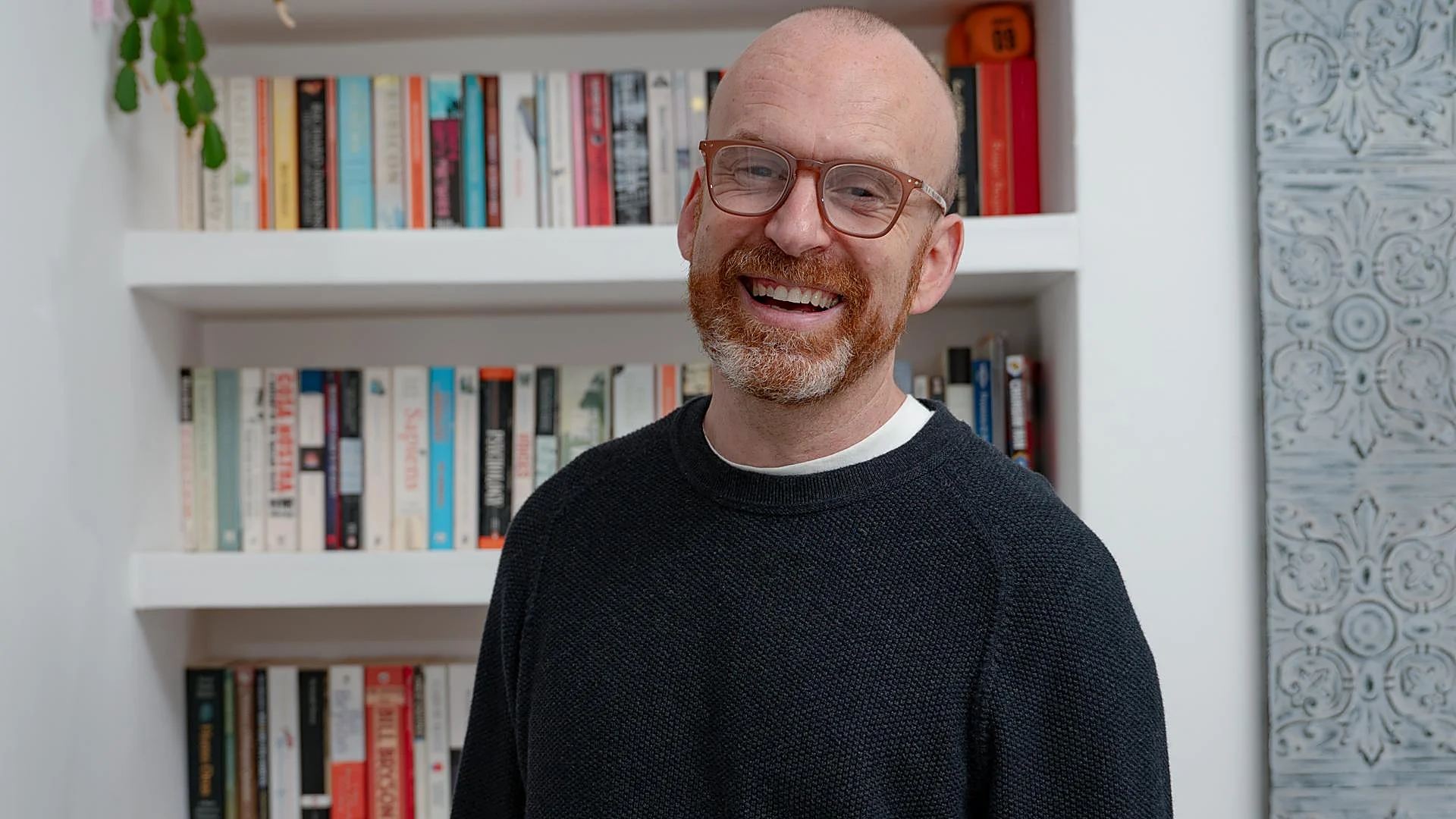
Matt Haig is the writer of the moment, and not by chance; his works deal with mental health, hope, but above all with the second chances we deserve in life. Writing about this author is like doing so through a lighthouse of hope, bright and luminous, that guides us through difficult moments of any life stage we have endured. The international success of The Midnight Library confirms it, especially after connecting with readers from different generations without distinction.
Now he returns with a new book, The Midnight Train, in which we undertake a journey through the memory of its protagonist at 81 years old. In part, this voyage is a metaphor for the passage of time, memory, and decisions. The idea of looking back and asking what would have happened if we had taken other paths makes perfect sense, but it also connects with a universal concern: regret and the imagination of what we could have lived.
From MujerHoy, we talk with Matt Haig about literature, love and the need to learn to live in the present without fear for the future. An interview full of feeling, where there is a willingness to seek meaning in moments of darkness, but with a bright light that guides us at all times.
Hope as the Throughline
In recent years, Haig’s work, both in fiction and in essays and children’s literature, has revolved around the same idea: finding hope in the midst of darkness. “Right now that is the throughline,” explains the writer, who acknowledges that writing has also become a form of personal refuge.
After the reception of The Midnight Library, Haig faced very diverse opinions about his work and began to wonder if he would be able to find the mental space needed to write again. However, he discovered that not doing so made him feel worse. “The next book I actually started to write for myself, for my mental health. A part of me needs to write and needs to do it the way I do,” he says.
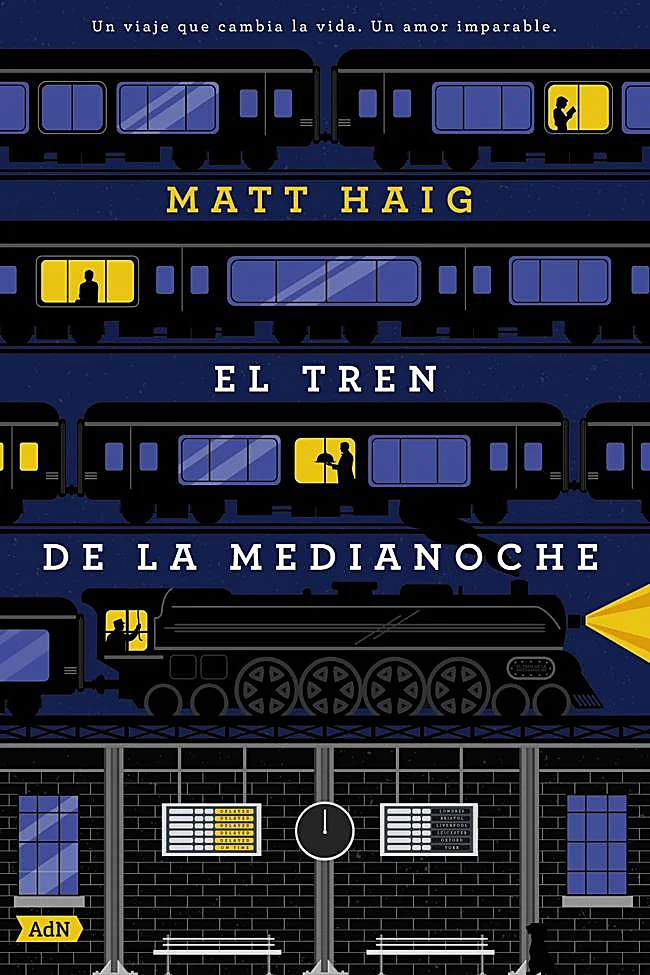
The Midnight Train, Matt Haig’s new novel.
In The Midnight Train, the protagonist is 81 years old, a age far from the author’s. Haig explains that he needs a certain distance to be able to pour himself into his characters: “I don’t really know why this happens that the more distance my characters have from me, the more I can put of myself into them.” He also acknowledges his connection with nostalgia and with eras he didn’t even live. While he was writing the novel, his father was receiving cancer treatment and he thought about his parents and how they met in the sixties. “That’s why I looked for a character who would fit that time period,” he explains.
Contrasting the idea that darkness might be more important than light, Haig clarifies that the issue is not about giving it greater weight, but about understanding that life is built from opposites. “Good is defined by its opposite, just as happiness is. It is in that contrast where we find what is truly important,” he affirms. From his own experience, he says he has lived more moments of happiness after his depression than before it and defends that there is no perfect life: “We have to learn to make the most of the one we have. It is a very uncomfortable truth, but one we have to make peace with.”
How to Learn to Live with the Past
Regret is another of the major themes in his literature. For Haig, looking to the past can help us learn from our mistakes, although it can also become a form of paralysis. “It is very easy to keep turning over the past or worrying about the future,” he notes. In his case, reading and writing are tools to process those emotions and observe them from another perspective. “In my novels I tell myself the kinds of things I need to learn,” he explains.
Over time, the writer believes that understanding our parents comes naturally, though he thinks the ideal would be to reach that perspective while we are living our own lives. Haig acknowledges that, at times, work and worrying about others’ opinions make him lose sight of his priorities. However, situations such as his father’s illness or family problems have helped him regain perspective. “We should be able to apply that nostalgia we feel for the past to the present,” he reflects.
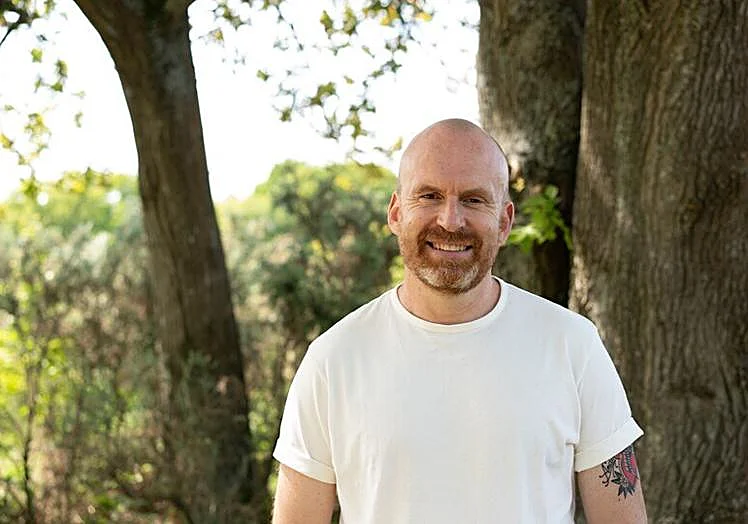
Matt Haig, author of the Midnight Universe.
In one of the scenes in the novel, a character thanks Wilbur for simply seeing him. For Haig, that gesture connects with an essential idea of love: “I think love is like a conversation, really. And the act of love is listening to the other.” The writer considers that listening is something we do far too little, especially in an era dominated by social media, where many people “are basically talking to themselves constantly.”
Literature as a Lifeline for Matt Haig
Books have also been a lifeline in the most difficult moments of his life. Haig recalls a troubled adolescence, problems at school and the death of his grandmother when he was 16. It was in the library of his town where he rediscovered the pleasure of reading, through authors such as Stephen King and novels that made him understand that art and literature are for everyone.
Years later, during a strong mental health crisis, he found solace in children’s books like Alice in Wonderland and Winnie the Pooh. “When you are depressed you feel stuck, as if you aren’t moving forward. And, essentially, a story is a tale of change and evolution. Therefore, for me, fiction is an antidepressant,” he says.
The choice of the train as the setting for the novel answers several reasons. On one hand, Haig drew inspiration from the numerous train-related metaphors that exist in English to talk about life. On the other, the train allowed him to connect the story with how memory works: “There are periods of our lives that pass by the window in a blink, while we actually dwell on things that may be important or utterly insignificant and that, for some reason, get lodged in memory.”
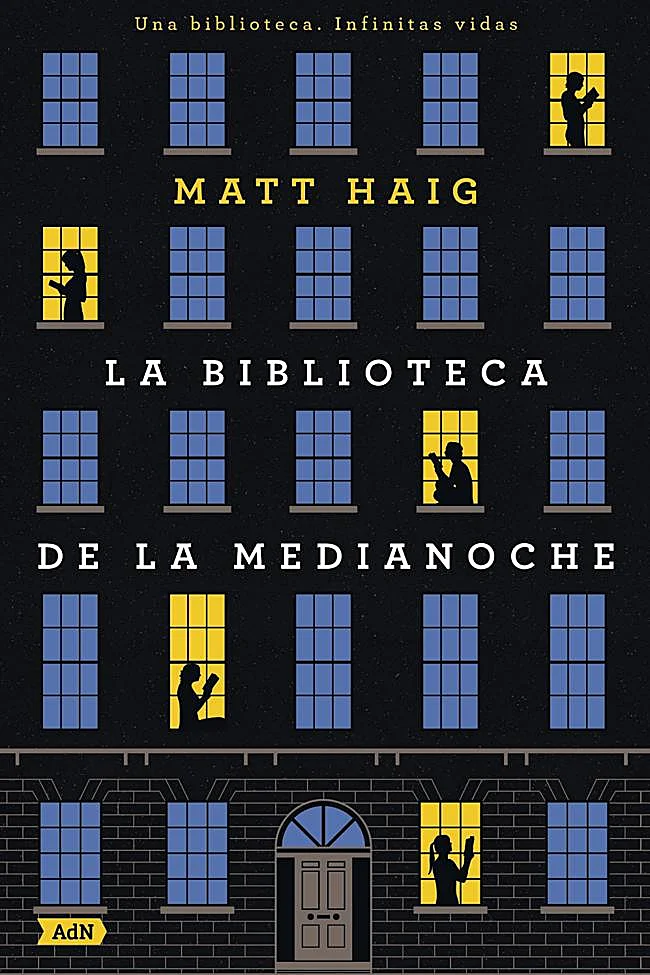
The Midnight Library.
If he could return to any moment of his life to observe it from a distance, Haig would travel back to his childhood, a period in which he preserves happy memories and important friendships. However, he acknowledges that he would probably get off the train early. “I feel that my happiness and life satisfaction only grow as I get older,” he says. “I know it may sound very sentimental, but right now I really like the stop I’m at, especially this one in Madrid.”
For those living trapped in regret, the writer reminds them that changing the past does not guarantee a better outcome. Some decisions that seemed right can end up with unexpected consequences, while certain mistakes can lead, over time, to wonderful results.
“It is impossible to predict the future and the consequences of things, and it is completely useless to live in that universe of hypotheses of what could happen or what could have been,” he concludes. “If we live constantly in perpetual regret, we are unable to move forward. And that is what we have to do: keep going, do things as best as we can in each moment and hope for the best.”