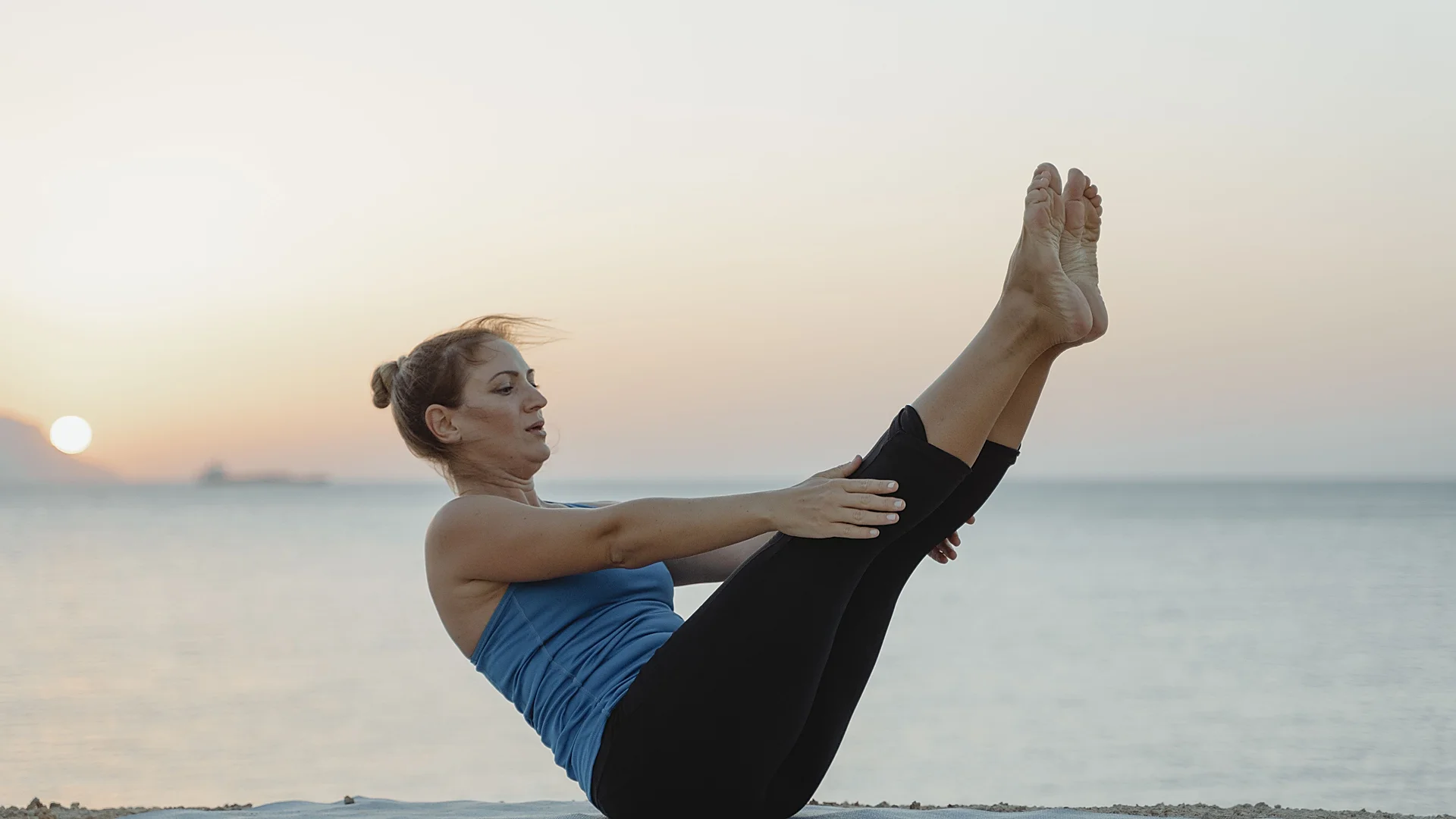
Just a few minutes before leaving home can change how the entire workday is faced. José Ballesta Ballesteros, a yoga expert, explains it from body awareness: ‘Every act of awareness is an opportunity to take ownership, real control. A few minutes before starting your workday will help you stay present at work, with fewer digressions, more cohesive.’ Fifteen minutes are not enough for a full practice, but they are enough to make a difference if complemented with longer sessions when time allows.
Breathing is the foundation of this brief routine. ‘If you only have 15 minutes to practice, the ideal is to maintain a balanced breath throughout the asana practice; just try to keep the breaths mindful and deep,’ Ballesta notes. If pace allows, he proposes to work in four counts: inhale, pause, exhale, pause, a cadence easy to remember even with the rush to leave home.
Three sun salutations, Series A and Series B, mark the start of the sequence. ‘Do 3 sun salutations, Series A and Series B, two side triangles, two warriors and move to floor asanas, working forward folds and twists, and fall into savasana,’ Ballesta details. It is not a full practice, but balanced for someone who only has a quarter of an hour before leaving home.
Yoga does not distinguish between those who need it more or less, although the benefit is particularly noticeable in certain profiles. ‘Yoga benefits everyone; the further you are from your balance, the more necessary it is. The more concentration lapses you have, the more necessary it is,’ Ballesta explains. Those who carry chronic work stress or struggle to disconnect from work after hours tend to notice the effect more clearly than someone who already starts from a good balance, although no one is excluded from its benefits.
Can it really make a difference in the day?
Ballesta does not present this routine as a miracle solution. ‘Yoga is a method of self-knowledge, not a magical solution,’ he summarizes. It depends on the person and the environment in which each operates: it always helps, though it is not always enough on its own to face a day that is especially demanding.
That honesty is part of what makes the proposal useful. Fifteen minutes of yoga in the morning will not neutralize a bad day at the office, but they can change the starting point with which you approach it. Beginning the day from a more conscious state, instead of dragging the last-minute rush, already makes a notable difference, even if it does not completely remove the difficulties that may arise later.
The combination of movement and conscious breathing, even though brief, prepares the nervous system for the day without overactivating it or leaving it too relaxed to function. That balance, between activation and calm, is precisely what this short sequence seeks before stepping out the door every morning.
For those who have never tried practicing in the morning, Ballesta’s recommendation is to start with no great expectations. There is no need for a perfect mat or an elaborate ritual: fifteen minutes, breathing in four counts and the willingness to pay attention to your own body before the whirl of the day begins. The rest, as he explains, is built with repetition.
September, with the return to schedules and responsibilities, is a good time to try it. Not because the month has anything special, but because it is when that first moment of calm is most needed before the workday takes control of the rest of the day.