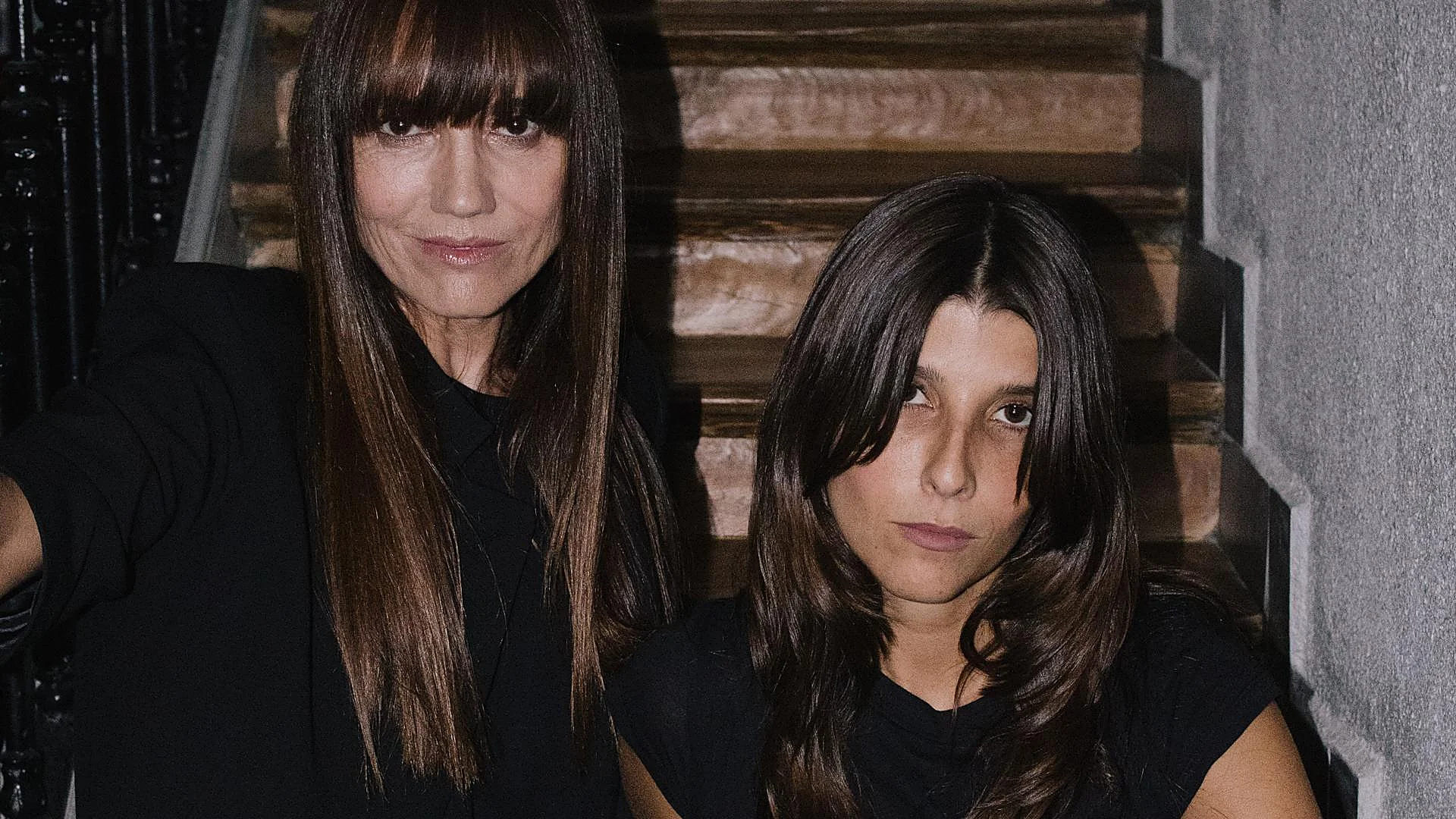
There is a photo of Wolf Vostell and his wife, Mercedes Guardado, with Salvador Dalí in Portlligat in 1978 that says it all. Of the ones that go down in history. The Dalí from Figueras wears the traditional espadrilles and his habitual beads. The German from Leverkusen is dressed as he used to, like a Jew without being one, in homage to the victims of the Holocaust. Both are extravagant and flamboyant, though each in his own way. It is perfectly evident in the Museo Vostell Malpartida, which Vostell (1932-1998) founded in October 1976 in the town of Malpartida de Cáceres. To the eye he appears Dalinian, but he is Wolfian. He will never cease to surprise us, and charm us, that there is a museum like this in deep Extremadura.
Mercedes Guardado, a Cáceres native from Ceclavín, did not play a secondary role. On the contrary, she had a lot to do with the pioneer of the European happening, video art and installation art deploying all his ingenuity at Los Barruecos. They had met in the late fifties in Guadalupe, where the artist had gone to study Zurbarán’s work in depth, after passing through the Prado Museum, and where she worked as a teacher. They were forty years together. She recounted them in the book My Life with Vostell, an Avant-Garde Artist (La Fábrica, 2011).
The very place where the Vostell Museum is located, only fourteen kilometers from Cáceres, is extraordinary. A landscape declared a natural monument by the Junta de Extremadura in order to preserve it for future generations. It could have sprung from the portentous and theatrical imagination of Vostell, with those granite boulders sculpted by erosive agents over thousands of years, yielding a varied catalog of shapes, each one more whimsical. But nature performs these miracles.
What to See at the Vostell Museum
As if that weren’t enough, the landscape is enhanced by four reservoirs, in whose waters the stone giants are reflected, making it even more dreamlike. Namely: Barrueco de Arriba and Molinillo, dating from the 16th century; Barrueco de Abajo, which fed the proverbial wool-wash, which operated from the 18th century to the early 20th, and Charca de Frasco Díez, the most recent, from the 19th century, linked to a flour mill, like the first two. The livestock farm was acquired by the City Council of Malpartida de Cáceres in the very year this contemporary art museum was launched.
El Museo Vostell Malpartida está en el paraje cacereño de Los Barruecos.
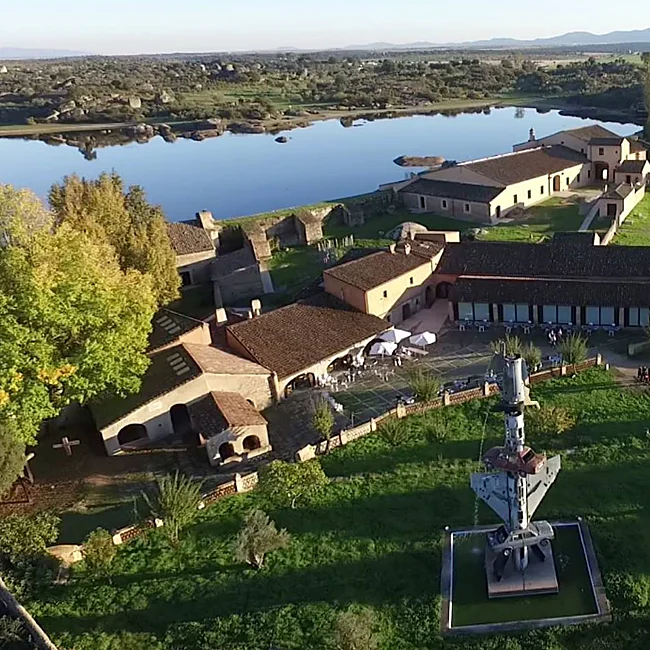
Todo resulta evocador y mágico, mientras águilas y milanos surcan los cielos, procedentes de la vecina sierra de San Pedro o de los Llanos de Cáceres, y las cigüeñas campan a sus anchas. No en vano Malpartida, de notable arquitectura popular y con casonas y palacios, fue nombrado Pueblo Europeo de la Cigüeña en 1997. Alberga una de las mayores poblaciones de cigüeña blanca de Europa. Otra de sus excelencias es que conserva asentamientos del Paleolítico y el Neolítico. De los romanos queda una villa en el área de Los Barruecos.
All this only serves to fix and magnify the Vostell Museum, which also contributes its own: the work of Wolf Vostell and the Fluxus Collection, donated by Gino di Maggio, editor, collector and great friend of the Fluxus artists.
Vostell, Fluxus, Yoko Ono
The German who settled in Extremadura was a member of Fluxus, an anti-art movement, akin to Dada, which had its peak in the 1960s and 1970s. Its followers understood life as a global artistic composition; they shunned complexity, were passionate about events over high culture, worked with any material, and infused everything with irony and humor. Fluxus? Above all, an attitude. Yoko Ono helped elevate it.
One of Yoko Ono’s works installed at the Vostell Malpartida Museum.
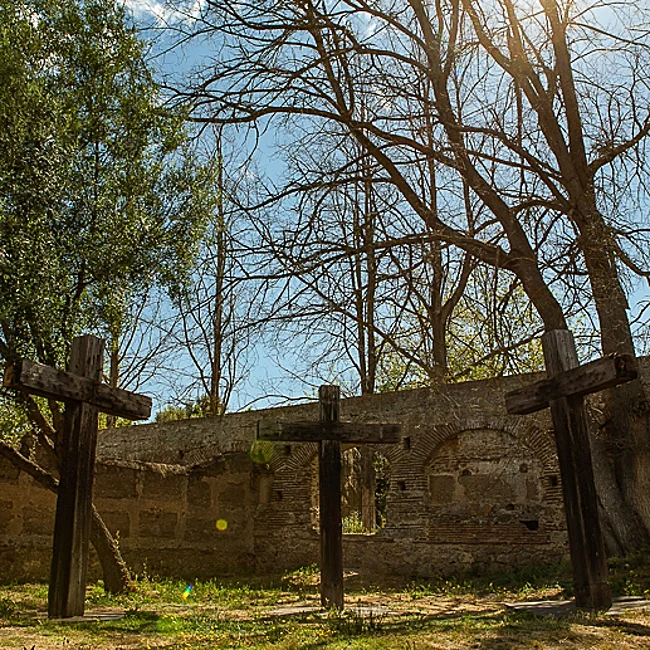
Precisely, the Japanese artist is represented at the Vostell Museum within the aforementioned collection. For example, with her work Painting to hammer a nail in/Cross version (2000), which consists of three large crosses facing a historic stone wall of Los Barruecos. It forms part of the museum’s garden and involves the visitor in the action, very Fluxus, of hammering a nail with a hammer. In addition, this center houses other conceptual works, sculptures, objects, installations and photographic records of the woman who was John Lennon’s partner.
Art in a Wool-Washing Mill
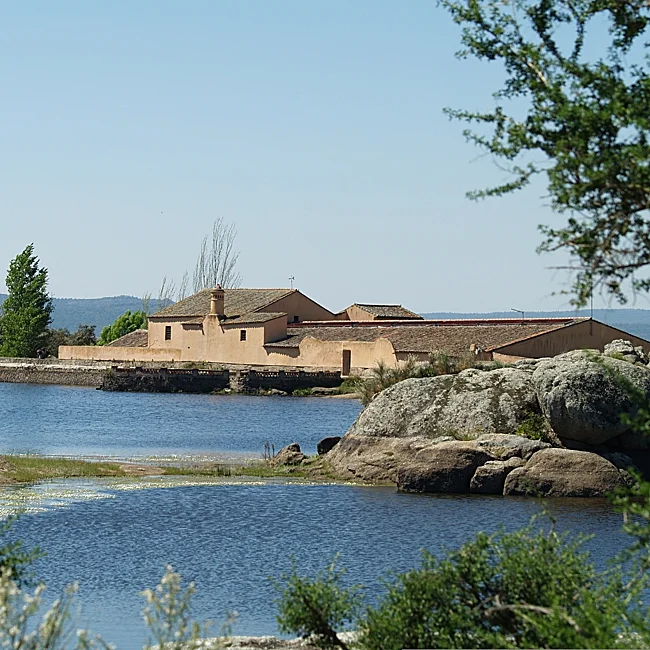
In total, three collections of contemporary art gather here. Beyond the latter, the Wolf and Mercedes Vostell Collection and the Collection of Conceptual Artists. From George Maciunas, the founder of the movement, to Nam June Paik, Dick Higgins or George Brecht. The exhibitions occupy a building that belonged to the old wool-washing washhouse, a very interesting example of industrial architecture linked to the livestock phenomenon of La Mesta. The point is that, alongside these avant-garde works, you can visit the Center for the Interpretation of the Livestock Trails and the History of the Wool-Washing Mill. The mix is unique. The artist wanted it to be a meeting place between contemporary art, life and nature.
Contemporary art lives side by side with an old wool-washing mill in Malpartida.
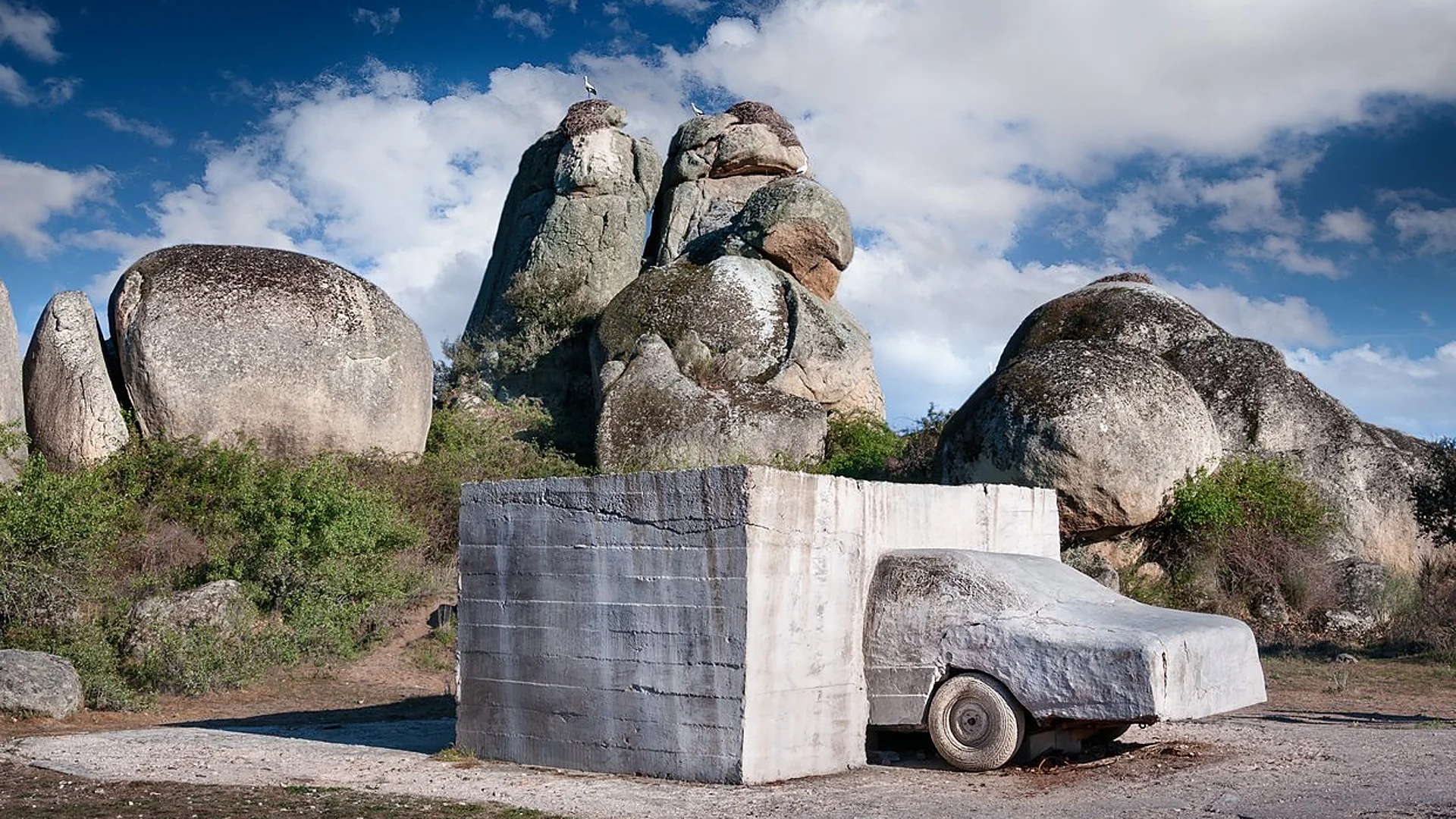
No hay que perderse las dos esculturas-ambientes a cielo abierto que conviven con las moles de granito. De un lado, V.O.A.E.X. Viaje de (H)ormigón por la Alta Extremadura (1976), obra fundacional, y El muerto tiene sed (1978), ambas de Vostell, quien pretendía impactar al espectador y abrir su pensamiento en todas las direcciones, abundando en las contradicciones del mundo contemporáneo. Para hacerlo eligió este lugar donde tan insospechadamente se funde lo natural con lo cultural.