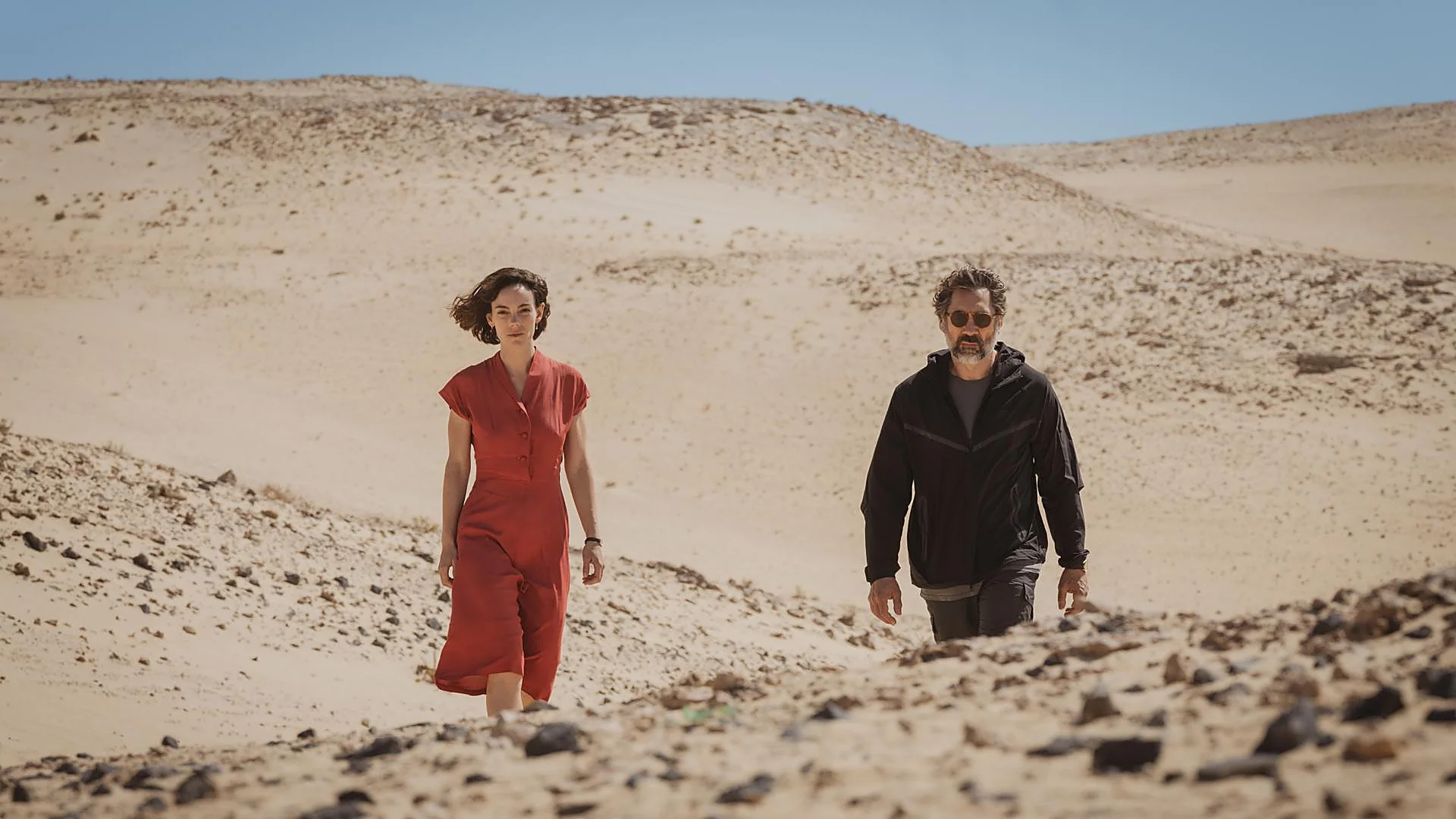
On September 26th Rodrigo Sorogoyen returns to cinema with The Beloved, his new project after The New Years, and he does so once again accompanied, a familiar collaboration, by Isabel Peña on the screenplay. The film stars Javier Bardem and Vicky Luengo, who play Esteban and Emilia, a father and a daughter who have been estranged for thirteen years and who meet again when their professional paths cross. He is a prestigious film director; she, an actress whose career is not exactly at its best moment. What begins as a professional reunion will end up bringing to the surface a family relationship marked by wounds, reproaches and everything that neither of them has known how to say for years.
With The Beloved, Sorogoyen returns to explore one of the terrains he knows best: human relationships and, above all, the tension that exists between what we feel and what we are capable of expressing. It is not a movie in which big events constantly occur, but a story that finds its strength in its characters and in the complexity of their bond. As had already happened in The New Years, the interest isn’t so much about asking what is going to happen as about observing what occurs between them as the story progresses. And there, Sorogoyen again proves that few directors can portray emotional conflicts with such precision.
The Sorogoyen and Peña tandem works again
Isabel Peña again proves to be a fundamental piece in that mechanism, achieving with Sorogoyen an exceptional screenplay which, in my view, is the best part of the film. Especially for its dialogues. For those so honest, so real conversations, in which the characters say things that we probably think many times but rarely know how to express. It is one of those films that makes you think, while you watch it, ‘I wish I could have conversations like this in real life.’
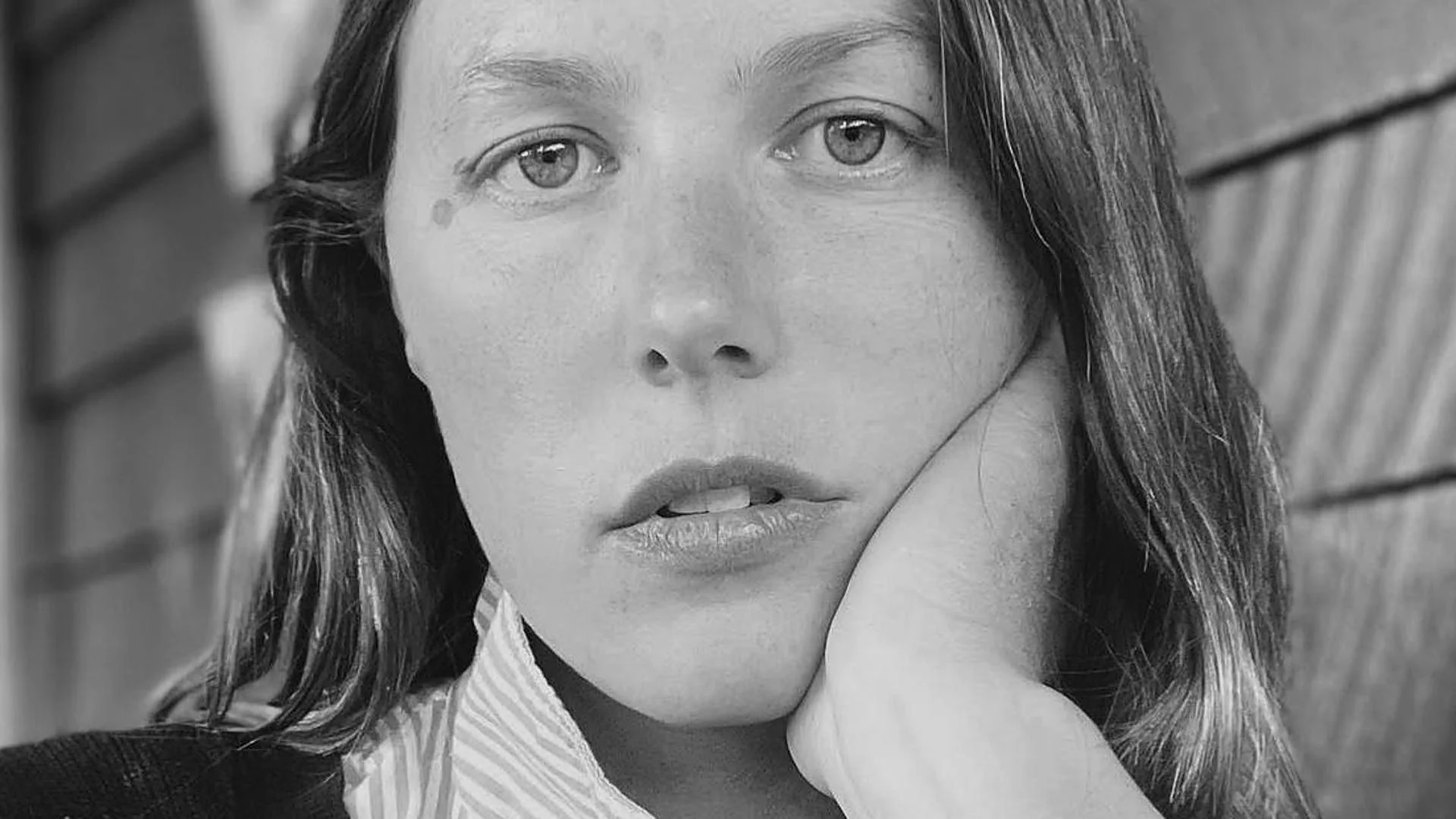
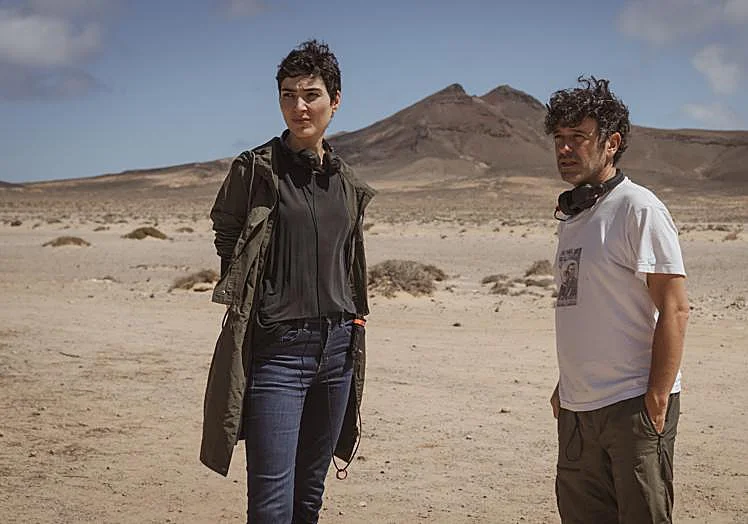
Rodrigo Sorogoyen e Isabel Peña
The relationship between Esteban and Emilia is built precisely from that restraint. There is no constant need to explain why they are the way they are nor to underline every wound. The viewer discovers little by little what has happened between them, and it isn’t always clear who is the bad guy or the good one. They are two very interesting characters because they are full of contradictions, and the screenplay knows how to maintain them without trying to resolve them in a simplistic way.
There is another element especially interesting in The Beloved: the film shows the making of a movie and does so with a level of detail that makes the viewer feel as if they are truly peeking into the workings of a set. Sorogoyen manages to recreate with great naturalness the dynamics that occur behind a movie: the relationship between actors, the conversations with the director, the decisions made during a workday, the tensions of the crew, or all the production work that happens while, in front of the camera, it may seem that only a scene is being shot. Everything is so well integrated that it never feels like the film wants to explain to us how a shoot operates; it simply lets us enter it.
And this adds another layer to the story. While Esteban tries to push forward his film and Emilia faces her work as an actress, they both must also confront what happens between them. The shoot ends up functioning almost as a mirror of their own relationship: there are things that are rehearsed, others that are improvised, and many that are attempted to be controlled, although in reality it is impossible to do so.
The film’s visual aspect
Sorogoyen also experiments with the image itself. The Beloved begins shot in digital, but as the conflict within that fictitious shoot grows, the image also transforms: 35 mm, 16 mm, 8 mm, color, black and white and different screen formats appear throughout the film to accompany the emotional change of the story. It is not a gratuitous aesthetic exercise, but a way to reinforce what is happening in front of the camera. The fact that, in addition, we are watching a shoot within the film makes this game even more interesting.
Cinematography is one of the film’s great strengths, especially for the attention it pays to looks. The camera lingers on them and it often helps us understand what is happening without the characters having to explain it. And the same goes for the sound, which knows when to leave room for absolute silence and when to let the music in to increase the emotion. The Beloved understands that conflict does not always need grand arguments: sometimes it lies in a pause, a look, or a gesture, and the film trusts the viewer to read them.
In short, The Beloved works because all its elements are at the service of the story: the screenplay, the performances, the cinematography and the sound. Sorogoyen again proves that he knows how to draw a lot from everyday conflicts and, above all, that he does not need to fill a film with events to keep you inside it. Here he achieves this through two very well-built characters and a relationship that feels credible precisely because it is full of contradictions.