There is a reason why novels shortlisted for the 2026 Booker Prize are so interesting: they are chosen by a jury that changes with each edition and, in 2025, even the formidable Sarah Jessica Parker, an avid reader, put herself forward. This year, the jury chair is Mary Beard and it includes Rebecca Liu, a Guardian critic, as attentive to the concerns that worry women as Beard herself. Helena de nada, the novel by Makenna Goodman (Colorado, 1985), sits in the orbit of both but, above all, in the orbit of another outstanding member of the jury: the singer of Pulp, Jarvis Cocker.
“I want to find an author who sees the world in a different way,” Cocker confessed about his reading goal of the 163 manuscripts submitted for the Booker Prize 2026. Goodman may be that author with a novel described as “wild.” Not because it tells anything uncivilized, but because of the absolute impossibility of controlling the reading experience. And, also, for an ending that certainly goes beyond. We’ll call it ‘a Kafkaesque twist’. And we can read it now thanks to the keen eye of the small publisher Mutatis Mutandi.
The plot of Helena de nada can be advanced, although like all good books, much of the action takes place in the sensitivity of the reader who reads and identifies and undoes, understanding and rejecting what is told, negotiating with what the characters represent. The very form of the work facilitates this: it is structured in six chapters that are read almost as monologues revolving around the four characters of the novel: Man, The Real Estate Agent, Helena and Woman. In total, 140 pages.
It has been described Helena de nada as a modern short story and that is how it feels, for it holds between its lines a teaching that does not come so much from the pen that writes, as in classical tales, but from us ourselves to give ourselves to. The protagonist, Man, is an academic and writer whose career revolves around the idealization of nature, regarded as a kind of paradise free from violence and antagonisms in which happiness waits. When his ideas are criticized and rejected by the feminist professors, he is challenged by his colleagues and falls into disgrace.
A Novel About the Cancellation of Love
One of those colleagues is, by the way, his own wife and former student. With the professional disagreement reproduced inside the couple, where also misalignments emerge that end in separation. Here, the connection between femininity and nature reaches philosophical status. In another strand of the plot we meet The Real Estate Agent and Helena: the former is the sales agent of a house in the middle of nature that Man intends to buy. Helena is its owner, a strange elderly woman who seems to have lived exactly as Man dreams and who, due to her age, resides in a retirement home.
As in fairy tales, the fine line that separates rational from irrational is crossed without asking permission of the authorities, hence some consider the novel “strange.” Recommended by writers who like to push boundaries such as Rachel Cusk, Sheila Heti or Jenny Offill, it is at once a ghost story in Dickensian style and an update of Kafka’s metamorphosis, under the umbrella of the culture wars around gender. And the desperate search for a love that understands no social, biological or cultural markers and affects the fate of humanity.
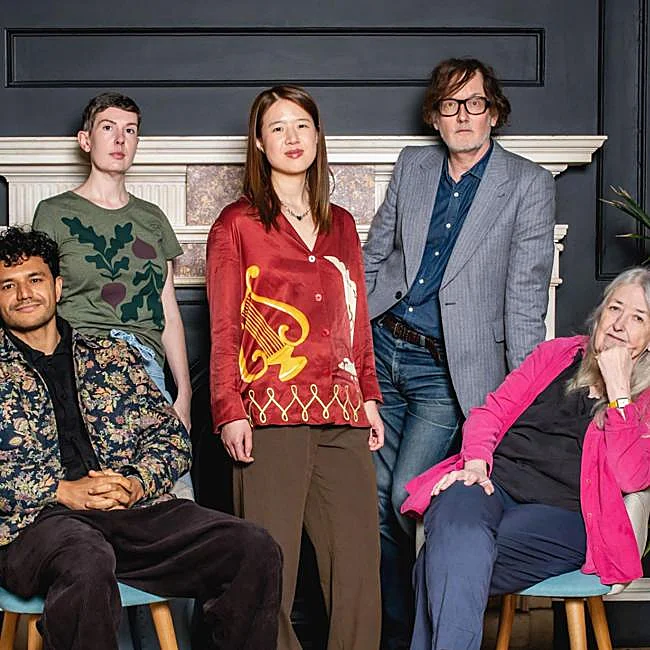
The Booker Prize 2026 jury: from left to right, Patricia Lockwood, novelist and poet; Rebecca Liu, Guardian critic; Jarvis Cocker, singer of The Pulp. Seated, Raymond Antrobus, poet and educator, and Mary Beard, Professor of Classics at the University of Cambridge.
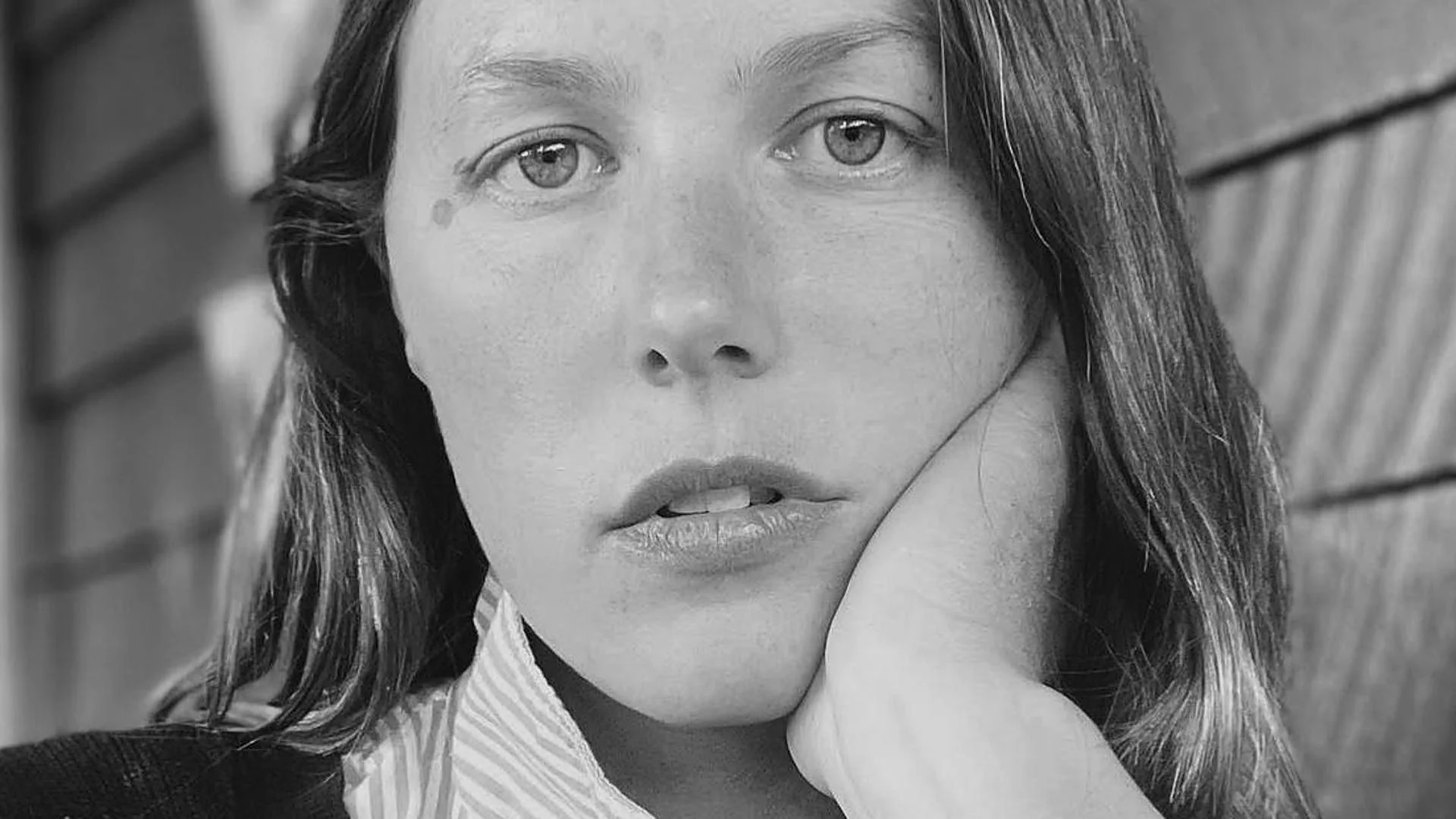
Although each reader will have to negotiate for herself what she feels and thinks about the fate of the characters, some of Makenna Goodman’s responses regarding her writing and Helena de nada can be at least suggestive. Although they do not resolve any of the dilemmas that her novel poses, whose ambiguity allows it to reach us unreservedly. She responds to us a few days after appearing on the longlist for the Booker Prize: “I’m still processing it!”, she writes. “It is a huge honor.”
WOMAN TODAY: How do you situate yourself in the old debate about the possibility of feminine, feminist, or women’s writing?
MAKENNA GOODMAN: I wonder why there isn’t more talk about works that fall within a ‘masculinist’ literature. Undoubtedly, being a woman has great value, and I am proud to be one. But is it necessary to express everything in terms of gender? I think it is a way of continuing to pigeonhole women. Of course, the terms are useful, but feminist literature takes for granted that literature, in itself, does not deal with women nor is it aimed at them.
How does it relate to the male canon of the literary tradition in which it is inscribed?
I am deeply interested in the psyche of all people and in discovering the ways we cross paths in the experience of being human. I write to make sense of the world and of my place in it. Of course, this is a world that has been dominated by men. But there are so many levels of domination that go far beyond gender, and literature is an important space to talk about these issues.
The cover of Helena de nada is by Julio Fuentes and the translation by Cecilio Santiago Gómez.
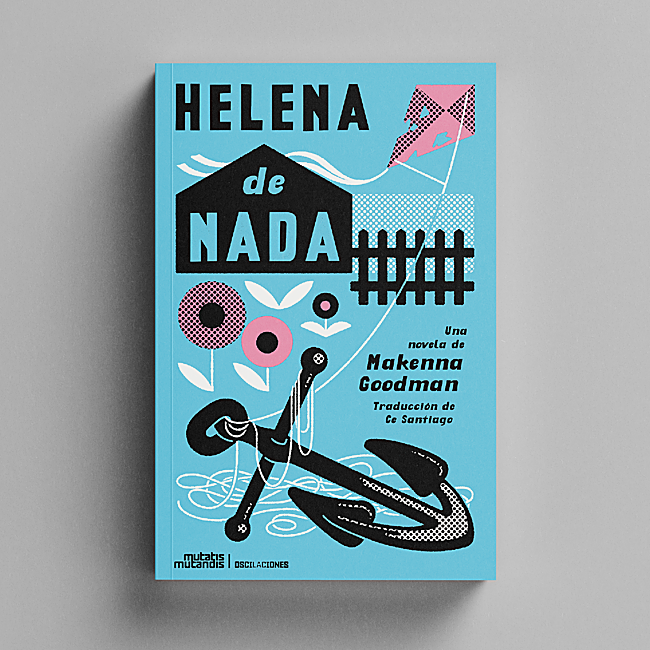
The identification between woman and nature is ancient and deep. Did it influence you during the writing of the novel?
I am inspired by women who write about the natural world and who live in close relationship with it. Tove Jansson, the Finnish writer, is a wonderful example of a woman who lived for many years writing about her relationship with an island and about what it taught her about love, being alive, time and the sea. She also wrote for children, in a wonderfully philosophical way. There are many examples of works that place women at the center of nature, and I keep discovering them.
Would you say that your male character represents a case of what is commonly called fragile masculinity in the Academy?
It is very recognizable, and not only in the academic sphere. And yet, it is much more than a simple stereotype. It is far too easy to reduce people to the sum of their faults. No doubt, the Man in my book has serious limitations. But is he unworthy of love? Is he a lost cause? It is easy to love someone who is easy to love. But how do we open our hearts and our imaginations to those who seem so unworthy of it? It feels almost like a religious question, but I think it is a very pressing one. Justice, but also forgiveness. The inherent contradictions of both impulses.
What interpretation of your novel has surprised you the most?
Some time ago I was at an event and everyone wanted to talk about the ending. I asked the attendees how many had read the book and half of them raised their hands. “What do you think happened?” I asked. Four of them offered their interpretations, each different. And so different… but all possible. All true. It is exciting to think that a reader can overlay their own consciousness onto the text and decide for themselves the fate of the character. Some people may find it despairing, but I find it exciting. And, in any case, many truths can coexist at once: seeking a single answer is, in itself, a trap.