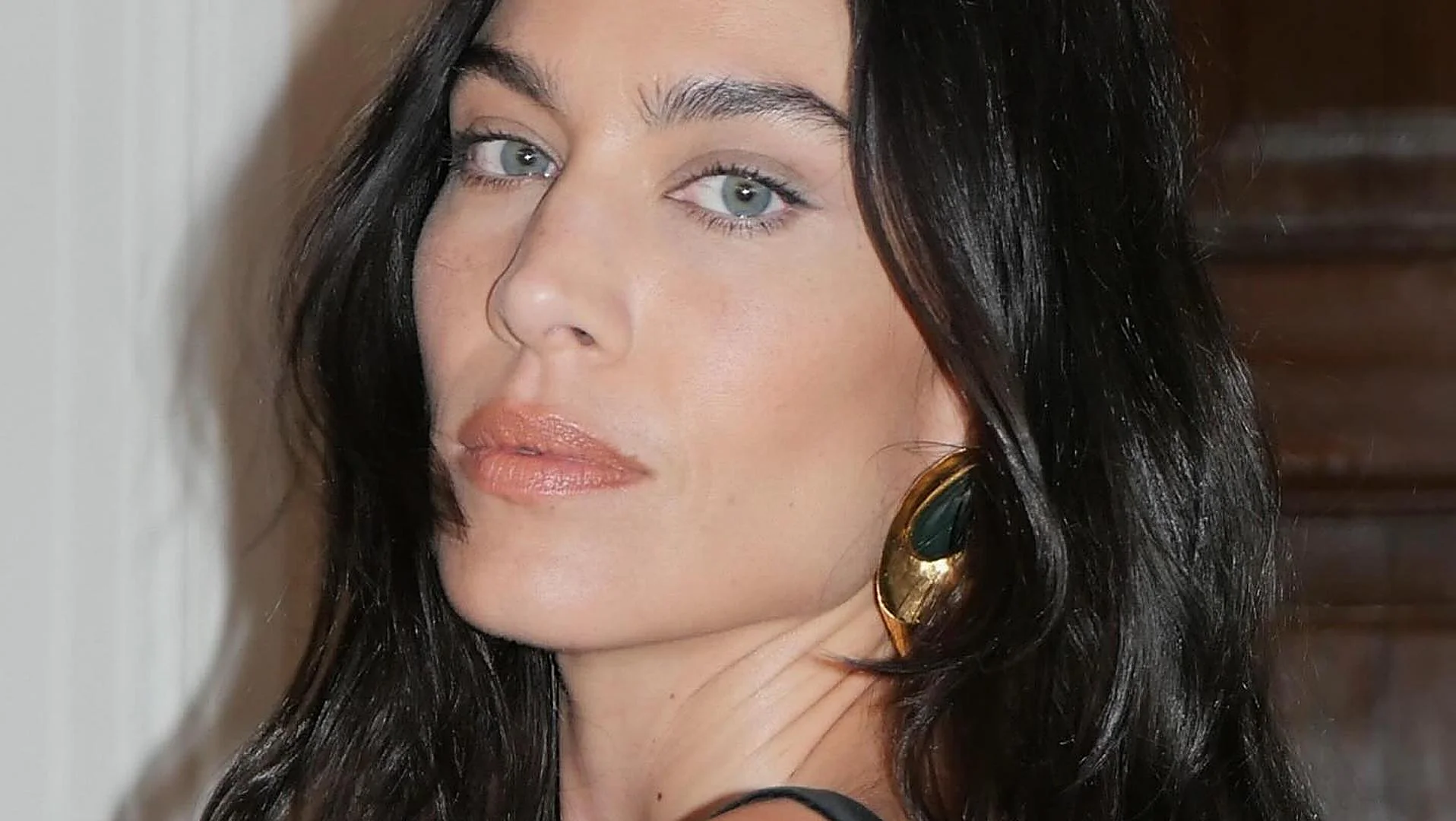
Facial rejuvenation with one’s own fat, also known as lipofilling, is one of the most cutting-edge and in-demand techniques in aesthetic medicine. An approach in which fat volumes are replenished, one of the main issues with the onset of menopause, which allows us to restore the appearance of our face with the patient’s own tissue.
It is a procedure that is very versatile and can be performed in different areas of the face and body, also allowing for skin regeneration. As with any cosmetic procedure, guidance from a professional is essential, since the evaluation and personalized analysis will determine natural results. Dr. Elena Jiménez, plastic and aesthetic surgeon and medical director of Eleca Clinic, explains the keys to this procedure.
What is lipofilling
Transfer of one’s own fat is “the technique that uses your own fat to rejuvenate and reshape,” says Dr. Jiménez, who also considers it a procedure “tremendously versatile that can be employed in many areas”. The professional explains that “it consists of extracting fat from a determined area, which is usually an excess fat point or one we want to contour in our body,” and to which a “processing” is applied, which does not have to be centrifugation. In the procedure there are “decantation methods, which can be a kind of mesh in which it is purified or a normal decantation without seeking any purification.”
Once we have extracted this fat, Jiménez details that it can be of three types. First, there is normal fat, which “will be reintroduced via very fine cannulas.” We would also have a second type which is SNIF fat, “a fat that we have already processed because we pass it through a special transfer device, which has holes with which a finer fat can be obtained that can be placed on top of the normal fat.” The last one would be known as Nanofat, in which “a processing is performed that has passed through a very small filter and with which a liquid is obtained that can be injected in the form of mesotherapy.”
For Dr. Jiménez, it is crucial to emphasize that “the fatty tissue will act both as volume and as a regenerating agent for all the tissues surrounding the point where that autologous fat injection has been performed.” The reason is that “it is loaded with stem cells and these will transform into the cells that are needed.” Among the main sites of application, Jiménez mentions we find “the face, the hands, the buttocks area and the breasts,” performed in these last two to seek “volume,” while on the face the goal is “a regenerative surgery at the skin level” in which “texture and luminosity are improved and, in some cases, fine wrinkles are treated.”
Recommendations before the procedure
Visiting a specialist who understands the patient’s needs is key to the success of the procedure. Dr. Jiménez recommends that “it be a plastic surgery specialist who manages fat transfer from the start, who understands and works with each fat section.” The professional mentions that a study is performed in thirds, “specifically in certain areas where we know there is a deep fat volume” and in which “the fat is already more intermediate, it is a fat that we need for mimicry and that should not be overloaded.” She also recommends, for more natural results, that the patient show “photos from when they were between 20 and 30 years old.”
Another point Jiménez warns about is smoking. She discourages it “before and after the procedure because it reduces the number of fat cells that will survive.” It also “increases local bleeding from where it is taken and where it is injected.” She also considers important “not exposing to the sun, following a proper diet and maintaining a skin care routine appropriate for the area.”
Recovery time and results
The lipofilling or autologous fat transfer procedure involves a recovery of between 7 and 10 days. You will encounter swelling and, in some cases, a hematoma may appear. The plastic and aesthetic surgeon recommends “sun protection” and the use of creams indicated to avoid “hyperpigmentations” with actives such as “kojic acid, ferulic acid and even retinoids.” It is also important not to massage the area where the graft has been placed because it can displace or extrude at the site where the cannula has been placed. The doctor also mentions that we should not “apply direct heat because it increases inflammation and can reduce the number of cells that survive the graft.”
As for the results, you will see them “between the third and fourth week.” One of the major advantages of fat transfer is that you add volume and regenerate, so it is very versatile in the areas where it can be applied and because it acts precisely on two of the key points of aging: loss of volume and loss of skin quality.
Is it necessary to perform it again? For Jiménez, “it depends a lot on the moment at which the patient’s evolution stands.” She explains that “if we treat patients over 50 years old with some hormonal changes, in this case it would be every two or three years.” For younger patients, she recommends “wait more than five years for a second treatment.”