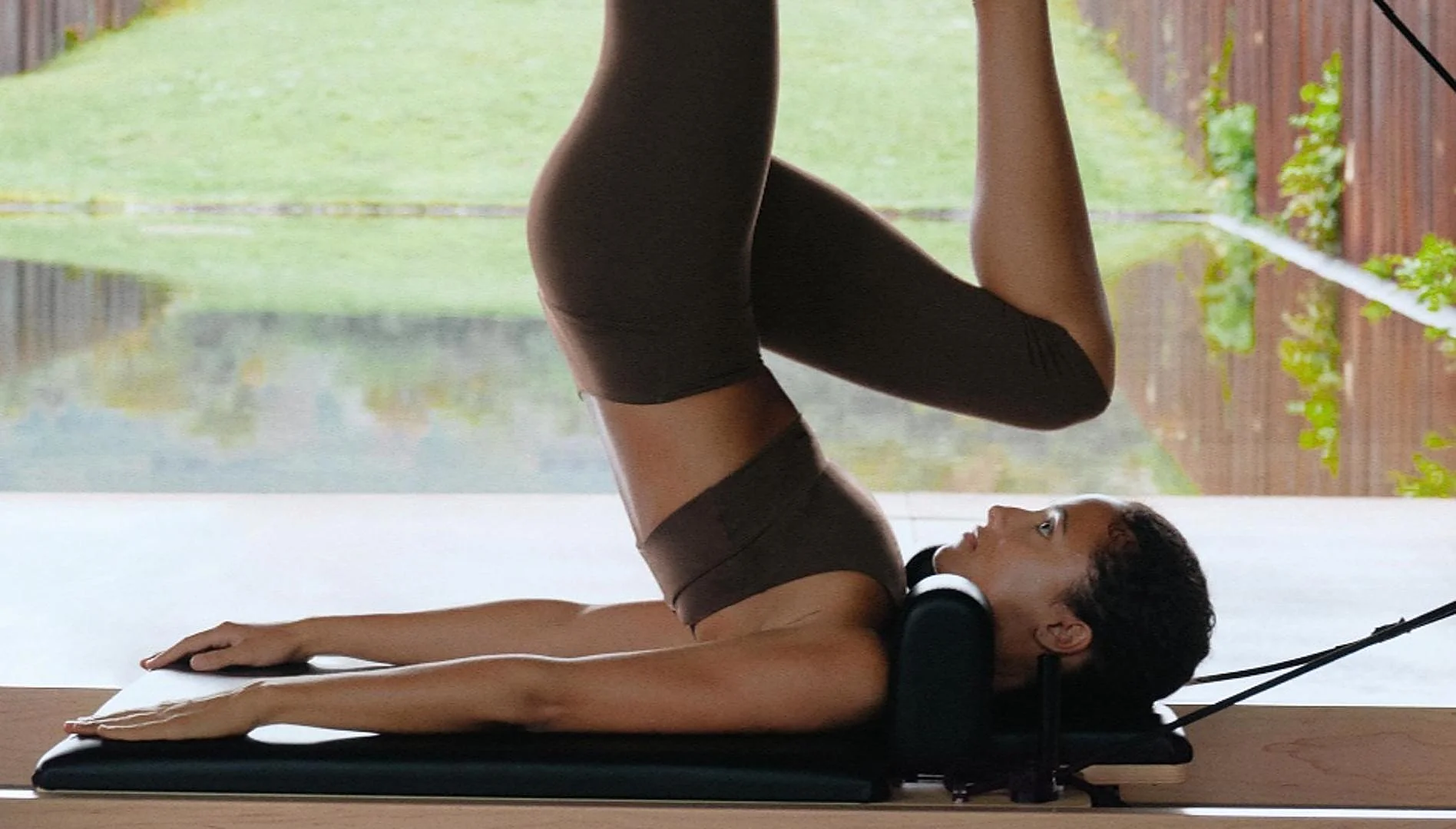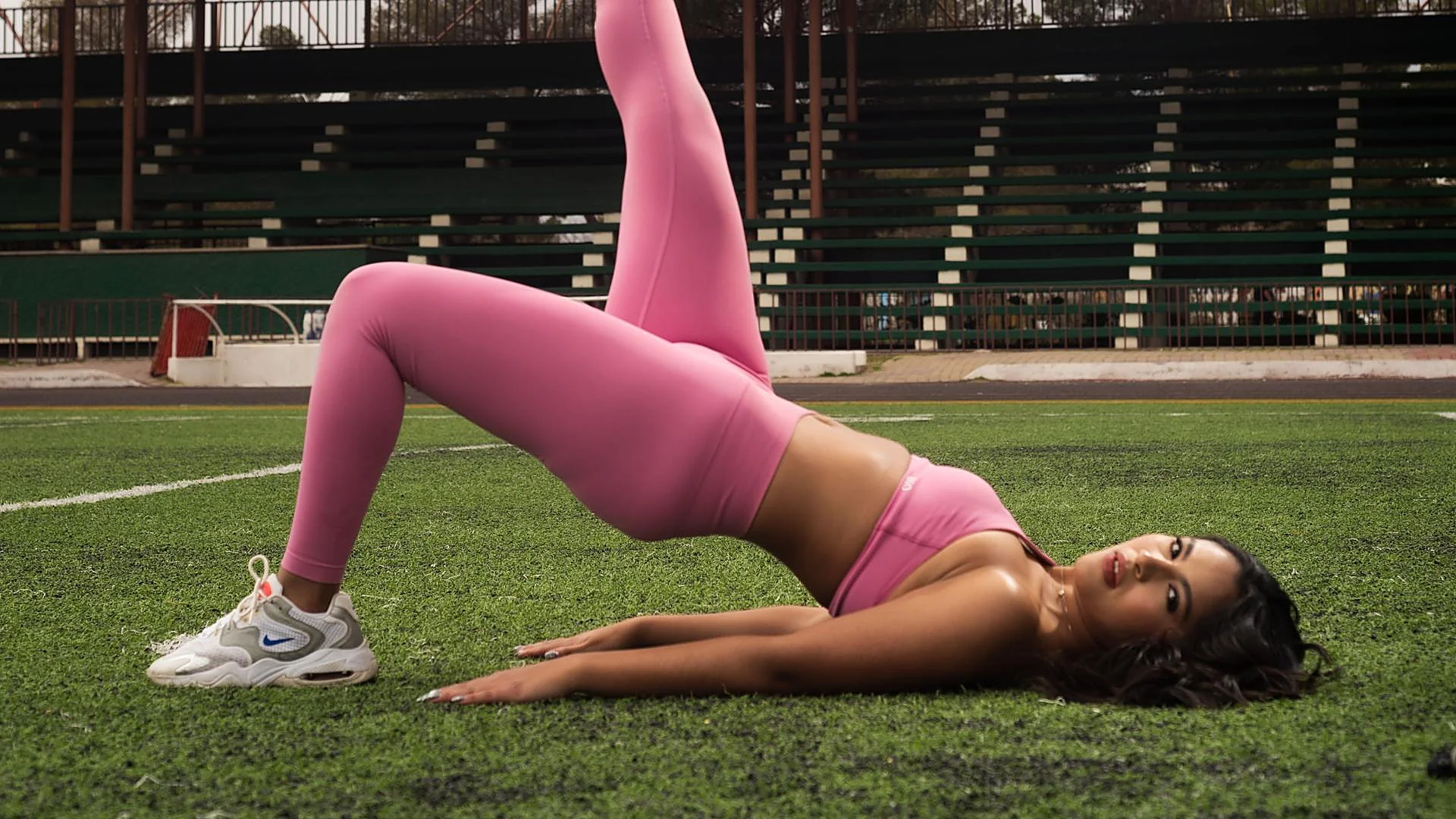
Many women perform the hip thrust and feel it more in the back than in the glutes. It’s not that the exercise is bad: it’s that the technique needs an adjustment. Sheila Ruiz, trainer at David Lloyd Clubs, explains it from the outset: “The hip thrust reproduces one of the main functions of the gluteus maximus, which is to extend the hip, that is, to move the hip forward to align the body.” When the movement comes from the hip and not from the back, the gluteus maximus is the main protagonist. When it doesn’t, the back starts doing work it shouldn’t.
In addition to the gluteus maximus, the hamstrings, other gluteal muscles and the abdomen as a stabilizer are involved. “The key is for the movement to come from the hip,” Ruiz notes. Rising by pushing with the feet, squeezing the glutes at the top, and maintaining a stable posture are the three gestures that determine whether the exercise works. If, on the other hand, you try to rise too much and end up arching the lumbar spine, the work is moved to a place where it shouldn’t be. More height does not mean more glute: better a shorter, controlled movement than a wide one done with the back.
Why technique matters more after 45
From around 45, technique becomes even more important. Over the years, especially if strength training isn’t performed, you can lose muscle mass and strength. It’s also common to have a stiffer hip from spending long hours sitting, or for the glute to be less active. “When the glute isn’t doing its job well, the body looks for help in other areas, and one of the most common is the lower back,” Ruiz warns. The goal is not to do many repetitions quickly, but to learn to move well: control the pelvis, activate the abdomen and ensure that the glute does the pushing.
Three positional details dramatically change the feel of the exercise. The pelvis: when you reach the top you should think about tucking in the ribs and squeezing the glute, rather than pushing the belly upward. The feet: fully supported on the floor, hip-width apart, with the knees forming approximately a 90-degree angle at the top. And the chin: slightly tucked, as if you were holding a small ball between the chin and chest. “If the feet are too close, you may notice the thigh more. If they’re too far apart, the calf and the posterior leg muscles may work more,” Ruiz explains.
The mistakes that transfer the effort to the back
The most common mistakes are arching the back as you rise, using momentum to complete the movement, not squeezing the glute at the end, pushing only with the tip of the toes, and trying to rise higher while losing your posture. They all share one thing in common: prioritizing the amplitude of the movement over control. “Better a shorter, controlled movement than a wide one done with the back,” Ruiz insists. The best sign that the technique is correct is finishing the set thinking the glute was worked, not that the back hurts.
Sheila Ruiz, trainer at David Lloyd Clubs.

The ideal progression is to go step by step, without rushing to add weight. First master the movement with bodyweight alone. Then add difficulty by pausing at the top and squeezing the glute for a few seconds. Later, try single-leg variations to increase the workload. And gradually incorporate a resistance band, a dumbbell or a kettlebell. “Weight is not the enemy; the problem is often adding it before having good movement control,” Ruiz says.
When bodyweight is no longer enough
In the beginning, the hip thrust with body weight can be more than enough. A person who is starting or who hasn’t trained for a while may notice significant improvements: more strength, more control and better glute activation. But the body adapts. If after months you do exactly the same thing, with the same repetitions and the same level of difficulty, you reach a point where you only maintain what you have achieved.
To keep improving, you need to give the muscle new challenges: add weight, perform the movement more slowly, increase the difficulty or use more demanding variants. “After 45, training with resistance shouldn’t be seen as dangerous, but as a tool to maintain strength, protect the joints and preserve independence for more years,” summarizes Ruiz. Strength training at this age is not optional: it is necessary.
What matters is not how much weight you move, but moving it well. The hip thrust is one of the most complete exercises for the glute precisely because, when done with good technique, it directly activates the largest and strongest muscle in that area. After 45, learning to do it well is an investment that shows in strength, in posture and in how the body responds in day-to-day life.