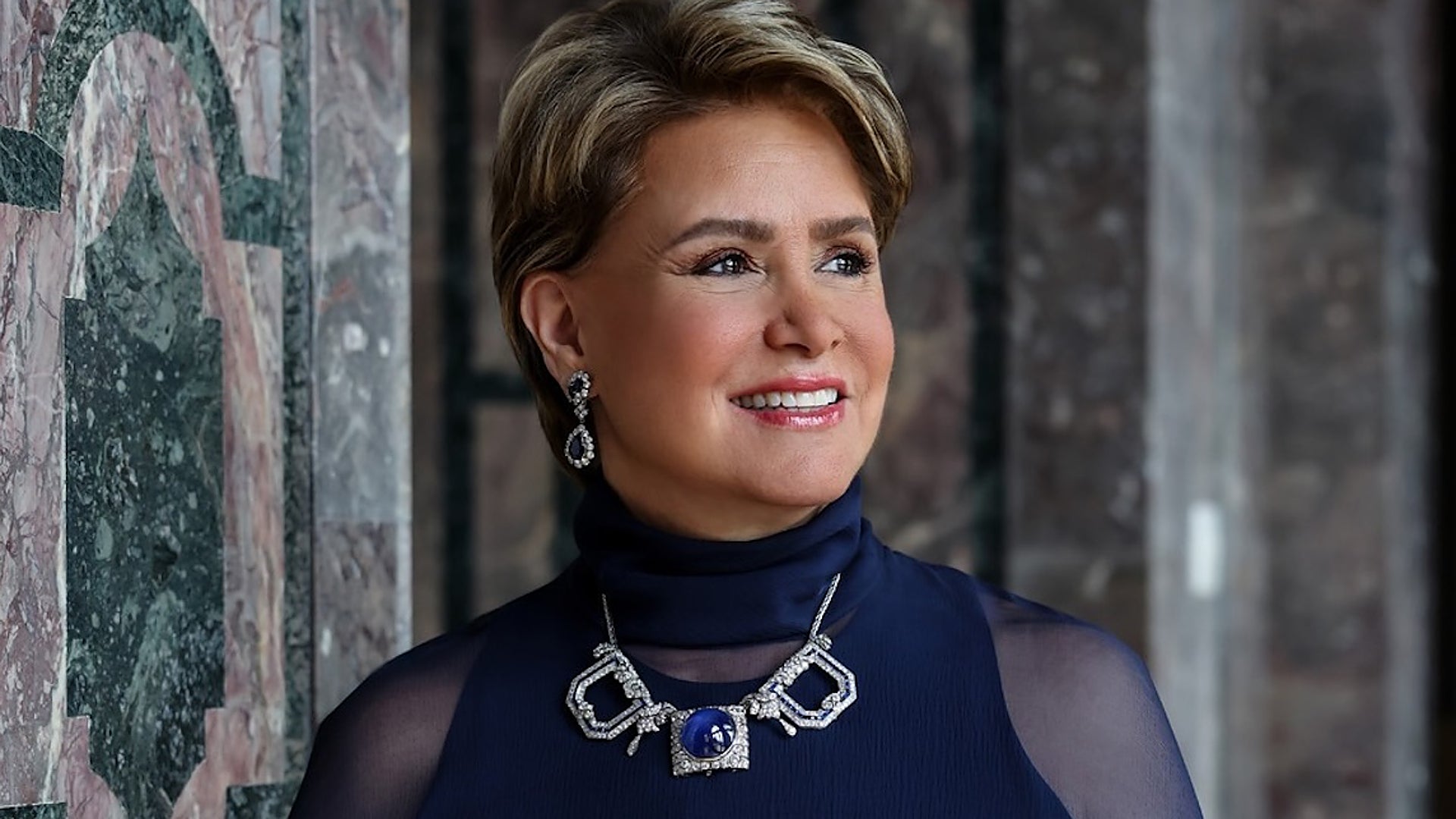
María Teresa Mestre turns 70 on her first birthday away from the throne in the last five decades. It was last October when the historic succession took place in the Grand Duchy of Luxembourg. Grand Dukes Henri and Maria Teresa gave way to their son Guillaume and his wife, Stéphanie de Lannoy. Since then, the former holders of the crown have stepped aside, with no institutional responsibilities to attend to.
For the Cuban-born royal, this retirement represents stepping away from a front line of power in Luxembourg that has brought her no small amount of trouble. The 25 years of Maria Teresa on the throne were marked by the Waringo scandal, the auditor’s report published in 2019 about the court and which she described as «painful» in a recent interview. The conclusions of that report stated that her management was chaotic and authoritarian and that it led to more than fifty departures of staff between 2014 and 2019.
Far from that sphere of influence, the first consequences for the former Grand Duchess Maria Teresa have been her near disappearance from the Grand Duchy’s social networks. Also her anticipated and imminent exit from the lists of royals who spend the most money on clothes, which she topped year after year. And her move from the official residence at Berg Castle to a more modest residence at another castle, Fischbach Castle.
In her sparse conversations with the media in recent months, Maria Teresa has stated that she dreams of road trips across Europe. Her husband, for his part, has as a grand plan to ride motorcycles through the Himalayas, as well as more modest goals such as visiting their children and spending more time with their grandchildren. Unfortunately, the Cuban royal has not yet been able to enjoy those getaways as she underwent a scheduled surgery a few weeks ago that forced her to use crutches.
Maria Teresa of Luxembourg: New Plans and a New Team
Maria Teresa Mestre was born in 1956 in Havana, Cuba, into a family of Spanish ancestry. After the revolution, her family fled to New York before settling in Geneva, where she obtained Swiss citizenship and later studied Political Science at the University of Geneva. There she met Prince Henri of Luxembourg and, despite some resistance from the grand ducal family, they married in 1981. The marriage has five children, who have made the former grand duchess the grandmother of eight grandchildren.
With no official duties to attend to, at 70 years old she focuses on charitable and humanitarian work to which she has devoted a large part of her life. Her work has focused on children, education, and women’s rights. She has also been a UNESCO Goodwill Ambassador since 1997. As she herself has stated, the abdication of her husband will not dissuade her from her commitments. “I will continue to supervise social projects, particularly those related to single-parent families, especially women who are alone and facing very difficult circumstances,” she said in an interview with RTL.
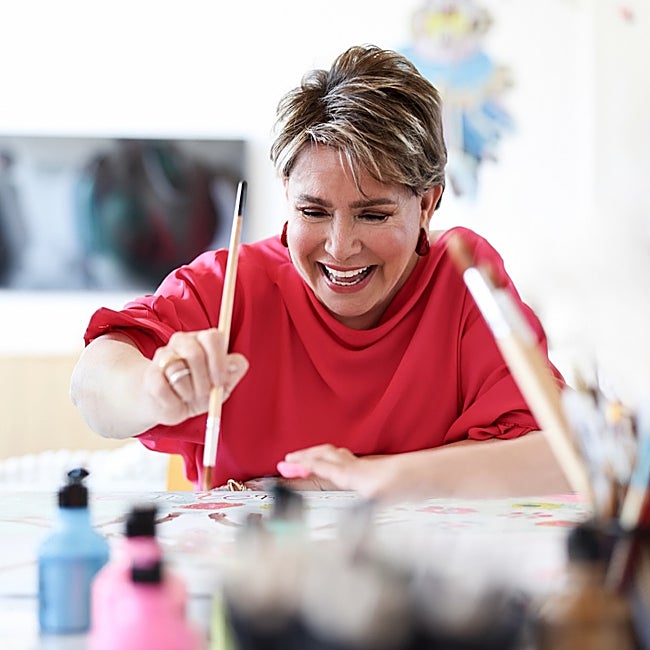
María Teresa during a visit to a workshop.
In this new vital chapter, Maria Teresa refuses to live a conventional retirement. That is why last month she published an advertisement seeking a new assistant for her and her husband. The duties of this new employee for the former grand dukes will include managing and updating the couple’s schedules, planning and coordinating appointments both in the country and abroad, and organizing national and international trips.
A devoted music lover, Maria Teresa has found time to appear on Luxembourg’s public television and speak about the songs that have marked her life. During the interview she spoke of her Cuban‑rhythmed childhood and highlighted a track by the Spanish group Mecano that she especially likes: “Por la cara.” To her, this song, “very Spanish, soft, energetic, optimistic, is everything I try to be.”
The Move of Maria Teresa and Henri
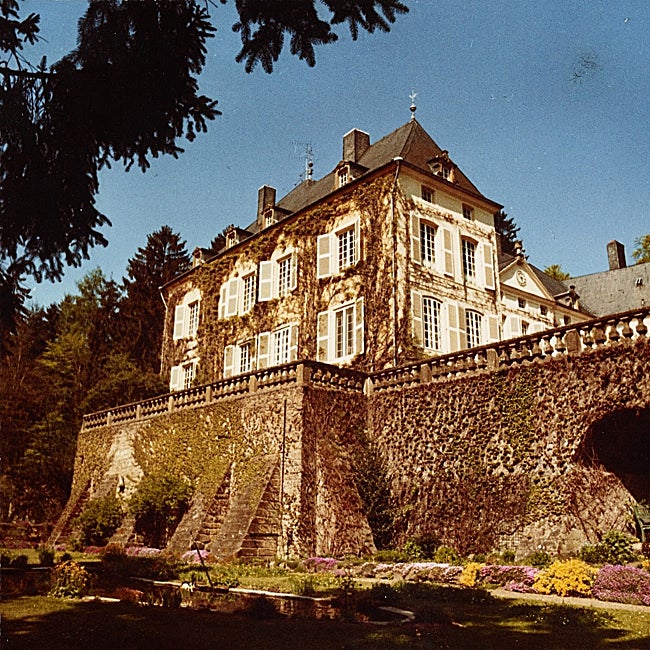
The former Grand Dukes of Luxembourg now live in their new residence at Fischbach Castle. After leaving Berg Castle, their former home which is now occupied by Guillaume and Stéphanie, they have returned to the house where their five children were born. It is a smaller, more modest estate that is not owned by the State, although the State handles maintenance and renovation work. The Fischbach Castle dates back to the 11th century and was initially used as a summer residence. During World War II it was requisitioned by the Nazi regime to establish a foundation for artists. And after the war ended it passed definitively into the hands of the Luxembourg grand ducal family.
The Fischbach Castle.
As the former grand duke told Paris Match, “we are calm and both happy with this change of life.” He added: “Although it is a very privileged life, it is also a kind of golden cage in which one sometimes suffers from the lack of freedom.” Regarding this move, in a conversation with Laurence Debray, Maria Teresa admitted that “I am an exile, but I feel at home anywhere. I give the place a small makeover, I take out the family furniture that had been stored and I feel comfortable.”
What will not change for Henri and Maria Teresa will be their summer holidays. Every year they unwind in Bormes-les-Mimosas, a vast estate in the French Provence full of memories for the royals. In fact, the emeritus grand duke assures that he has not missed a single summer there since he was born in 1955. In this house they have shared relaxing moments with other royals such as Haakon and Mette-Marit of Norway. And they used to share at least one dinner a year with the Macrons, where politics was never discussed.