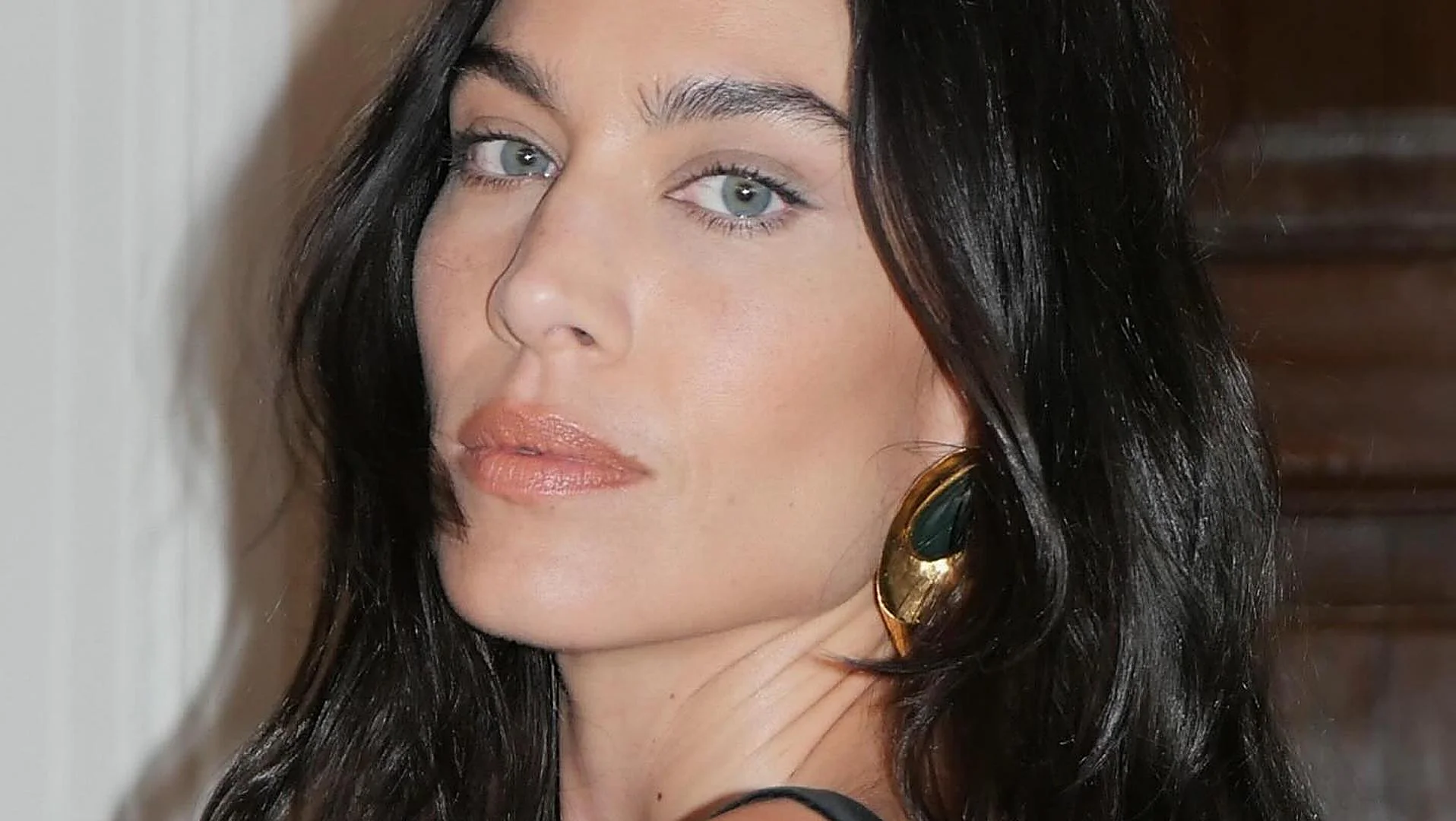
Cheek sagging is one of the most evident signs of facial aging and one of the concerns for those seeking to maintain a fresh and harmonious appearance. Over time, the loss of collagen, elastin, and subcutaneous fat causes the skin to lose its natural support, leading to a downward drift of tissues toward the lower part of the face. This process not only alters the facial contour, but also accentuates grooves such as the nasolabial folds or marionette lines, producing a tired or sad look even when one is not.
Therefore, beyond the specific care we can perform at home with a skincare routine, there are procedures within aesthetic medicine that help to improve the cheek area. Procedures that allow recovery of the lost volume and restore firmness, as well as definition to the middle third of the face. What are the keys? They are explained by Dr. Elena Jiménez, plastic and aesthetic surgeon and medical director of Eleca Clinic, and by Dr. Morales Raya, dermatologist and founder of the clinic bearing his name, as well as the Raya Cosmética skincare line.
Sagging of the Cheeks
Why does cheek sagging occur with aging? Dr. Morales Raya explains that it is “a complex phenomenon in which several layers of the face are involved. With age, the skin loses collagen and elastin, the fibers that give it firmness and elasticity. The dermis becomes thinner and less resistant to gravity.” The dermatologist also notes that “the progressive resorption of bone in key areas such as the cheekbone and the jawline” contributes: structures that act as the natural scaffolding of the face and, when weakened, fail to support the soft tissues.
Dr. Elena Jiménez summarizes it by saying that the sagging of the cheek is not the origin of gravity; it is the origin of a change in three structures: bone, deep fat pads, and the quality of the skin.
For Morales Raya, another key aspect of aging in the area is that “the fat compartments, which in youth are well positioned and confer roundness to the cheeks, tend to move downward due to laxity of the retaining ligaments.” For these reasons, “the skin loses hyaluronic acid and water, which reduces turgor.” The dermatologist concludes that “all these factors combine and cause the cheeks to lose their firmness and the appearance of a tired face, with more pronounced grooves and a less well-defined facial contour.”
Pre-menopause Steps
This procedure begins even before menopause arrives. Dr. Elena Jiménez notes that “from age 25, we will be losing fat in the deep fat pads, which means we will not only lose local volume, but the lever axis of the insertion of each muscle will shorten, and it will cause what sits above the muscle, that superficial fat pad, to descend.” All of this, she adds, “will be accompanied by a loss of vitality, texture, and luminosity of the skin, giving it an effect similar to when you inflate a balloon and then it deflates.”
The dermatologist believes that “although aging is inevitable, we can delay and minimize its signs.” Daily photoprotection is the most effective measure, since ultraviolet radiation accelerates collagen degradation. It would be complemented by “an appropriate cosmetic routine” with retinoids, antioxidants, niacinamide, or peptides. Another active to consider, in Morales Raya’s words, is “topical hyaluronic acid that helps preserve hydration and provide support.”
Regarding treatments, the expert mentions those that “realistically stimulate collagen synthesis and improve skin quality.” Some of them would be “fractional lasers and the Picolo Premium picosecond laser,” “radiofrequency with microneedles such as Potenza,” or “unipolar radiofrequency, such as Accent Prime.” Lastly, the doctor elaborates “Ultherapy, which uses microfocused ultrasound sounds guided by ultrasound to act on the SMAS, the superficial muscular layer that is traditionally treated in facelift surgery.”
Dr. Jiménez, for her part, considers intriguing the use of “collagen-level stimulators to maintain good skin quality” that do not “have to be based on calcium hydroxyapatite, but on other compounds such as certain hyaluronic acids.” Another recommendation from the surgeon would be “skin boosters.” As menopause approaches, the professional regards “hormone replacement therapy, very specifically to prevent bone loss, not only in the limbs or spine but also in other areas.”
Treatments to Correct It in Maturity
Beyond prevention, genetics plays an important role. What to do in maturity to correct the cheeks? Dr. Elena Jiménez considers “structural hyaluronic acid to replace the loss of volume in the deep fat pads and bone volume.” In surgical terms, the professional recommends “autologous fat transfer, which not only provides volume, but is the best regenerative medicine at the skin level we can have and the replenishment of tissues through lifting, whether a mini facelift with very rapid recoveries in less than a week, using the techniques currently used, or the treatment that includes face and neck in a deep-plane facelift.” The great advantage is that these are treatments “with results that will endure over time.”
Dermatologist Carlos Morales Raya mentions other treatments such as “Ultherapy Prime, which is one of the most advanced techniques for tightening deep tissues,” and, “it allows more precise treatment of the SMAS, achieving a lifting effect without surgery and with durable results.”
The professional adds “radiofrequency with microneedles like Potenza, very effective in moderate sagging and in the loss of dermal density, as it induces a strong collagen-stimulating effect and markedly improves skin firmness. Unipolar radiofrequency such as Accent Prime is especially useful in diffuse sagging of cheeks and jawline, providing global and homogeneous tightening.” Finally, he recommends “fractional lasers” because “they act on dermal collagen, being an indispensable complement in rejuvenation protocols.”
Home Care
Post-procedure care will also make a difference in the results. For Dr. Morales Raya, it is “the indispensable complement to medical treatments. A well-designed cosmetic routine can make the difference in maintaining the results.” Therefore, the dermatologist recommends “in the morning antioxidants such as vitamin C or niacinamide, followed by a broad-spectrum sunscreen. At night, retinoids are the reference active ingredient to stimulate collagen, always accompanied by moisturizers with hyaluronic acid, ceramides or peptides that reinforce the skin barrier.” He also warns that “no medical treatment can replace daily at-home care.”
She adds that it is very important “daily photoprotection applied correctly with the renewals that correspond. Not only the morning cream, but there are powders with sunscreen makeup.” She also recommends following “a balanced diet with antioxidants, proteins, and vitamins, not smoking, and physical exercise that is not extreme or exhausting, which should be combined with other types of activities such as meditation, yoga, or moments of relaxation.”