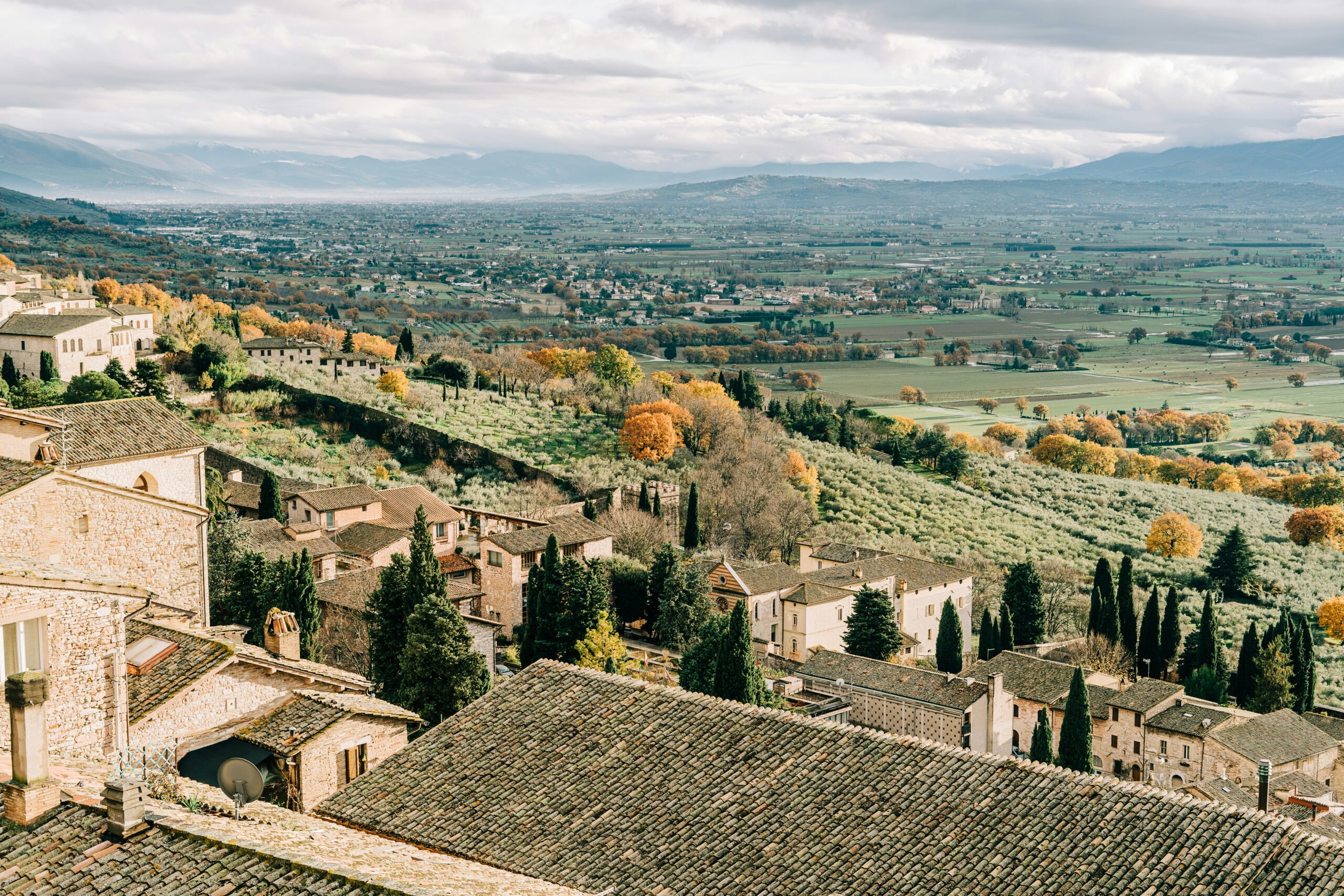
Perugia has a curious talent for ending up off the beaten track on first trips to Italy. Florence is about two hours away and Rome a little more, so the capital of Umbria often ends up as a pass-through zone. It deserves a different treatment.
Its historic center sits atop a hill and preserves the density of a city that has been built on itself for more than two thousand years. There is the Etruscan Arch, built in the 3rd century BC; the Palazzo dei Priori, begun in medieval times; the Fontana Maggiore, a masterpiece of the 13th century; and the Rocca Paolina, the fortress that Pope Paul III ordered to be built in the 16th on part of the previous city. Today it is traversed by escalators.
The Galleria Nazionale dell’Umbria occupies part of the Palazzo dei Priori and explains another matter that appears again and again during the journey: painting. Perugino was born near here and was Raphael’s teacher; Pinturicchio was from Perugia; Piero della Francesca is also represented in the collection. The Renaissance that is usually told from Florence takes on other names when viewed from this side of the Apennines.
Assisi is about thirty kilometers away. The figure of Saint Francis has shaped the city for eight centuries and in 2026 even more, when the 800th anniversary of his death is celebrated. Even leaving aside the religious dimension, the Basilica of Saint Francis justifies the visit for its frescoes.