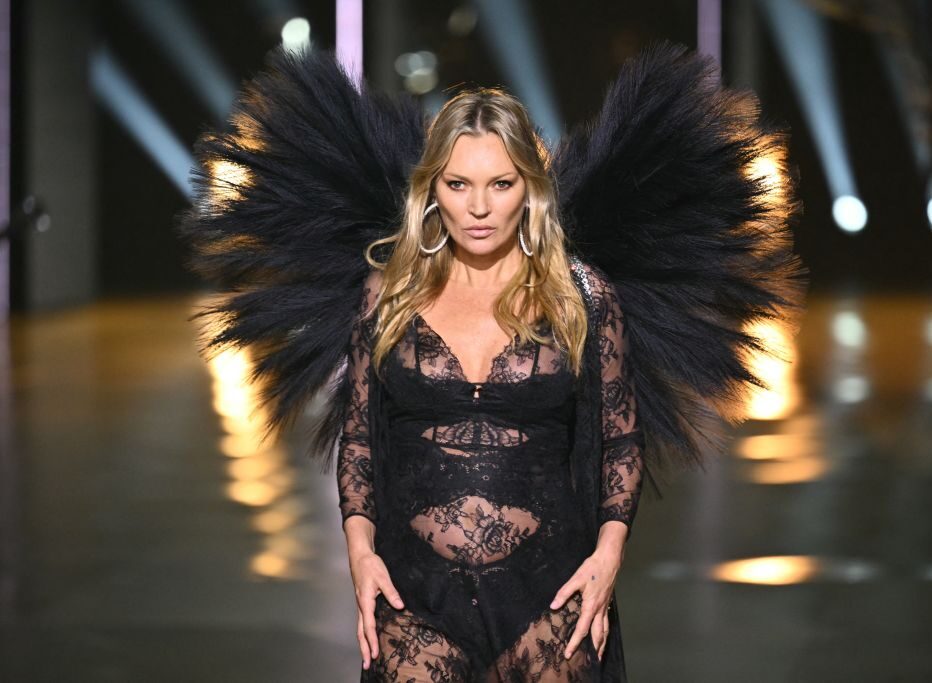
We women who are now approaching the onset of menopause are witnessing the era of the 90s’ era of splendor—the supermodels, incredibly tall, slender, and stunningly beautiful apparently without effort. Then came heroin chic, that cruelly demeaning term that encompassed that new generation of goddesses, as beautiful as they were hyper-thin, and to whom a certain consumption of drugs was presumed to prevent weight gain. There were Kate Moss or a Keira Knightley in a state of grace with their low-rise jeans.
But not going that far. Raise your hand if you didn’t dream of a perfect belly button like Britney Spears, the slender legs of Victoria Beckham, or how well jeans looked on Jennifer Aniston in Friends.
We grew up with strong beauty ideals and did the impossible to stay slim, with a waist of a wasp and a flat stomach. Then menopause arrives and the body starts to go its own way.
Join our menopause community
And you will be able to participate in events, contests and experiences, as well as receive all the information that will allow you to face this stage in the best possible way.
I want to join!
Daughters of Our Mistakes
Before the current culture of strong, sculpted bodies achieved through a healthy diet and proper physical activity, strict and exclusionary diets were the usual path for women to avoid gaining weight. In particular, demonizing carbohydrates. Bread makes you fat, pasta makes you fat, rice makes you fat…
The nutritionist and communicator Marta Marcè, who will be one of our guests at WeLife Festival 2026, also lived through that era. “We were so wrong,” she responds.
“Those of us who are now around 40 and 50 lived through a period with a very harsh body ideal. We grew up with the heroin chic, learned to admire extremely thin bodies and learned to hate carbohydrates because they supposedly made us gain weight. For a long time we were taught that they were almost the enemy: that if you wanted to stay slim, you had to remove them. Any carbohydrate-rich food had to be controlled, restricted, or avoided. That has deeply shaped our relationship with food.”
This Body Is Not Mine
Staying on a perpetual diet has been the mantra that has accompanied us since adolescence. It was desperate, stressful, anxious… but we thought it worked. Or so we believed. We vetoed carbohydrates and feared fats to stay slender. Menopause changes the rules of the game, and that absurd restriction no longer works.
And, if that weren’t enough, stress increases in a stage where cortisol starts to run amok.
“Here there are two distinct things that it is useful to separate. The first is that in this stage not only does the amount of fat change, but where it accumulates. That is largely determined by estrogen. As girls we have a straighter body; in adolescence, as hormones change, we begin to have more curves, more breasts and hips. When we reach perimenopause and menopause and those hormones change again, the pattern changes again: less fat accumulates in the hips and more in the abdomen, explains the nutritionist.
If until recently the mirror returned an hourglass silhouette, now “we have a more rectangular body.” The fat that before created that feminine shape moves to the abdomen. Goodbye to Britney’s belly button. “I’m not fat, I have menopause,” proclaimed months ago model Heidi Klum when some mocked her new anatomy with a bit of a tummy.
Not Confusing Obesity with Nature
Those skeletal heroin chic bodies burned into us. We wanted to be skeletal at 20 and we want it to stay that way at 50. But it wasn’t normal then, and it isn’t now. “It’s not just a matter of weight or having more fat, but where it deposits changes. Since no one has explained it to us, we feel that our body is no longer the one we knew, we don’t like it and we don’t recognize it,” says Marcè.
And worse, we interpret it as if we are now fatter. Because the adjective ‘fat,’ five letters, applies to anyone who swells one day, is premenstrual, has menopause, or because they’ve put on a few extra kilos.
We only have to remember the scorn Georgina Rodríguez endured this summer. The model and Cristiano Ronaldo’s wife stepped in with statements we subscribe to letter by letter: “My body will change, just like every woman’s does. And I hope it keeps doing so for many years to come, because that will mean I’m still alive.”
Brave Georgina
The Hispano-Argentine influencer is still only 32 and, predictably, far from entering menopause (except for premature menopause, as happened to Marcè at 26). But hostile comments do harm. Georgina herself explained it on her social networks: “I was discussing it with Cris and told him: ‘I’m worried that people are calling me fat now, because I live off my image’.”
Fortunately, the footballer rose to the occasion. His response was: “You don’t live off your image. You live off what you are. A perfect woman. Beautiful, with a great body, mother, good person, successful, and who lives life with love. What more do you want? It’s normal to be envied.”
For Marcè this example and many others should open the door to finally reclaiming the real woman at any age. Not fat, nor lazy, but a woman with a real body, without filters or nonsense. “It is everyone’s task, starting with the media, to begin showing natural bodies of women at this and other moments in life,” she explains.
Accepting It Is Not Giving Up
She immediately warns that it’s not about falling into complacency or resignation. “This type of central adiposity is different and promotes more inflammation that can also contribute to greater insulin resistance,” warns Marcè.
She insists that now is the time to change the discourse. It’s not about fleeing the Michelin, nor censoring the belly for its own sake, but about “caring for metabolic health. How? With nutrition and with specific physical exercise that work to maintain a healthy body composition. Not to regain the body of before, but to truly pursue that metabolic health, that energy, that sense of agility, that well-being.”
No More Dinner of Only Lettuce
In that shift in mindset, our relationship with food must also change. We were taught to go hungry to look a certain way, with the saying ‘to brag, you must suffer.’ Now the directive is clear: eat real food. “There is no point in having dinner just lettuce or a yogurt. First, because we should not miss the opportunity to include nutrients at dinnertime as well. Second, because we need to have the nutrients available for the brain to form sleep neurotransmitters,” she explains.
She emphasizes the word ‘sleep’ because insomnia, nighttime awakenings, and, in general, poor sleep tend to be associated with menopause. And there enter our old enemies: carbohydrates. “Carbohydrates at night are important to allow tryptophan to cross the blood-brain barrier and become serotonin and melatonin, which are what help us sleep.”
Nor should dinner be a grand, complicated feast. “A complete dinner, with your fiber, your good fats (without overdoing it, so digestion isn’t extremely long), your easily digestible protein and your complex carbohydrates, will help you rest well and feel full. This avoids cravings to snack before bed and ensures a restorative sleep,” she notes.
It’s time to embrace menopause as a natural part of life and turn the page on the old heroin chic mistakes.