To understand El Bosque, one must look toward Renaissance Italy. The suburban villa recovered an idea that came from Antiquity: to leave the city without renouncing comforts, the protocol, or social standing. During the Renaissance, the great Italian families turned that tradition into a sophisticated blend of architecture, agriculture, leisure, and landscape.
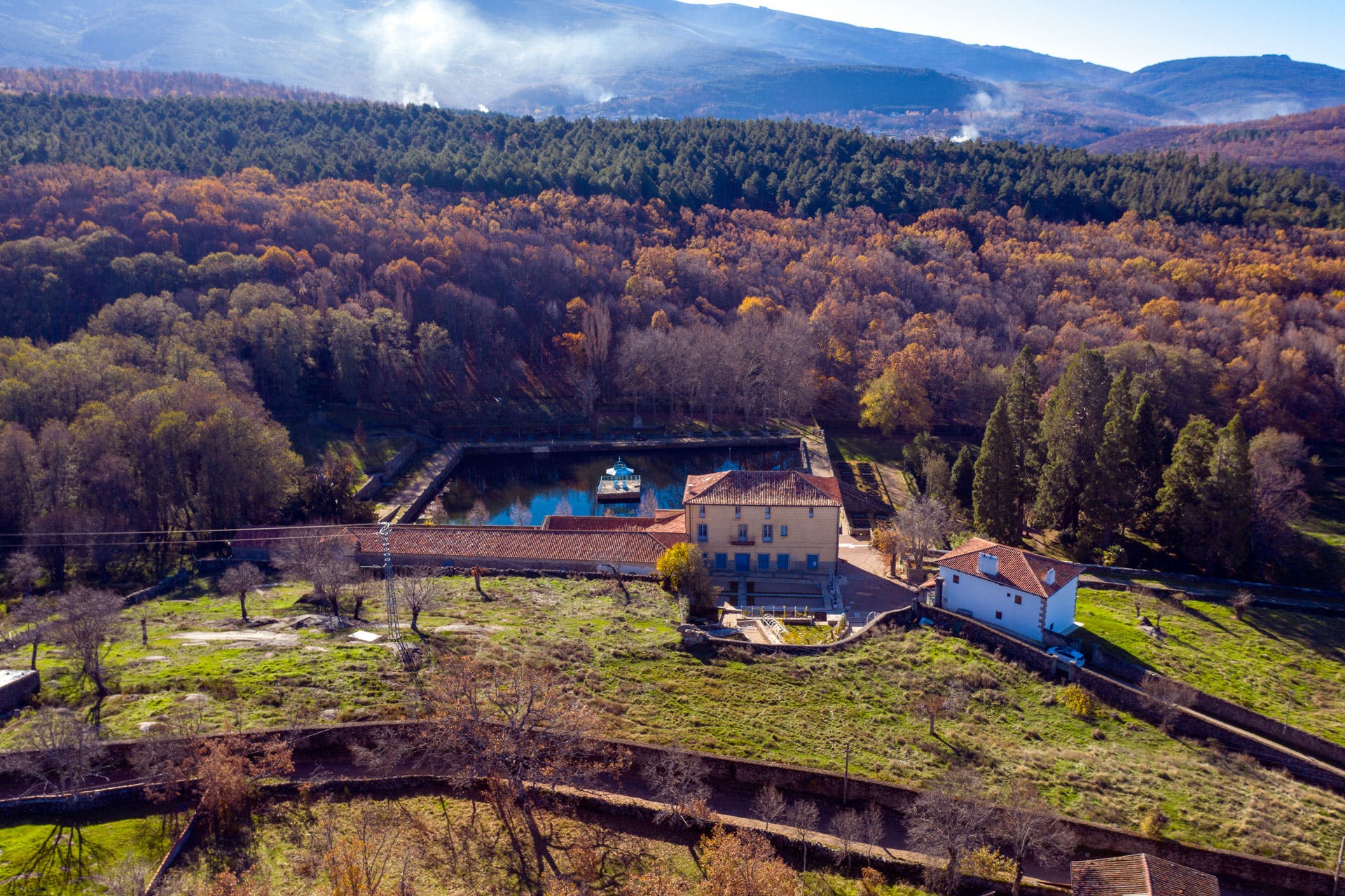
The model found suitable ground in Béjar. The site occupies a small valley surrounded by the peaks of the mountain range, with an abundance of water and a topography that allowed the complex to be organized through terraces. To achieve it, large-scale intervention was necessary: moving earth, raising a new dam, and building an irrigation channel of about 3,200 meters that diverted part of the water from the Garganta del Oso. The Renaissance garden was beautiful but also highly engineered.
The composition followed an axis and descended through different levels. At the top stood the small palace and the great pond; further down, the ornamental garden; then the vegetable gardens and the productive spaces. Between 1583 and 1585, apple trees, pear trees, vegetables, legumes, strawberries, raspberries and olive trees were documented here.
And then there is the water. The pond measures about 68 by 77 meters, a scale that completely alters the perception of the ensemble. It served to store and distribute water to the lower terraces, but it also formed part of the spectacle. Surrounding it, fountains and recreational spaces began to appear: The Fountain of the Eight Spouts, dated 1577; The Rotunda, from 1583; and, in the eighteenth century, the Sheet Fountain. Everything was connected.