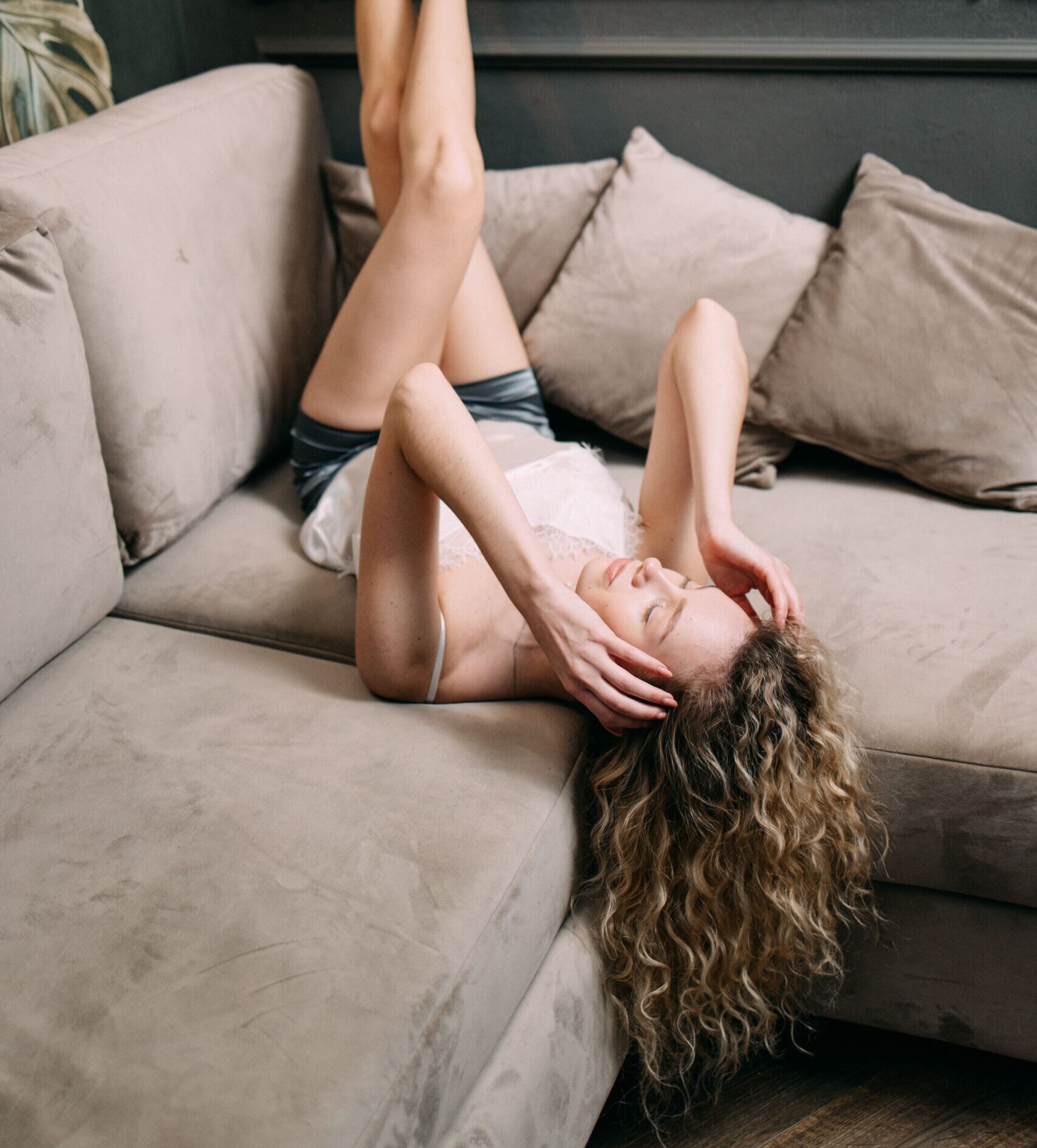
Nature seems determined that we can’t have good hair from menopause. Fortunately, science is at the service of hair cosmetics to prevent the disaster. PHOTO: Ivan S (Pexels).
Drop in Estrogen and Insulin Resistance: A Fatal Combination
The enemy isn’t always the shampoo. The oiliness on the scalp at this stage is fought in the shower… and at the table.
By Isa Espín
October 6, 2026 / 07:30
The arrival of menopause often dries out the skin. Also the scalp. But there are women who report the opposite: hair becomes oilier more frequently. And the situation becomes even more desperate because another effect of menopause is hair miniaturization. That increasingly thin hair makes the rise in sebaceous secretion more evident; stress levels rise, perhaps a few extra hot flashes, and the scalp responds with more grease, more itching, and the feeling of always having hair that looks bad.

Join our menopause community
And you’ll be able to take part in events, contests and experiences, as well as receive all the information that will help you face this stage in the best possible way.
¡Quiero unirme!
The immediate reaction is to change shampoo. Or wash it more often. But the cause of this new setback may not lie in the shower, but in insulin. According to studies, one of the main changes in menopausal women is insulin resistance. And this, in turn, boosts sebum production in the hair.
First of all…
“There is a direct link. The insulin resistance causes hyperinsulinemia (high insulin levels), which acts as a ‘megaphone’ for androgens. Insulin raises the growth factor IGF-1, which triggers the activity of the enzyme 5-alpha-reductase. This enzyme converts testosterone into DHT (dihydrotestosterone), which is the hormone that hyperactivates the sebaceous glands”, explains pharmacist Helena Rodero, a specialist in hair care.
The first thing to understand is that hair is a reflection of the overall state of the body. Therefore, the expert explains that in the face of abrupt changes in texture, thickness, or shedding, one must undertake a comprehensive approach that includes:
- Medical assessment (trichology): to diagnose whether it is a physiological process or a follicular pathology.
- Nutritional status: check iron levels, ferritin and vitamin D, which tend to be altered at this stage.
- Hormonal and metabolic profile: especially insulin sensitivity, which becomes critical in menopause.
The hair’s hot flashes
Can insulin resistance make the hair get oilier faster? “Yes, significantly. When the insulin and IGF-1 pathway is activated, the production of DHT within the follicle increases,” says Rodero.
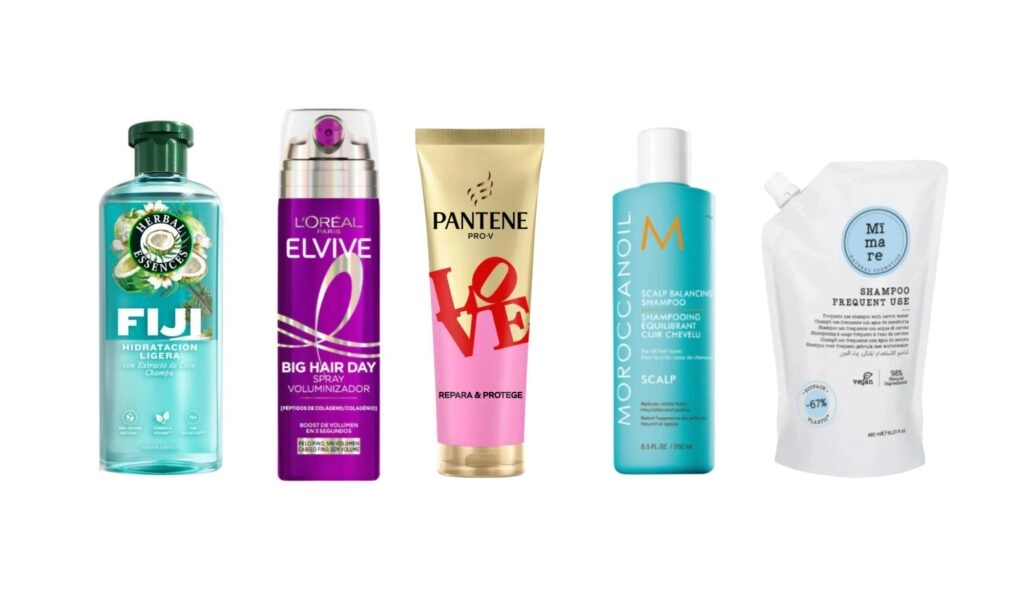
The expert explains that DHT not only weakens the hair, but also has receptors in the sebaceous gland adjacent to the follicle, stimulating an excessive and rapid production of sebum: “In fact, having insulin resistance multiplies by 4.88 times the risk of experiencing hair density loss associated with these imbalances”.
One of the big mistakes? Not using conditioner for fear of greasiness. “Many women avoid it, which causes the hair to break more. It should be applied from mid-lengths to ends,” she says. She also explains that there is a need to avoid overusing straighteners, since “above 150°C the keratin of an already weakened hair is destroyed”.
And if we add sweat…
If we add to all this the excess sweat on the scalp during exercise, it’s a disaster. The increase in temperature and sweating during exercise also affects the scalp and can promote sensations such as itching and discomfort. Dr. Tristán Sobral, a dermatologist expert at H&S, explains why taking care of this part of our skin should be part of the routine after training.
“When we exercise, our body temperature rises and we sweat, and this also happens on the scalp. Heat, humidity and the composition of the sweat can create conditions that favor itchiness and discomfort and, in susceptible people, contribute to an environment related to the appearance of dandruff. And it’s not exclusive to the hot months,” he says.
Even if we train in winter or the outside temperatures are low, exercise raises our body temperature and triggers sweating. Therefore, paying attention after training and washing it well makes sense year-round. “Many times we remember the scalp only when dandruff appears or when we start to notice itching or discomfort, but its care should be a continuous habit,” Sobral explains.
It also becomes finer and shedding increases
During menopause, the drastic drop in estrogens disrupts the androgen/estrogen balance. With fewer estrogens (which have a protective and balancing role), the circulating androgens have, as pharmacist Helena Rodero says, “a free rein to act on the follicle, fostering a greasier environment and the miniaturization of the hair.”
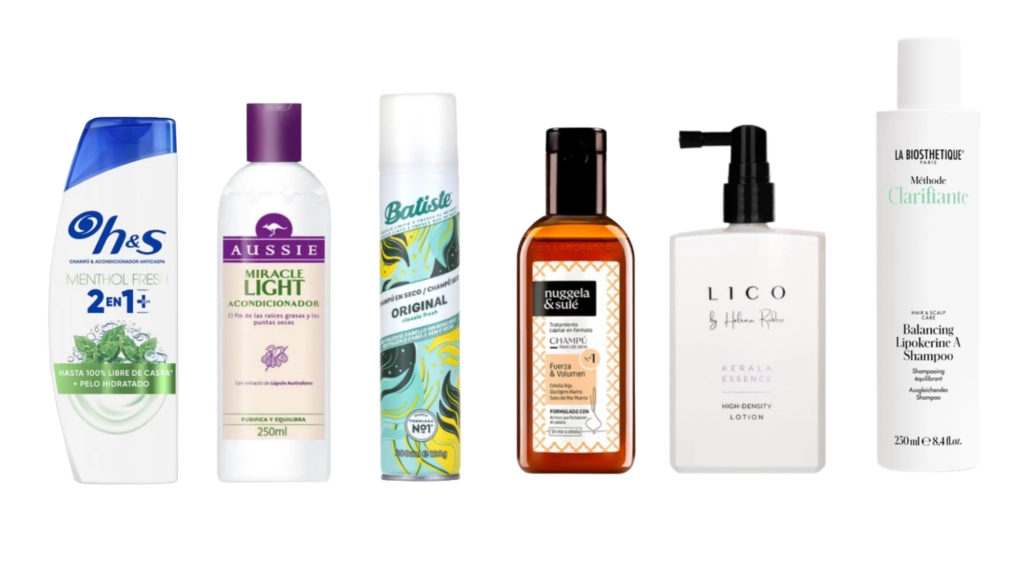
It is common to observe a combination of factors:
- Fine hair (miniaturization): the follicle becomes smaller and the hair grows with a smaller diameter (androgenetic alopecia).
- Telogen effluvium: a diffuse and abundant shedding caused by the hormonal change itself.
- Loss of volume and shine: due to the decline of collagen and structural proteins.
- Frontal fibrosing alopecia: a type of scarring alopecia (receding hairline) increasingly common in menopausal women.
Now, when it comes to hair loss, the expert pharmacist explains that an anti‑loss shampoo “improves the fiber and the environment, but will not stop the process; cosmetics do not reach the deep follicle”.
Hormone therapy also lends a hand to the hair
Some hormonal treatments or antiandrogens (such as spironolactone) are used precisely to block the action of androgens on the follicle, which helps stabilize shedding and regulate excess grease. “Nevertheless, any therapy should be prescribed in a personalized manner by a doctor,” says the expert, who stresses the importance of performing a full analytical panel in a scenario of very oily hair.
- Serum ferritin: the optimal value for hair should be at least 70 “even if the lab marks lower as normal”.
- Vitamin D: the optimal level is at least 30 ng/mL [20, 22].
- Biochemistry: fasting glucose and insulin (to calculate the HOMA index for insulin resistance)
- TSH: to rule out thyroid alterations, very common at this stage.
What not to do
- High glycemic index diets: avoid excess sugar and refined flours—this is the first step to control insulin.
- Rub aggressively: when washing, gently massage with the fingertips. Scratching with nails further stimulates sebum production.
- Biotin on blind faith: biotin should not be supplemented routinely if there is no deficiency, as it does not improve hair and can alter important hormonal analyses.
What to do indeed…
- Niacinamide: improves barrier function and reduces scalp inflammation.
- Piroctone olamine: ideal for controlling microinflammation related to excess grease and flaking.
- Chelating shampoos with citric acid: highly recommended if you live in hard-water areas (high calcium), to prevent minerals from depositing on oily hair and making it stiff.