Eight hours at a desk leave the spine in a single gesture: forward. Sara García, Head Coach of ARO, a space for well-being and mindful movement in Madrid, explains why the spine twist acts precisely in the opposite direction. “It helps increase the mobility of the spine, create space between the vertebrae, release the muscular tension accumulated in the back, and improve the range of motion. It is scientifically proven that the Pilates technique known as axial elongation promotes that traction or vertebral decompression,” García explains.
During the exercise, the thoracic vertebrae are the real protagonists. “The cervical vertebrae accompany the movement, although we should try to keep the neck aligned. The lumbar area has a lower rotational capacity, so the objective is that the movement originates mainly in the thoracic spine and not in the lumbar region,” García details. That distinction is key: seeking rotation in the wrong place nullifies much of the benefit.
Spending the day in flexion has a very concrete effect on the body. “We spend a large part of the day in flexed positions: sitting, with the shoulders forward and the head projected forward. This causes the nervous system and our tissues to adapt to that posture, making movements that counteract them, such as rotation, increasingly difficult,” García notes. In daily life, twists or backward movements are hardly practiced, and that absence is what adds rigidity without it being noticeable.
The longer you stay in that posture, the more it settles as a default pattern. The body stops perceiving constant flexion as something forced and begins to treat it as its natural position, which makes recovering rotation increasingly difficult if it is not worked on deliberately. Over time, that pattern even transfers to everyday gestures that supposedly have nothing to do with sitting in front of a computer.
Rib breathing plays a role that few people connect with back mobility. “Through the expansion of the thoracic cage we can gain mobility in this area,” García explains. The spine twist works precisely on that blind spot: recovering the range of rotation that sedentary work is reducing week after week.
ARO Madrid.
How to perform it without turning into a shoulder twist
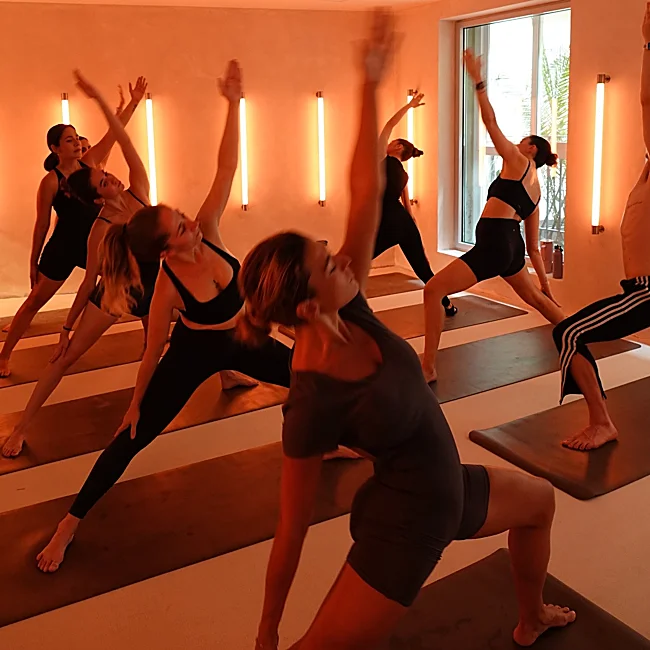
The most common mistake is to seek the greatest possible range in the rotation. “It is not about turning as far as possible, but about performing a controlled thoracic rotation, keeping the pelvis stable and avoiding compensations with the lumbar region,” García notes. The priority should always be the quality of the movement, not how much rotation is achieved.
There is no best time of day to practice it, although each window offers something different. “For the morning, it can be beneficial after having spent several hours in bed and feeling the body a little stiffer,” García explains. At the end of the workday the goal changes: it helps recover thoracic mobility and reduce the stiffness accumulated after hours sitting in front of a screen.
That moment after work usually coincides with the point where tension is most present. Undoing the posture held for hours before it becomes chronic makes more sense exactly then, without waiting for it to turn into a bothersome issue. Many people choose precisely that moment as the closing of the workday, before moving on to the rest of the afternoon.
Practiced regularly, the spine twist yields real and sustained changes. “Yes, practiced regularly it can considerably reduce the sensation of accumulated tension, mobilize the joints in the area and improve the range of rotation. As a consequence, we can also feel the lower back more relaxed,” García states. You do not need a long session: a few minutes of consciously performed rotation, well executed, are enough to start noticing the difference.