Spain is a country of perfumes. The aroma forms part of its history, its culture and its economic value. Not surprisingly it has established itself as the second-largest exporter of essences in the world, only behind France. However, for that olfactory heritage, treasured for decades, to acquire its own voice and recognition, something more was needed: an entity capable of promoting and elevating the universe of aromas. Thus in 2006 the Perfume Academy, which now turns 20 years old.
In the beginning it was an association and in 2017 it evolved into a nonprofit cultural foundation. Looking back, Val Díez, vice-president and executive director, highlights two key moments in its evolution. «In 2015 the Academy entrusted STANPA (National Association of Perfumery and Cosmetics) with its strategic direction and management, and only 15 months later it transformed into a cultural foundation, a platform of social commitment with the values of perfume and with the aspiration to spread its importance as an artistic creation and millennial legacy».
To put the volume of this industry into perspective, Spain today exports more cosmetics and fragrances than sectors as traditional as wine, footwear and olive oil together. Only the perfume category represents 51% of the total exports of the entire industry: more than 4.7 billion euros in the last year, according to STANPA figures. If we look inside our borders, fragrances are the products that grow the most: 9.5% in 2025, exceeding 2.4 billion euros in sales. «We continue growing well above the market average», adds Díez.
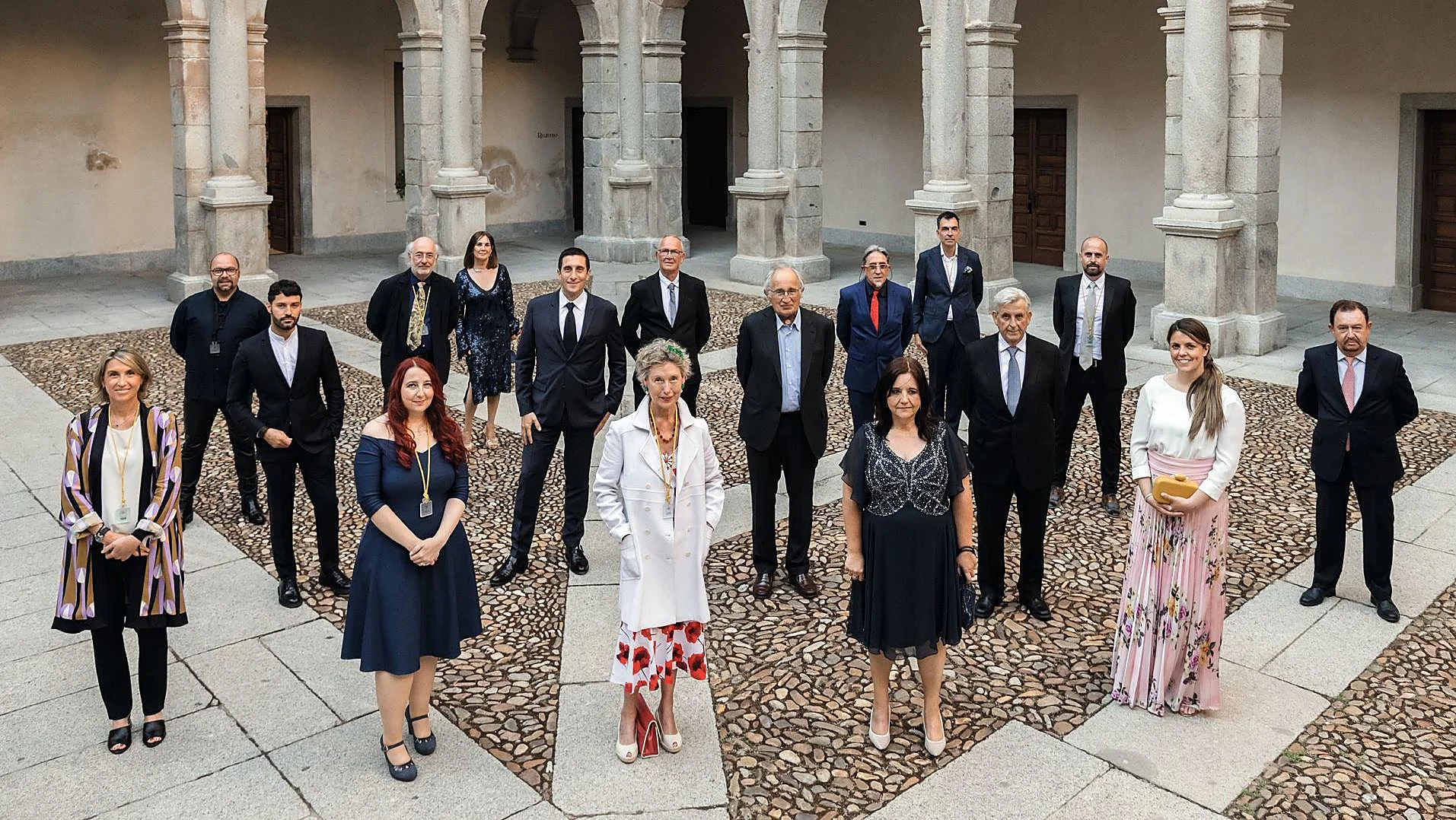
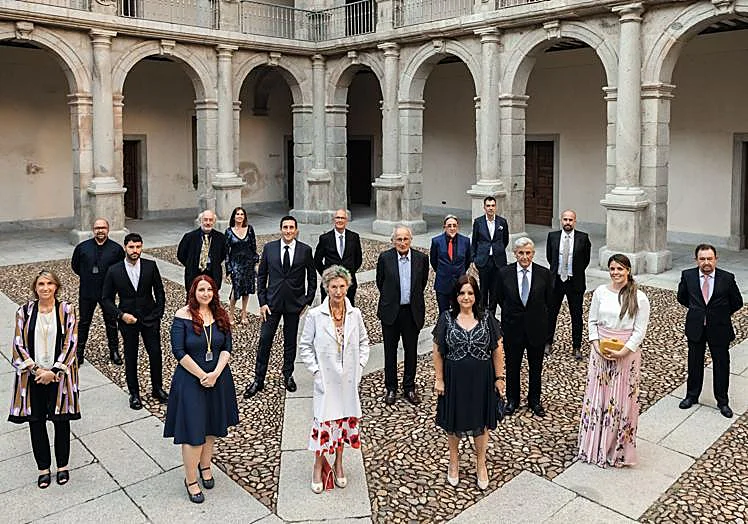
Algunos de los académicos, durante su nombramiento en 2021 en el Paraninfo de la Universidad de Alcalá. El acto siempre tiene lugar en una solemne ceremonia inspirada en las que hacen las Reales Academias.
The association of perfumery and cosmetics is, in reality, the network and the voice of the sector. «We are proud to represent everyone, the largest and the smallest, and accompany them in regulatory challenges, in the transformation through sustainability and the export and innovation ambition. In this sense, Europe is a space of opportunity, but also of threat, as objectives are often distorted by political pacts or misinformation», adds the also CEO of STANPA. Hence its role as a transparent and didactic interlocutor.
An example of success is the recent political agreement in the European Parliament and the Council for the modernization of cosmetics legislation, based on safety, but avoiding bureaucratic obstacles that could put at risk wonderful ingredients. In this growth context, the flip side emerges: unfair competition in the form of counterfeits. For Val Díez, «these dupes are a phenomenon that parasitizes creativity and concerns the sector because of their apparent impunity. Moreover, the supposed inaccessibility of a perfume should not be used as an excuse: with the inclusion of categories such as lifestyle, more affordable, there are perfumes for every budget. And this is, in fact, part of the objective: democratize the universe of aromas.

Val Díez
Unique in the world
The Academy, as an entity, is exceptional, and this is emphasized by its president, Juan Pedro Abeniacar. «It is the only European institution that has become an international reference thanks to the support of the companies linked to the sector and to the great team of professionals who dedicate themselves to making it the go-to reference for perfume open to all». Making the team are the academics, an elite of experts composed of perfume sages who belong to one of these three categories: the number academics are recognized masters distinguished by their career and olfactory creations. There are also the merit academics, linked to the world of perfume and a potential divulgation through publications or research. Finally, the honorary academics, whose prestige has contributed to the dignification of the sector.

Juan Pedro Abeniacar
Alberto Morillas belongs to the first group. Creator of icons present in our olfactory memory (such as CK One, by Calvin Klein, or Acqua di Gio, by Giorgio Armani), he attributes the credit for recognizing the noses to the Academy. «For years, perfumes were known by their brands, rarely by their creators. Moreover, the Academy transmits knowledge to new generations and helps the public understand that behind every fragrance there is a story and an extraordinarily complex creation work». In fact, this organization is the only one in the world with academicians «akin to those of the great Academies such as History and Language», emphasizes Val Díez, reinforcing Morillas’ message.
The connection with new generations is a challenge, as Cristina de Catalina, Development Director of the Academy points out; and the access route, of course, is social media. «We take care to create high-quality educational content in an engaging way. We also take this into account in the composition of all the juries for our annual awards, giving entry to young talents». With this accessibility ambition, the entity has developed a content factory on its website that brings together webinars, workshops and mentoring programs for young people, which combine training and sensory experiences.

Cristina de Catalina-
Value Judgments
Known as the Oscar of perfume, the institution celebrates its awards for the year’s fragrances and grants them in a spectacular gala, where the winners are unveiled at each edition. The 2026 awards, in their nineteenth edition, recognize different categories: perfume of the year, iconic, lifestyle, niche, home, design, campaign of communication and the award for sustainability/innovation/CSR.
The first to vote is the distribution jury, made up of the sector’s main brands. After that initial filter comes the online vote for professionals and fragrance enthusiasts. The next is the Spanish press jury, whose mission is to select the finalists who reach the final podium. Given the relevance of iconic perfumes, timeless jewels that have transcended the years, their choice corresponds to the academics. Finally, it is the jury composed of personalities from art and culture (film, dance, literature, sport, fashion or gastronomy) who cast their vote. The final decision is traditionally announced at the famous autumn event.
Actress Natalia Verbeke is part of the jury and values the close link between her profession and the aromas; in fact, she chooses a scent for each of her characters. Regarding her role as a jury member, she explains: «We evaluate the fragrance beyond technical prowess, to understand what it tells, what emotion it conveys, what cultural or artistic references it evokes. We do not judge only whether it is well-made, but also what it says and how it says it».
Applied Neuroscience
Nevertheless, the Academy has contributed to the evolution of society in the perception of essences, as Cristina de Catalina notes. «There is a desire to know more about their creation, the ingredients, who created it, how the perfumer works; inspiration and narrative are valued. The perfume accompanies us and identifies us». And this is so because 94.6% of Spaniards wear perfume and more than half do so daily, according to STANPA data. Scent is emotion: it reinforces it for 64%, who say they feel good when wearing perfume, which is why the industry is applying neuroscience to design fragrances capable of connecting with the limbic system and influencing mood, since 70% of purchase decisions are purely emotional.
Another turning point lies in the new generations and their transformation in the way fragrances are consumed. Trends such as neo-gourmand flourish, essences that combine the classic sweet notes with salty or spicy touches. This creates a new interpretation of the family of sophisticated and impactful aromas. Regarding gender, there is technical parity. Men have joined in a very significant way and today masculine perfume represents 40% of the market, compared with 60% for feminine perfumes. In both cases, the general taste leans toward niche and genderless scents. And if we talk about young people, there is a growing interest in authorial perfumery, in order to differentiate themselves and enhance their individuality.