For weeks we have been talking about Zendaya’s spectacular looks during the promotion of her latest films. There’s no one like her to turn method dressing into a spectacle and transform every red carpet into a runway. However, there is one element of all these looks that has gone far more unnoticed than the wardrobe and that, probably, is the most important of all: her hair.
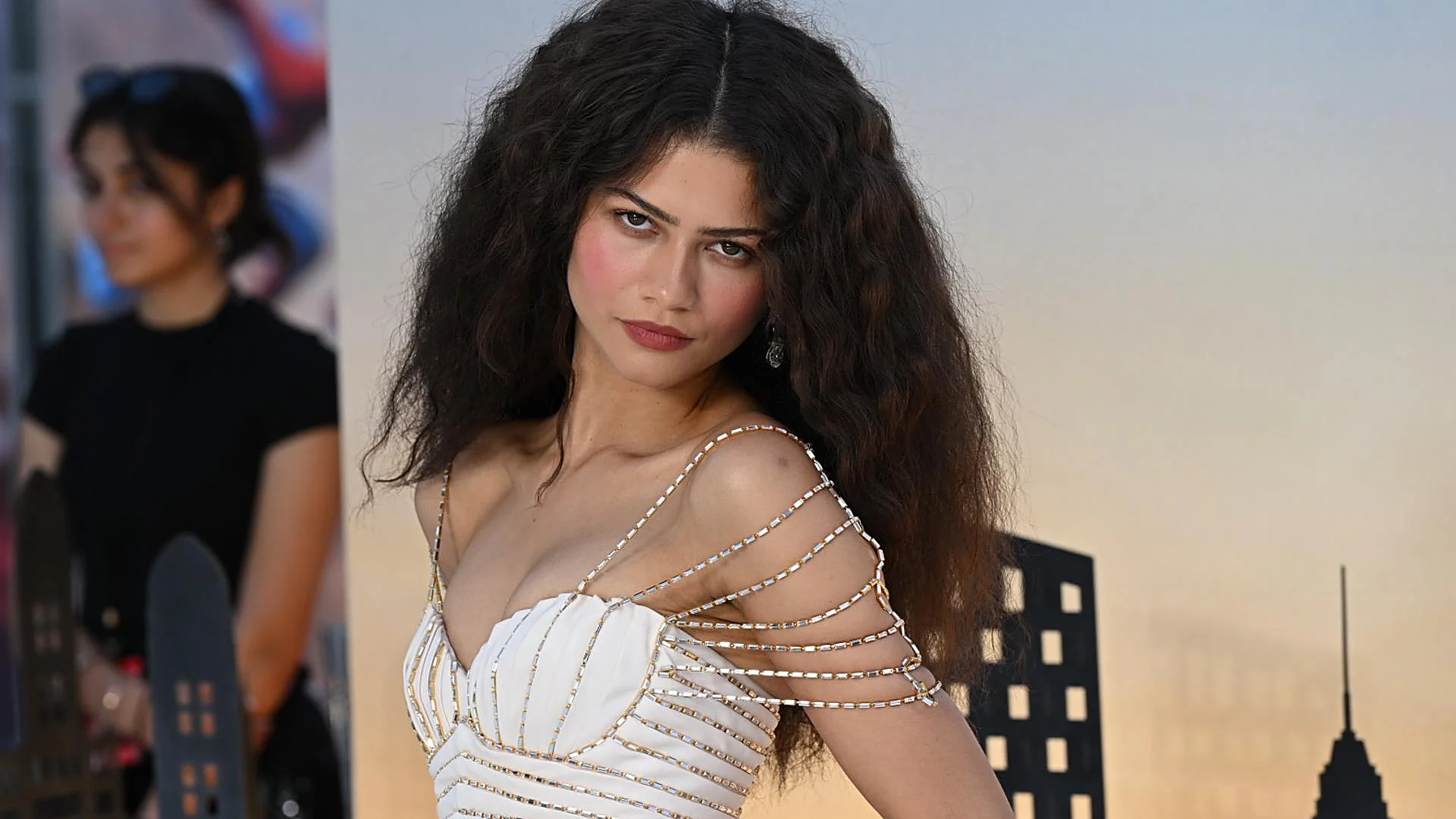
In her latest appearances, the actress has turned curly hair into another element of her styling. We have seen her flaunt a bob with defined curls, updos that respect the natural texture of the hair, and manes where volume or frizz are not hidden but are part of the hairstyle. In an industry where for years the beauty ideal has revolved around perfectly straight and polished tresses, the decision does not seem casual.
Because, although currently the curly method accumulates millions of views on social networks, and the beauty market is betting more and more on products to define curls, for a long time the message was exactly the opposite. Curly hair was something that had to be controlled, tamed, or, directly, eliminated. It didn’t matter whether it was a loose wave, a tight curl, or Afro-textured hair: any texture that deviated from straight hair was perceived as less elegant, less professional or less beautiful. And this affected how many women viewed their own hair.
Straight hair as a symbol of beauty
The importance of cultural references when we are girls in building a healthy relationship with our image is fundamental. For decades, cinema and television built a very concrete imaginary of what a protagonist looked like. She was beautiful, popular and, almost always, wore straight hair.
And when it wasn’t like that, the hair formed part of the conflict. There you have Mia Thermopolis in The Princess Diaries, whose big transformation begins precisely when the frizz of her mane disappears. The message was quite clear: to become a princess, you first had to go through the straightener. Something similar happened with Hermione Granger. In the early Harry Potter films her hair was voluminous and abundant, as described in the books. However, as the character grew, her mane became more disciplined until it turned into soft waves much closer to the traditional beauty canon.
And not to mention the Disney princesses. For decades, the beauty imagery was led by long, soft, perfectly styled manes. Snow White, Cinderella, Aurora, Ariel, or Belle answered, each in their own way, to the same ideal. In 2009 came Tiana, who already inaugurated a small change with her curly hair, although it should be noted that she almost always wore it up in a bun. And finally, in 2012, with the release of Brave, Merida arrived, a princess with a spectacular red mane of remarkable curls. Her curls were not a defect to be tamed, but an extension of her personality: free, impulsive, and difficult to confine within the rules others had written for her.
Zendaya on the Spider-Man promotion
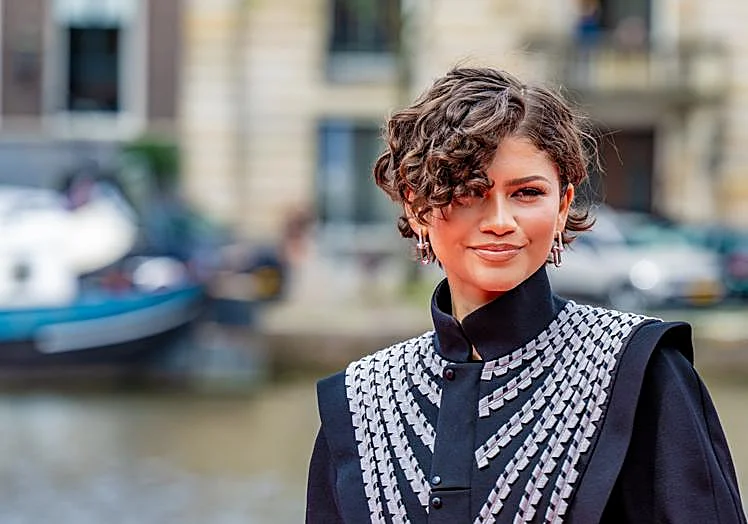
Perhaps none of these scenes, individually, meant much. But together they ended up building a very concrete image. For years, it was difficult to find protagonists, princesses, or heroines who wore curly hair without it being part of a transformation or a comic trait of the character.
Curly hair is also political
Talking about hair has never been just about aesthetics. For decades, Afro-textured hair was considered unprofessional in many workplaces and educational settings. In many cases, wearing natural hair, braids, dreadlocks, or natural afro hair could become a reason for discrimination or a barrier to access certain jobs. The situation became to such an extent that in 2019 the CROWN Act (Creating a Respectful and Open World for Natural Hair) was born, a law aimed at prohibiting discrimination based on the natural texture of hair or hairstyles associated with racial identity.
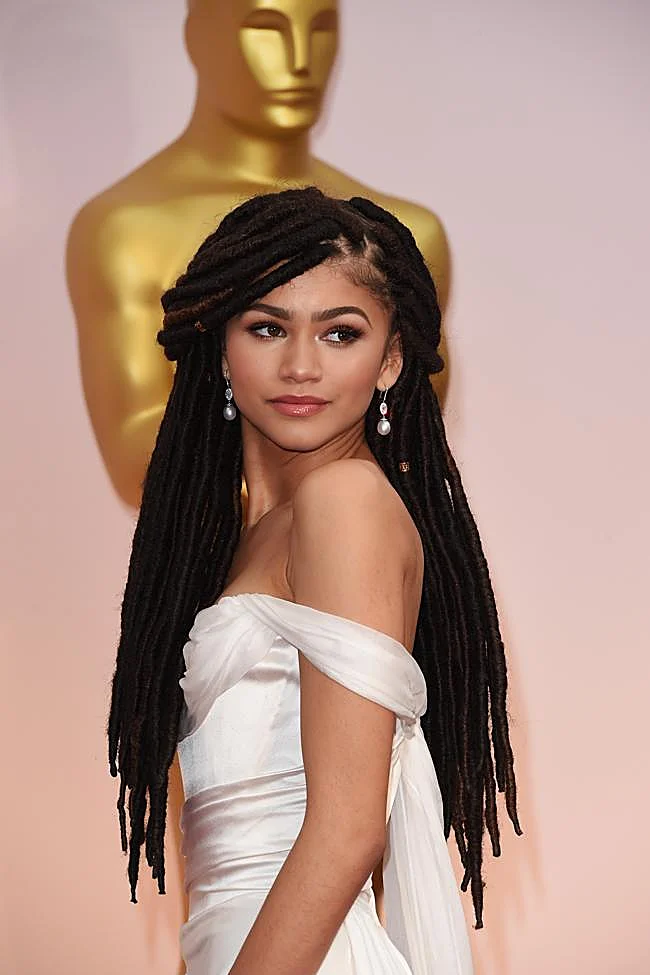
Zendaya at the 2015 Oscars
In 2015, Zendaya attended the Oscars red carpet with dreadlocks and had to publicly respond to comments linking that hairstyle to dirtiness or drug use. Her response was immediate and has become one of the most memorable moments of her career outside acting. Since then, the actress has defended on numerous occasions the importance of normalizing natural hair and expanding representation of different textures in the fashion and entertainment industries.
Zendaya’s Stand
Perhaps in a few years no one will remember what dress Zendaya wore at the premiere of The Odyssey. Red carpets always find a new spectacle that eclipses the previous one. But it is possible that many girls will remember something else: that one of the most admired women in the world had hair similar to their own.
Zendaya at the premiere of The Odyssey
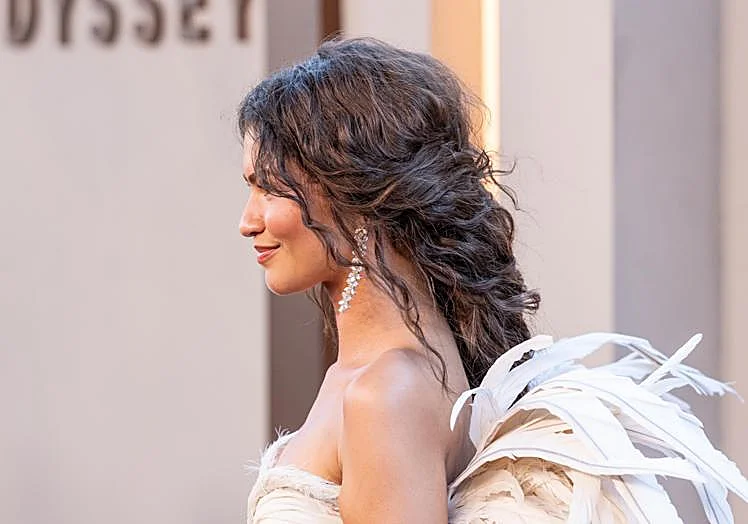
Zendaya is doing something much more important than setting trends with her hairstyles. She is reminding that a protagonist can also have curly hair. That volume, texture, or even frizz does not have to disappear for a woman to look sophisticated and elegant.
And perhaps that is where the real change lies. Maybe the girls who see her on the red carpets today, when they look in the mirror at home, will stop asking their mother for a flat iron to straighten their hair, and instead will want to wear the same curls as Zendaya.