We don’t usually have Zamora in mind, and we don’t mark it much on the map when planning our steps. A grave mistake, because in this Castilian-Leonese province there are many destinations that should be preferred. Toro, among them. A medieval town of immense beauty in the heart of the Duero valley, which perhaps originated from a pre-Roman settlement, Vacceo to be precise. Evidence of this would be its granite verraco. It seems of the same stock as the one in Ciudad Rodrigo, in Salamanca, just a stone’s throw from Portugal.
But, above all, Toro puts us face to face with the Romanesque, which translates into a rekindling of love. To see beautiful churches, you must go to this Zamoran town. The crown jewel is the collegiate church of (12th century), Romanesque but with a foot set in Gothic and all its glories, into which it opened well into the 13th century. The ecstasy arrives with the Portico of the Majesty, for the endless procession of sculptural figures and its original polychromy, which has miraculously withstood time. A door that invites you to enter and, at the same time, to stay for the pure pleasure of contemplation.
It also shines one of the most beautiful cimborrios on the peninsula, included in the select group of the «León cimborrios», of French and Lombard influence. In that club are the Zamora cathedral, the ultimate inspiration of this collegiate church, the Vieja in Salamanca and that of Plasencia. This cylindrical body shapes the Toro profile, the line that cuts across its sky, as the bell-towers and campaniles usually do. Inside, the Virgin of the Fly, a 16th-century Flemish panel, in addition to a 16th-century silver monstrance and the Neapolitan Calvary in ivory are remarkable.
What else to see in Toro
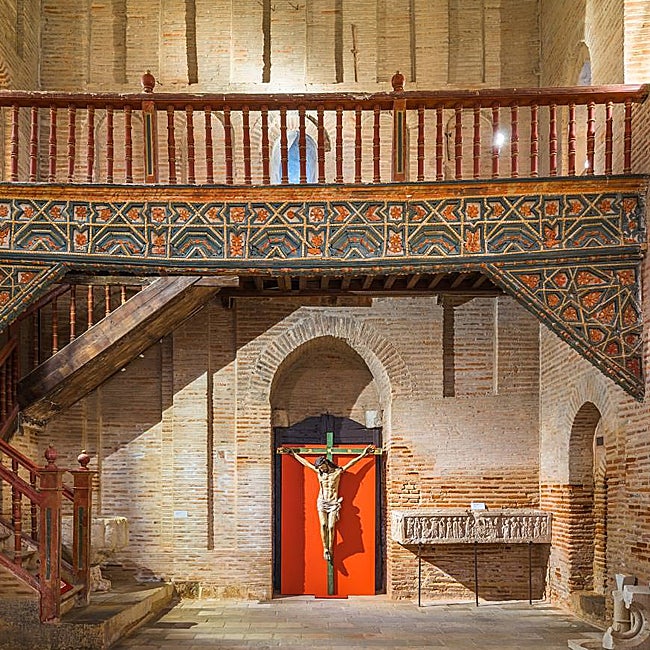
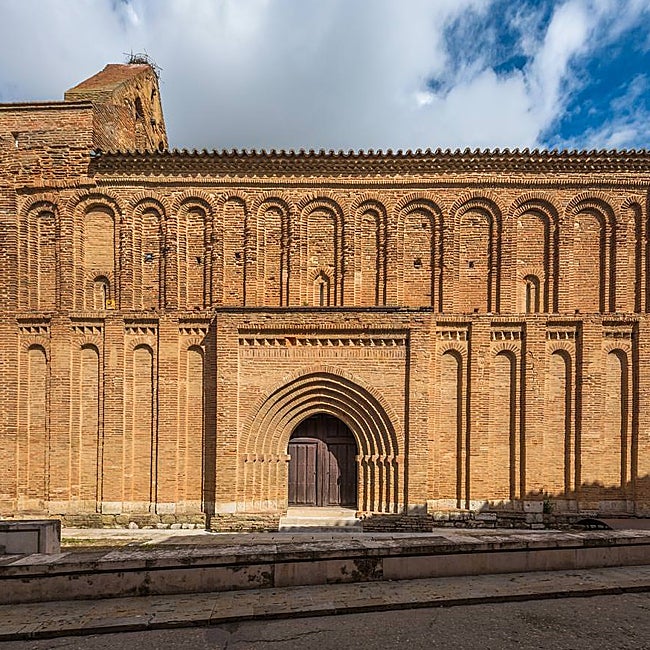
The collegiate church is unique, but by no means the only noteworthy patrimony. In Toro you must follow the traces of Mudéjar art. They lead to the church of San Lorenzo el Real, brick-built, with a single nave and a semicircular apse with two bays of blind arches. Notable inside are the altarpiece by Fernando Gallego (15th century); the Gothic-Flamenco tomb of the Castilla-Fonseca, descendants of Pedro I the Cruel, known as the Just by his supporters, and a beautiful Moorish choir of the 16th century, polychromed.
The Moorish choir of the Church of San Lorenzo el Real.
Toro’s history is also written in its alcázar, which dates back to the 10th century and bears witness to the strategic-military importance it held during the Middle Ages, leading us to Queen María de Molina (1264-1321), known as the Lady of Toro. This castle proved key in the Castilian-Leonese conflicts and in the defense of the frontier against Portugal. Hence, it was integrated into the town’s walls. Fortunately, you can ascend to its towers and battlements, fabulous lookout points over the plain, the vineyards, and the historic hamlet.
The Old Town and the Wines
Today, the alcázar is the Visitors’ Reception Center of Toro, with an information area about the city and its surroundings, as well as a room for temporary and permanent exhibitions dedicated to its heritage, including the enology. That the wines of Toro are equally renowned and celebrated. From here depart routes through the historic center, guided tours to monuments, visits to bodegas, and outdoor activities.
The Church of San Lorenzo el Real, an example of Mudéjar in Toro.
The old town must be enjoyed. Walk along Calle Mayor from the iconic Clock Tower to the collegiate church, as well as other streets ennobled by palaces and manor houses, especially from the 16th and 17th centuries, the era of its greatest splendor. A good example is that of the Counts of Requena (15th century), with a Gothic courtyard and another from the 19th century in wood.
Toro, beyond its artistic virtues, is a natural lookout at 735 metres above sea level, and beside the Duero. It is 39 kilometres from the capital, about 70 from Valladolid and Salamanca, and very close to Tordesillas, where the historic treaty was signed. From Madrid it is two and a half hours away. It was a royal seat and place of Cortes among the twelfth to sixteenth centuries. The Palace of the Laws, specifically, hosted the sessions in 1505, in which the Laws of Toro were promulgated, the famous 83 rules that regulated succession and inheritance after Isabel la Católica died. A fire destroyed the building in 1923. The portal survived, another Gothic marvel.