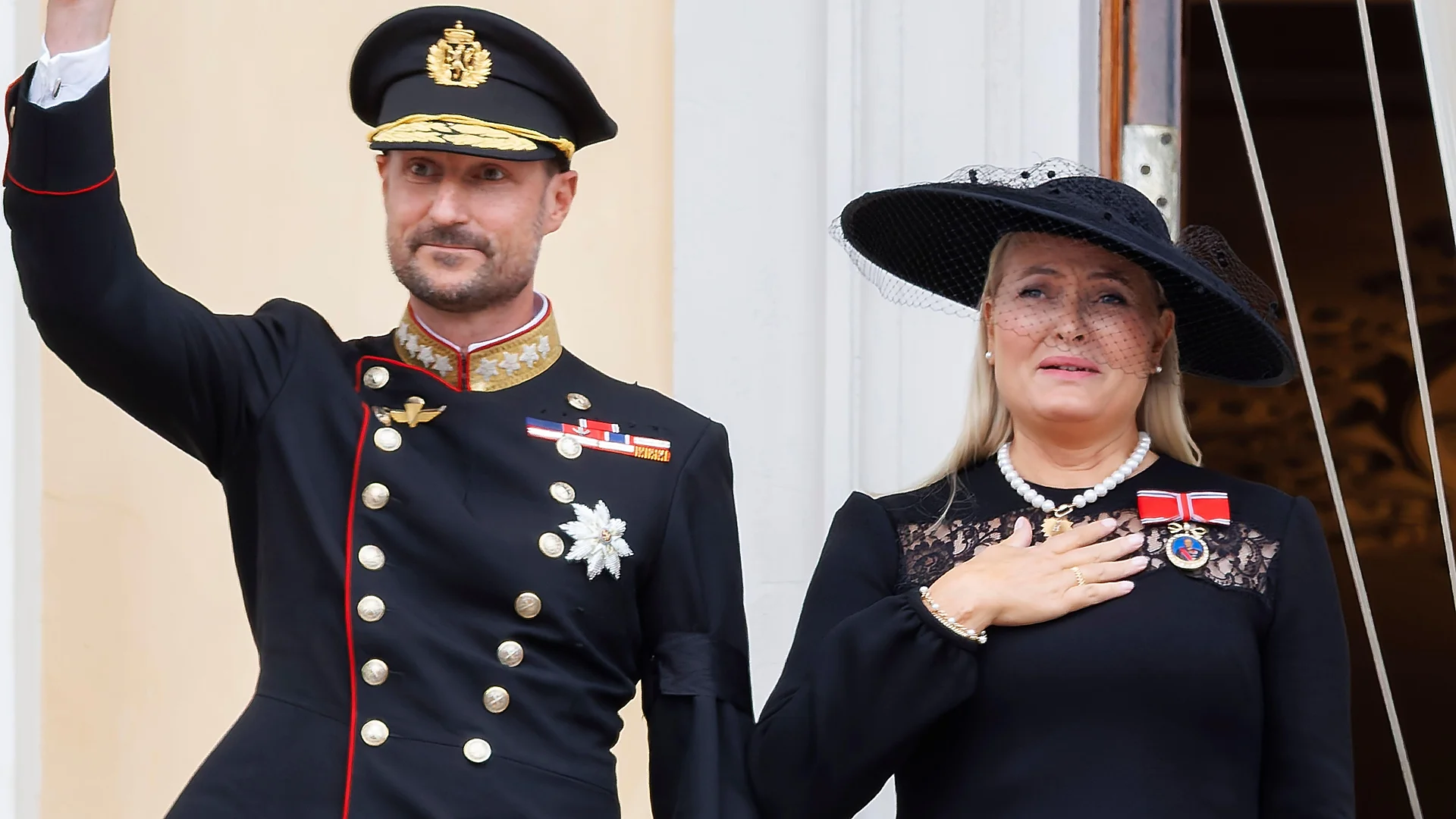
Haakon VIII automatically became king immediately after the death of his father, King Harald V, last August 28. With the State funeral for the ‘grandfather of Norway’ concluded and while the Royal Family remains in mourning until next October 9, it is time to resolve the practical questions of his new reign. And one of the most surprising is Haakon and his wife, Queen Mette-Marit’s, intention to not move to the Royal Palace in Oslo.
The new kings of Norway have officially announced that they will not move into the main building of the Royal Palace and will keep their residence at the Skaugum estate, about 19 kilometers from Oslo. Their intention is to use the official residence of the kings of Norway in the capital solely for state functions, formal receptions and offices of work.
This decision breaks with a tradition that had prevailed in the Norwegian monarchy since the early 19th century. The palace became a permanent royal residence in 1905, following the country’s independence and the accession to the throne of King Haakon VII. From that moment, both he and his son Olav V and his grandson Harald V did use it actively and officially.
The palace had originally been commissioned by King Charles XIV John, of the Swedish Bernadotte dynasty, who ruled both countries. The Swedish monarch died before it was completed, and his successors spent most of the year in Stockholm, using the Oslo building only as a temporary residence during their brief visits to the neighboring country. Until its completion, the Norwegian royalty resided in Paléet, a magnificent mansion in Oslo that the wealthy merchant Bernt Anker left to the State in 1805 to be the royal residence.
This is Skaugum: the home of Haakon and Mette-Marit
The Skaugum royal estate has been the private residence of Norway’s King Haakon and Queen Mette-Marit since 2003. The estate, of about 100 hectares, sits at the foot of the Skaugumsåsen mountain, southwest of Oslo. It includes the main house, the garage, the park, the parking areas and the roads that traverse it. The property originally belonged to Oslo’s St. Mary’s Church and to the Nonneseter monastery, and its origins date back to the Middle Ages.
The interior of the Skaugum royal estate.
The main building burned down in 1930, and the Norwegian architect Arnstein Arneberg designed the dwelling that was built on the original site of the main structure. The old layout was preserved, which allowed constructing it in the same place. In 1932 the house that exists today was completed. It was there that King Harald was born on February 21, 1937, becoming the first king born in Norway since the 14th century.
Unfortunately, the family had to flee the country after the German invasion of Norway during World War II, and the Nazis occupied the estate. Since then, Skaugum has passed through royal hands on several occasions. At first it belonged to Crown Prince Olav and Crown Princess Märtha, who later gifted the house to their son, King Harald. The then-heir apparent Haakon and Mette-Marit received the house as a wedding gift from Harald on the occasion of their wedding in 2001.
Haakon and Mette-Marit, at Skaugum during the 2020 pandemic.
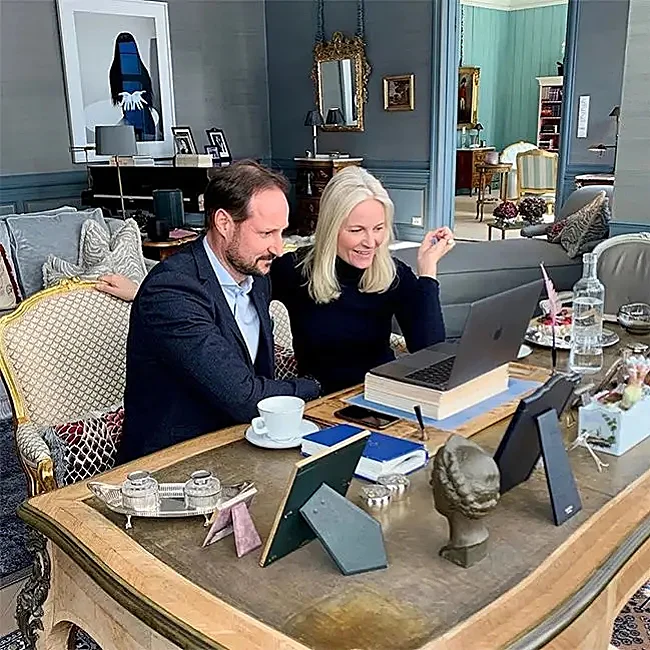
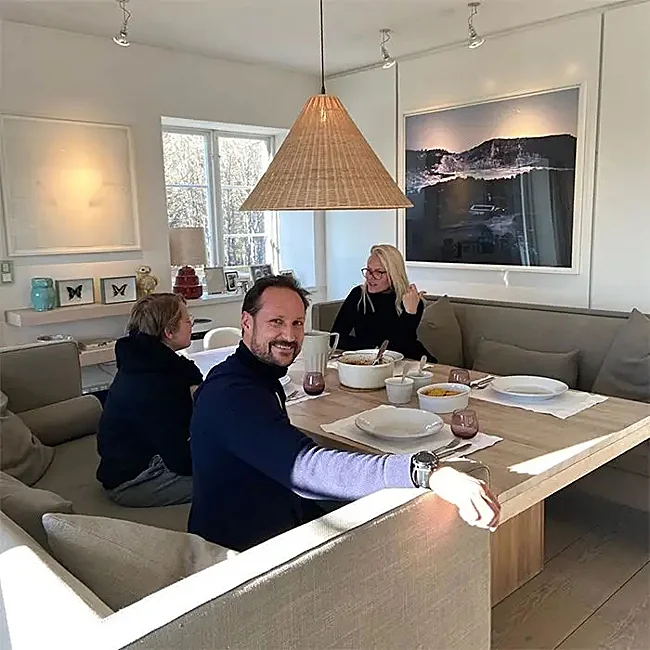
As it is a private residence, the estate is not open to the public, but during the 2020 pandemic its owners shared several images of its elegant interior. A series of photos on the Royal Family’s Instagram showed them having lunch in their dining room and working from their study. In one of them, we saw them holding a video conference, with a pile of books serving as a stand for their laptop on a wooden desk.
The most uncomfortable neighbor
The Kings of Norway are not alone at Skaugum. Marius Borg is now under house arrest at the royal estate. A very comfortable life that scandalizes the press and the country’s citizens, even more so now after his controversial role at King Harald’s funeral. The 29-year-old has been living in a house near the main building since last July, after having been sentenced to four years in prison for various crimes, including two counts of rape and abuse of an ex-partner.
Marius Borg now maintains a home confinement regime controlled by an electronic ankle monitor at the royal residence, but he has received several permissions to leave Skaugum due to his mother’s and grandfather’s health problems. According to Norwegian press, the young man can browse the Internet, order food for delivery, and enjoy the estate’s private swimming pool, provided he stays away from alcohol and drugs.
Marius Borg has previously acknowledged his cocaine addiction, but during his trial he stated that he had been ‘totally detoxified for some time.’ Nevertheless, and to ensure his good faith, the prison administration plans to show up at Skaugum without prior notice at least twice a month, to conduct toxicology tests.