On the upcoming October 24, 2026, the Real Teatro Retiro in Madrid will become the epicenter of wellbeing. After drawing nearly a thousand attendees in its previous edition, WeLife Festival 2026 marks its sixth edition, reaffirming itself as the reference day for those seeking scientific rigor and practical tools to transform their daily life.
Organized by WeLife and Vocento, experts, brands and attendees align in their commitment to physical and mental health. This event is sponsored by Cupper, El Granero, Flavia, Intimina, Lepas, L’Oréal, Petit Bambou and Malta Tourism Authority, with the collaboration of Alma Secret, Komvida, Linwoods, Macami and Suprey.
Planning Our Mind
Cristóbal Amo, specialist in mindset and performance, who will open the program with a profound reflection on how our internal projection conditions our relationships and personal success.
“Being aware means learning to recognize our patterns, question what we have taken for granted and choose more freely how we want to live. When we change the way we look at life, the experience we have of it also changes,” Amo states in his book ‘Manual of Conscious Wealth’ (Vergara Ed.). And that emotional wellbeing is a fundamental pillar of longevity.
Physical and Emotional Regulation
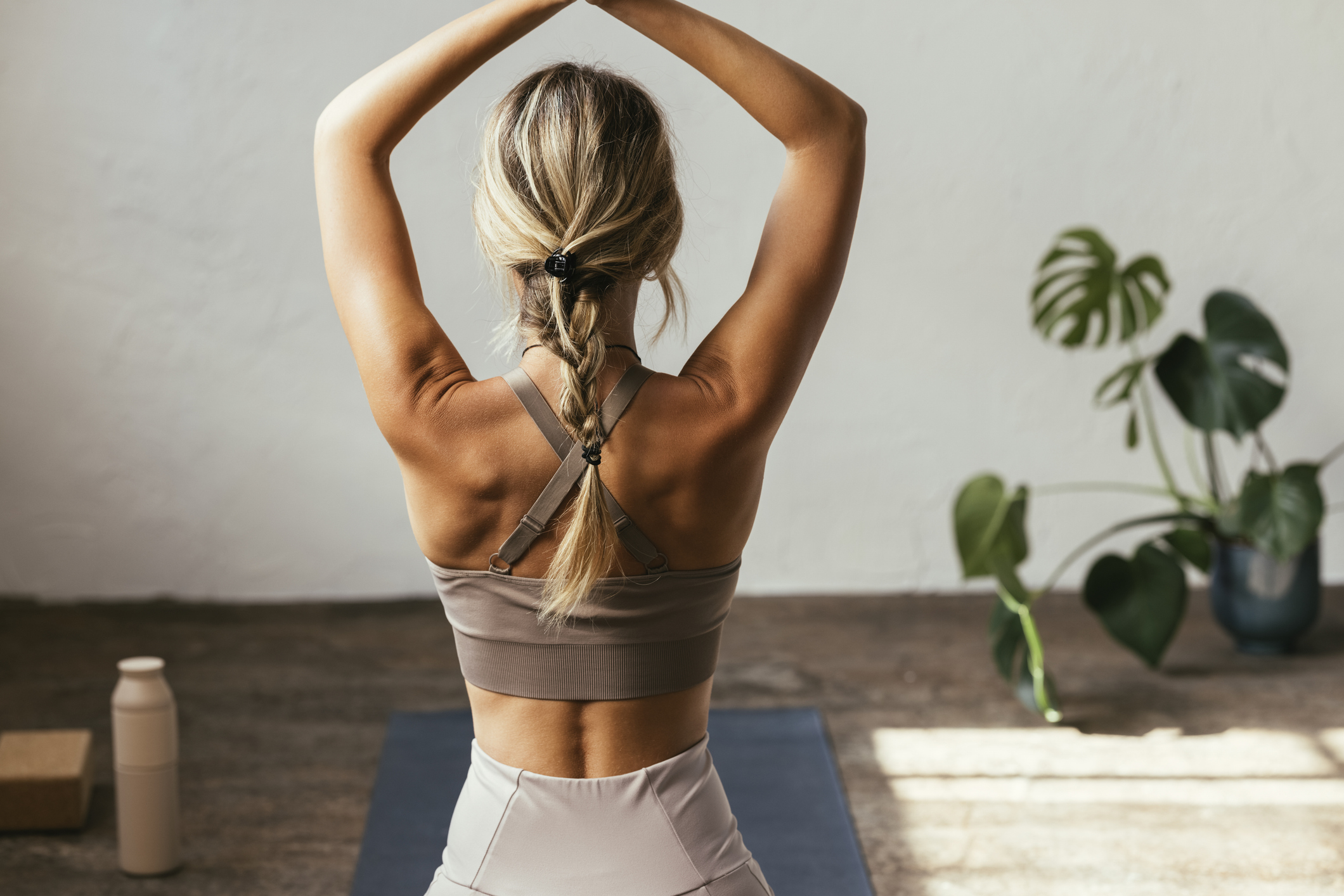
Lorena Gascón, psychologist and science communicator, advocates seeking tools to liberate ourselves from self-imposed pressure under the premise of mental calm. Two of the tools most frequently used are meditation and yoga. This is supported by Belén Colomina, mindfulness expert: “They accompany me every day in my mental, physical and spiritual development training. These practices promote wellbeing and have many benefits for combating stress, cultivating self-compassion and emotional regulation.”
For those who prefer something more vigorous, physical activity also helps unclog the mind and stimulates brain neuroplasticity. “Sedentarism is the enemy of a healthy brain,” emphasizes José Luis Trejo, scientific researcher at CSIC and head of the Lifestyle and Cognition Group at the Cajal Institute.
When the Future Has Other Plans
We may have a million plans for the future, but sometimes something unexpected arrives that forces us to be resilient. “What matters is the attitude we maintain,” explains Cisco García in his book ‘Unbreakable’ (Alienta Ed.). García suffered a serious snowboard accident that damaged his spinal cord. He decided he would not let a setback bring him down and became one of the country’s best wheelchair tennis players. He now comes to WeLife Festival 2026 as an example of overcoming adversity to share his experience.
Talking about the future is somewhat uncertain, but in terms of longevity, the experts are clear: not everything is written in the genes. Regarding reconfiguring cellular aging, there are several decisions, practices, and habits that influence it, and, above all, that are in our control.
That will be the debate ‘Is Our Future Written? What the Genes Do Not Decide’, the roundtable featuring Manel Esteller, head of the Epigenetics Group at the Sant Pau Hospital Research Institute; José Manuel Soria, director of the Genomics Unit of Complex Diseases at Sant Pau Hospital and scientific director of BASE4 Biosciences; and Beatriz Crespo, Doctor of Medicine and Sports Performance and creator of Healthy Microhabits.
Prevention Is Better Than Cure
“Let us not wait for the body to give us a scare to start taking care of it. Preventing a cardiac pathology is as simple as correcting small daily decisions before it is too late,” explains Aurelio Rojas, cardiologist and renowned health communicator at the Regional University Hospital of Málaga with more than one and a half million followers on Instagram (@doctorrojass). Rojas will give us a masterclass on how to avoid more than one visit to the doctor.
Some of those good habits start at the table. Or more precisely, in what we eat and how we care for our gut microbiota. “Many of the discomforts we consider ‘normal’—such as bloating, migraines, fatigue or mood changes—are not at all normal,” explains Xevi Verdaguer, psychoneuroimmunologist, nutritionist and physiotherapist. “They are distress signals from our gut and our hormones,” he argues in his book ‘Transform Your Health: The Key Is in Gut Bacteria and Hormones’ (Grijalbo).
WeLife Goes Into Your Pantry
Marta Marcè, nutritionist and communicator specializing in menopause and hormonal health, will focus on the specific nutrition during menopause, demonstrating that everything is connected, that our body does not operate in isolated sections. Even the small habits we integrate into our routine today will bring great benefits tomorrow.
This is also supported by Sara Marín, physician expert in microbiota and women’s health. Through her Instagram community (@uncafecontudoctora) — with nearly two million followers — she translates medical knowledge, not always easy to understand, into an engaging and approachable language. With the same objective she will be at WeLife Festival with the talk ‘What They Don’t Tell You in the Doctor’s Visit: the Invisible Axis Between Your Hormones, Your Microbiota, and the Vagus Nerve’.
Marimer Pérez, gynecologist, obstetrician and founder of WoMer Center, will address some of the big questions about menopause, while experts Natividad Cano, dermatologist and medical director of the Natividad Cano Institute; Minerva Piquero, journalist and author of the book ‘How to Survive Menopause and Feel Powerful’; and Marta Masi, pharmacist and cofounder of The Menopause Club, will headline the roundtable ‘The Generation Reinventing Age: why are today’s women changing the rules of aging?’.
Longevity on the Plate
“Healthy doesn’t always mean nutritious.” Healthy is eating lettuce and chicken, but that’s not nutritious
— say biochemists Elena Pérez and María Hernández-Alcalá, mother and daughter and creators of Futurlife21, who come to WeLife Festival to demonstrate that you can eat well and deliciously, indefinitely. Without short-term goals, without a wedding on the calendar, just because it makes you feel good and that is more than enough.
“We always say that in order to acquire a habit you need three things: the scientific knowledge of how what we eat impacts us; practice, that is, how to cook or what to buy; and the motivation, which is what makes you feel better every day on all levels,” explains María. Why do we always start with enthusiasm and then lose consistency? “Because it isn’t enjoyable. If it’s done as an obligation and focused on the scale, you don’t eat well,” notes Elena.
That is about to end; from now on we will eat healthy, nutritious and tasty. After all, we need energy for our bodies to want to do more: dance, exercise, practice yoga and maintain a good balance between effort and recovery. Yes, we will also have plenty of that in the hands-on classes at WeLife Festival 2026.
Movement and Physical Well-Being
Through functional training, injury prevention and postural health, Toni Pérez, physiotherapist, creator of content with more than a million followers (@fisioteduca) and author of the book ‘No More Injuries’, will teach us to build a strong and resilient body through the talk ‘Learn to Move; Avoid Discomfort and Injuries’.
Practically speaking, Afonso Coelho, personal trainer at Piko Studios, will do so via the workshop ‘Morning Glow. Mobility and strength to activate circulation’; and Andrea Fresneda, professional esthetician, trainer and creator of the NeuroVagal Glow method, through her hands-on workshop ‘Vagus Nerve Glow’.
Meanwhile, Almudena Morell, personal trainer and specialist in hypopressive exercise and female training, will lead the workshop ‘Hypopressives to Relieve Abdominal Inflammation’. What will it consist of? Working, through postural guidelines and mindful, precise breathing, on toning the deep abdominal fascia and the pelvic floor safely, achieving a more functional, desinflamed and lighter abdomen.
Keeping Pace…
Georgina Grimshaw, trainer and Pilates instructor, with her workshop ‘Power Pilates: Strength and Flexibility for the Abdomen, Glutes and Legs’ will show us how this controlled training system tones the muscles and how the ‘power’ variant includes strength exercises through which we will feel how we strengthen the abdomen, glutes and legs, while also gaining flexibility.
The yoga instructor for over 15 years, certified at the prestigious LightHouse Yoga School and a teacher at Hot Yoga Madrid, Mariana Garay, will give us a techno-yoga class. Here, very fluid yoga sequences merge with electronic music. Get ready for a very fun session!
Rest Also Matters
“More and more I am clear that progress does not always mean doing more. Sometimes it means stopping a little, resting better, caring for technique, organizing better what I do, and giving the body time to adapt,” explains Paula Butragueño, fitness instructor, yoga and mindfulness teacher, and creator of the PHI method, on her social media.
“Ultimately training is also about learning to know yourself. And there are times to push and times to slow the pace a bit.”
Mercedes de la Rosa, yoga and meditation teacher, CEO and cofounder of Zentro Urban Yoga, will arrive with her class ‘Vinyasa Yoga: Reconnect with Your Energy and Serenity’ that will allow us to connect. How? On the one hand, with our strength and vitality, and on the other, with the calm and serenity that lies within each of us.
Lola Ibáñez, physiotherapist specializing in the pelvic floor, will address the workshop ‘Menopause, Abdomen and Pelvic Floor: the Forgotten Axis’ and E.V.E Puértolas, expert in breathwork,, immersive experiences and founder of Una Vida Coach, will teach us to recharge and breathe.
Don’t miss your ticket!
WeLife Festival 2026.
When: October 24
Where: Real Teatro de Retiro (Madrid).
How to get there: Metro Lines 1 and 6. Parking next to the theater.