Whether you were able to witness the total solar eclipse on August 12, which for a minute and a half turned day into night, or you missed it, the summer calendar now gives us a new opportunity to enjoy astronomy. In the early hours of Thursday, August 27 to Friday, August 28, sky enthusiasts have an unmissable appointment with a partial lunar eclipse that can also be observed from our country and that will tint the dawn red.
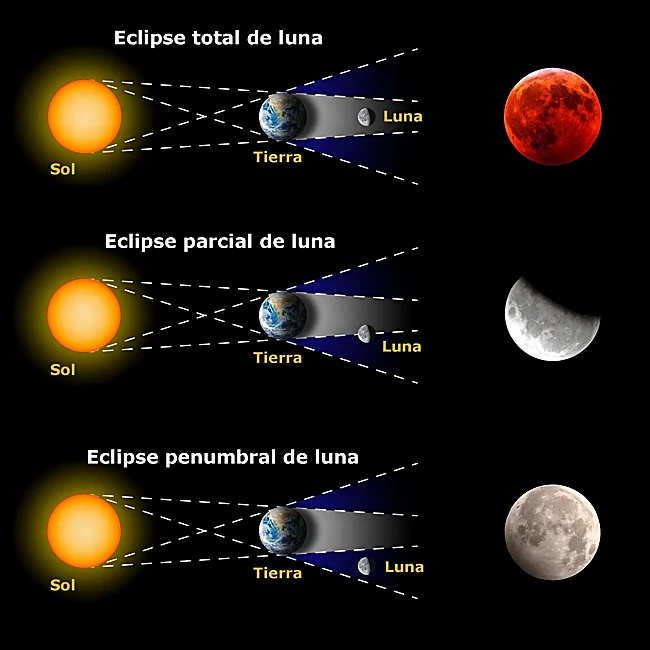
A lunar eclipse is the phenomenon by which the Earth prevents sunlight from reaching the Moon, generating a cone of shadow that darkens it. The Moon, fully eclipsed, takes on a characteristic reddish color due to the scattering of light refracted by the Earth’s atmosphere. Unlike a total eclipse, in a partial lunar eclipse only a fraction of the Moon’s surface enters the darkest region of that shadow. If the Moon lies in the penumbra, the eclipse will be penumbral and only a subtle darkening of the surface will occur.
According to the National Geographic Institute, this eclipse will have a magnitude of 0.93. This means that the Earth’s darkest shadow (the umbra) will cover 93% of the Moon’s diameter. Following the historic total solar eclipse of August 12 and the traditional Perseids, this event will close the summer eclipse cycle and will be visible from the Americas, Europe, Africa and the western part of Asia.
This partial lunar eclipse is part of a very active astronomical cycle on the Iberian Peninsula. The next major event will arrive on August 2, 2027, when we will again enjoy a total solar eclipse. On this occasion, the path of totality will be concentrated in the southwestern peninsular region. And on January 26, 2028, an annular solar eclipse will take place, also visible from Spain.
What time is the partial lunar eclipse?
The partial lunar eclipse will occur in the early hours of Thursday, August 27 to Friday, August 28, 2026. At 03:23 —Peninsular Time— the onset of the penumbral phase is expected, in which the initial darkening is almost imperceptible. At 04:34 begins the partial eclipse, when the Earth’s umbra starts to devour the lunar disk.
The maximum of the lunar eclipse will occur at 06:12. At that moment, the lunar disk will be darkened, allowing the satellite to adopt intense reddish and coppery tones similar to those of a blood moon. Finally, at 07:52 the partial phase will end.
The three types of lunar eclipses.
From where will the lunar eclipse be best seen in Spain
In the Canary Islands, Ceuta and the western peninsula the eclipse can be seen in full before the Moon hides behind the horizon. In the center, in the eastern peninsula and in the Balearic Islands, the Moon will set before the end of the partial phase, so astronomy fans will not be able to observe the final emergence of the shadow.
The Moon, you won’t need to go to such extremes to see the lunar eclipse.
Do you need glasses to view this eclipse?
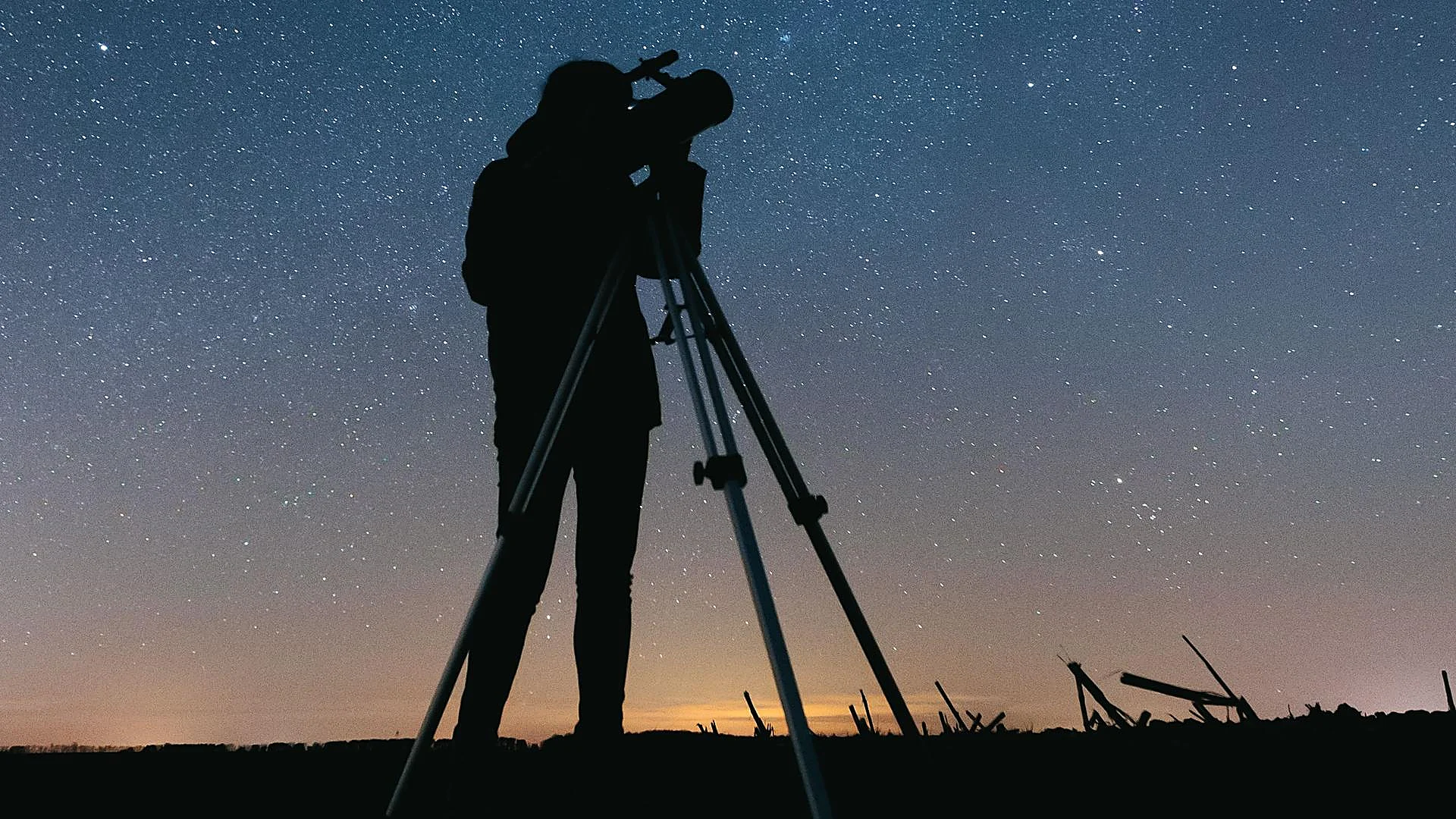
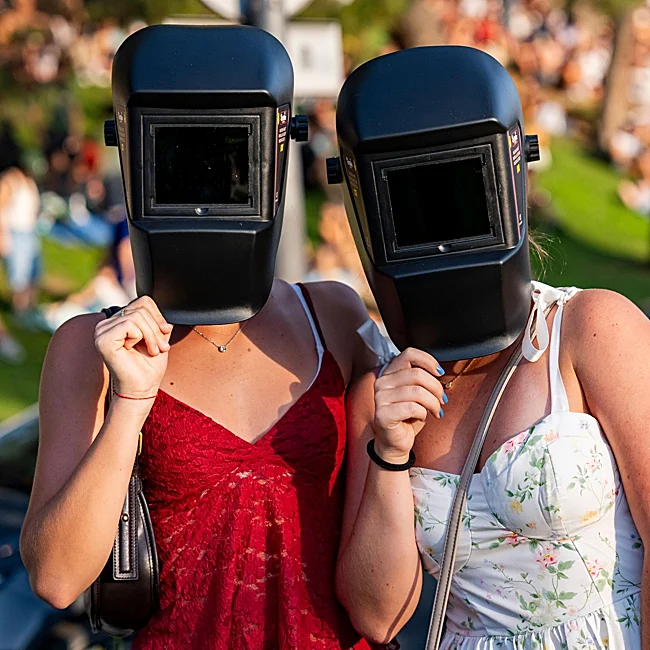
While for observing a solar eclipse it is very important to use certified glasses to avoid damaging your eyesight, the same does not apply in this case. We can look at the Moon with the naked eye without the need for glasses, even at the maximum of the eclipse. We can also use binoculars or a telescope to observe the lunar surface in more detail or take photos without risk.
Tips for optimal eclipse viewing
It is important to prioritize altitude and avoid obstacles to fully enjoy this lunar eclipse. Since it occurs very low in the sky, any mountain, building, or tall tree to the west will block the Moon. The use of binoculars or basic telescopes is recommended to appreciate the subtle color changes and the relief of the craters at the edge of the shadow.
It is also important to reduce light pollution to better see the reddish tones of the satellite. And don’t forget to check local weather a few hours before the eclipse. Low clouds or morning mist do not bode well with astronomical events that are so close to the horizon. Check the weather forecast to change location if necessary.