If you ever feel that you can’t stretch the lower back, even though you know those muscles are very tense and you try your best to relax them, you’re not alone. The most common thing is to think about complicated things when often the most effective is also the easiest. For example, the knees-to-chest stretch.
For many people, stretching the hip, the neck, the calf, and other muscles is fairly easy. But the back muscles? Not so much. They can tense up so much that they become hard to reach. Finding the optimal stretch point in the lower back muscles can be difficult if you don’t choose the right exercise.
You can hold touching your toes for a sustained period in the hope of improving the flexibility of the back. And yes, you’re arching the back, which technically stretches those muscles, but the toe-to-toe movement mainly affects the hip joints. Arching the back is often a consequence of this, and it’s not particularly safe either.
A perfect stretch to finish the day
This is where the knees-to-chest stretch comes into play. Not only does it relieve in most cases, but it’s a wonderful way to regain the flexibility of the lumbar muscles after an afternoon of household tasks or after a long day in front of the computer.
But the knees-to-chest stretch serves more than just relieving the lumbar muscles. As a range-of-motion exercise, that is, a movement that increases joint flexibility, the knees-to-chest stretch can help reduce stiffness associated with spinal arthritis and/or spinal stenosis. For people with osteoarthritis, range-of-motion exercises can help lubricate the joints, increase blood flow, and bring nutrients to the affected area.
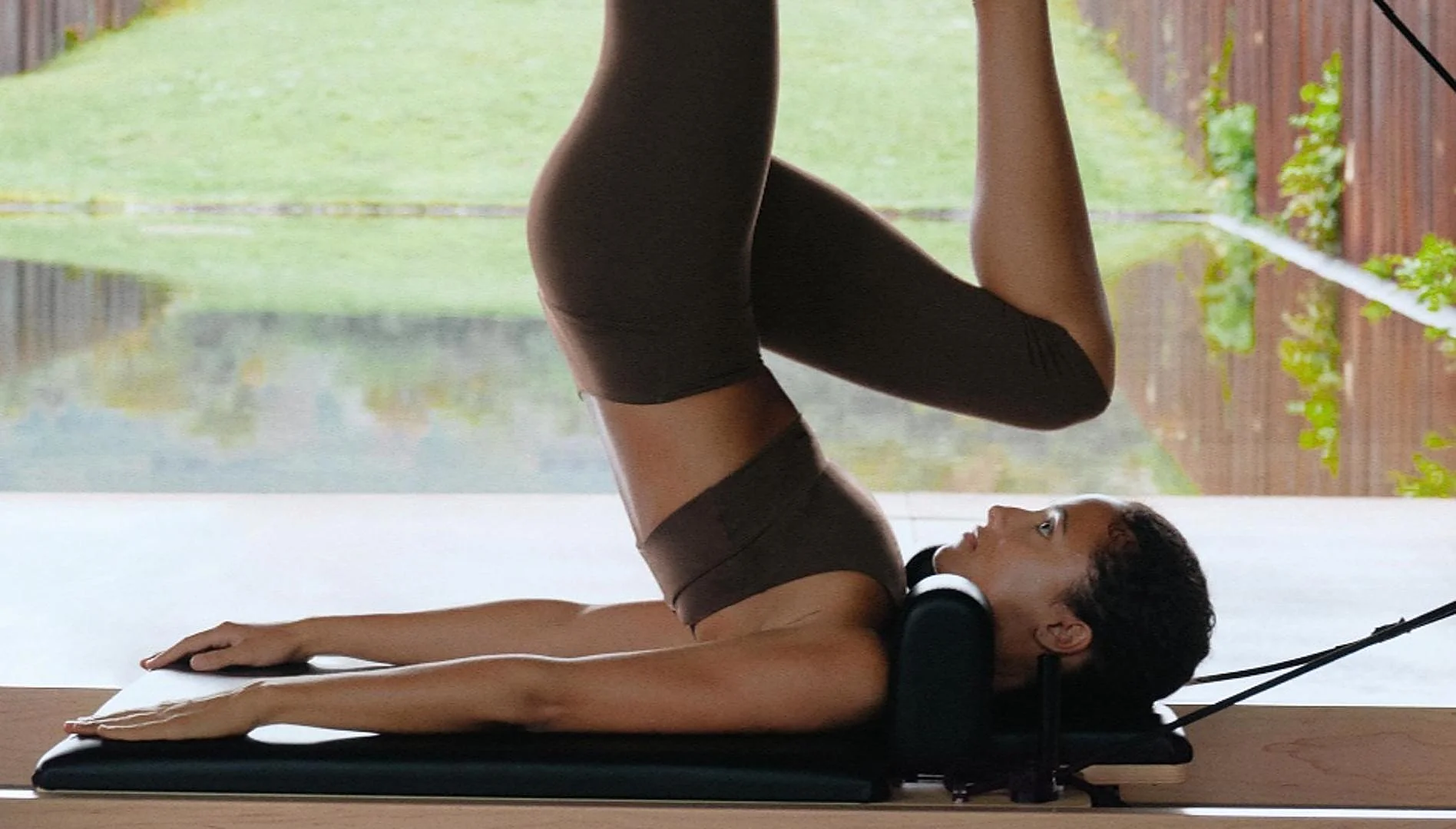
Woman exercising outdoors.

To stay safe, start the knees-to-chest stretch with one leg. If after a few days you perform it pain-free, it’s probably time to move on to lifting both legs. If you have doubts, consult with your doctor whether it is safer for you to do the knees-to-chest stretch with both legs or with one.
How to do the knees-to-chest stretch
To begin with this stretch, lie on your back with your knees bent and your feet flat on the floor. Gently lift one bent knee enough to be able to grasp the lower leg with both hands. Interlock your fingers just below the knee.
If you’re doing the version with both legs, lift one leg and then the other. Since lifting both at the same time requires a lot of abdominal strength, starting with one and then quickly following with the other is probably safer, especially for vulnerable backs.
Just like the one-leg version, if you lift both legs at the same time, interlace your fingers or clasp the wrists between the legs, right below the knees. Gently pull the bent knees toward the torso, using your hands. As you pull, try to relax the legs, the pelvis, and the lower back as much as possible.
The knees-to-chest stretch reaches the lumbar muscles best when performed passively. Hold the position for a few seconds. Return the leg to the floor and repeat with the other side. Repeat the stretch 10 to 15 times, once or twice a day or as needed.
As already mentioned, the knees-to-chest stretch works best as a passive stretch, meaning keeping the legs and hips as relaxed as possible. Doing so can help you achieve a good spinal flexion, as it allows the natural chain reaction from the thigh to the hip and the lower back to occur.