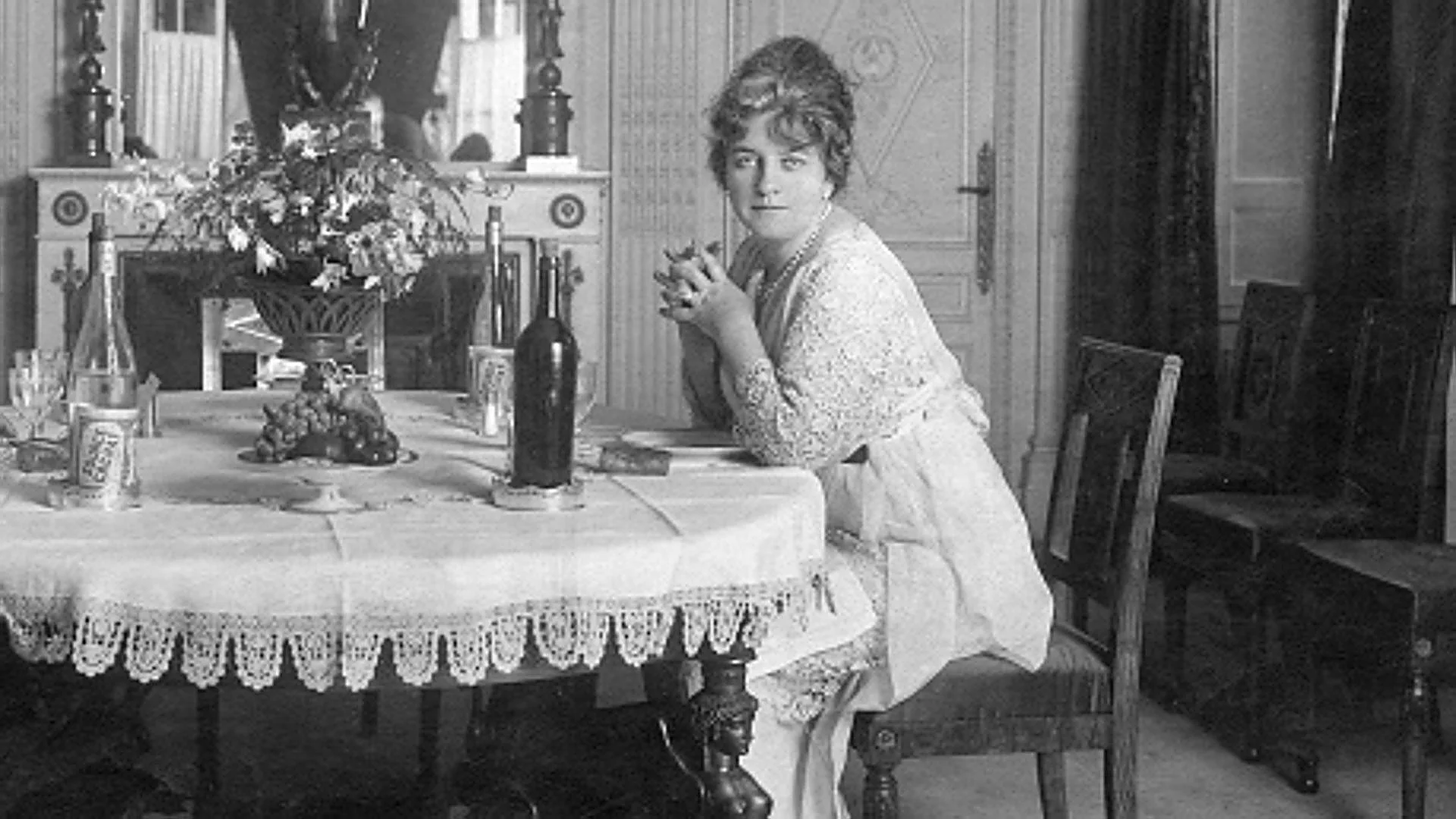
The nineteenth century was also a golden age for fashion. Surely you know names such as Charles Frederick Worth or Paul Poiret, benchmarks of Parisian haute couture at the moment, but they were not the only ones who left their mark on history. Long before Coco Chanel became an emblem of women’s fashion, there was a woman, also French, who changed the rules of the industry and who, although time has been unfair to her legacy, contributed as much as her male peers to Parisian fashion that would not take long to spread to the rest of the world. We are talking about Jeanne Paquin, the figure who anticipated the modern fashion industry and who was crucial in the evolution of women’s clothing.
Jeanne Paquin was born in L’Île-Saint-Denis in 1869. She spent her childhood in the workshop of a local dressmaker, where she learned the trade from within, then went on to become a seamstress for the Parisian firm Maison Rouff. Jeanne’s talent was such that she soon became head of the workshop. During this time she not only deepened her knowledge of the craft, but also learned to read fashion from what is not seen, something that would be key in later chapters of her life.
This young seamstress would change course when, in 1891, she married Isidore René Jacob, known as Paquin, a nickname that would become the surname by which she has gone down in history. Her husband owned a couture house that originated from a former men’s clothing shop, and after marrying him, Jeanne began running the business with him, renaming it as Maison Paquin. The objective was clear: they wanted to make that house something big and they sealed their intent from the very beginning, placing the shop on Rue de la Paix, the artery of Parisian fashion, next to the one of Charles Frederick Worth himself.
Jeanne Paquin, pioneer in the contemporary fashion business
While Isidore handled the finances and staffing, Jeanne took the reins of the creative direction. They quickly rose to be one of the city’s leading houses, as evidenced by the passing of actresses, artists, and even royalty. But what distinguished Paquin was not her flair for design, but her business acumen more typical of our times than of the era in which she lived. She was clear that if she wanted to make a name for herself, she had to differentiate the business model, and she did so through a personalized attention to each client that gave her haute couture house a certain air of exclusivity not found elsewhere.
Paquin came to have as many as two thousand workers under her, most of them loyal for years and with departments led by women, an exceptional feature that made her name even more popular across Paris. But Paris seemed small for this visionary who was also a pioneer in the international expansion of French fashion. In 1896 the London branch would open, and gradually she expanded to major cities such as Buenos Aires, New York, and even Madrid, where she arrived in 1914. To date, no other couturière had dared to go beyond local clientele, but Jeanne Paquin proved, as history has shown, that it is not only possible but necessary to further enlarge the name of her business.
Her persistence and faith in the project even endured one of life’s harshest blows: the sudden death of Isidore in 1907, when she was 38 years old. With the help of her brother and sister-in-law she kept the business afloat, albeit with a small change in her life, namely that from that moment she would only dress in black and white as a sign of mourning for her husband’s death, a gesture that ended up becoming her hallmark.
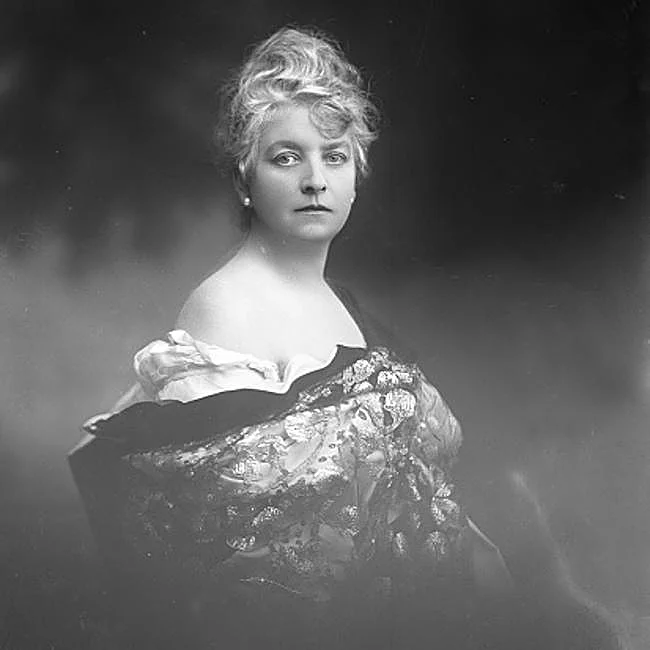
Jeanne Paquin
Why Jeanne Paquin is considered Coco Chanel’s precursor
Although Paquin became especially known for her evening gowns, her gold and silver creations and her designs that drew directly from Oriental tradition, in which no ornamental detail was missing, Paquin stood out for creating a line designed exclusively for an active woman, accompanying the changes typical of the early 20th century with female attire that suited the needs of the moment. Traditionally this idea of functional designs that seek women’s comfort is attributed to Coco Chanel, and although it is true that this designer was key in it, before her Paquin was the one who detected the missing piece needed to make this turn.
Additionally, Jeanne Paquin also wanted to be the ambassador for her brand, and although she had ample resources to publicize herself in the most original way, she herself wore her most prominent designs in order to become the face of her creation. Years later, Chanel would take up Paquin’s mantle and would also dress, almost exclusively, in her own designs, imitating her predecessor in this strategy as well, with exquisite results.
The curious promotional strategies in which Jeanne Paquin stood out
Today we are more than used to fashion shows being a display of artistic disciplines, a show where fashion is enriched with a multitude of elements that end up giving meaning to the proposal. But at the beginning of the 20th century this was not so common. That is why it was so surprising when, in 1914, Jeanne Paquin presented her new collection at the Palace Theatre in London with live music, turning the event into a true social affair.
But her innovative power did not end there. She knew where her potential clients were and decided to take her designs to those venues. How did she do it? Dressing young actresses whom she sent to the spaces frequented by high society, the target she aimed at, so that the women who saw them would talk about them. Doesn’t it sound a lot like all those influencers who bring to our screens the latest launches from brands that count on them to promote them?
All these achievements led her to receive institutional and symbolic recognitions for her career. One of the most notable was the Paris Exposition Universelle of 1900, when her colleagues chose her to head the first great collective exhibition of haute couture. She was the first designer to receive the French Legion of Honor for her contributions to the country, and in 1917 she became the first woman elected president of the Chambre Syndicale de la Haute Couture.
Jeanne Paquin ceased her professional activity in 1920, and Madeleine Wallis, her assistant, was in charge of keeping the house active until Paquin died in 1936. Nevertheless, the firm stayed alive until 1954, when it merged with the House of Worth after not surviving the postwar upheavals. However, and although the name of Jeanne Paquin does not appear among the leading figures in fashion history, her legacy remains alive in the conception of design and the fashion industry.