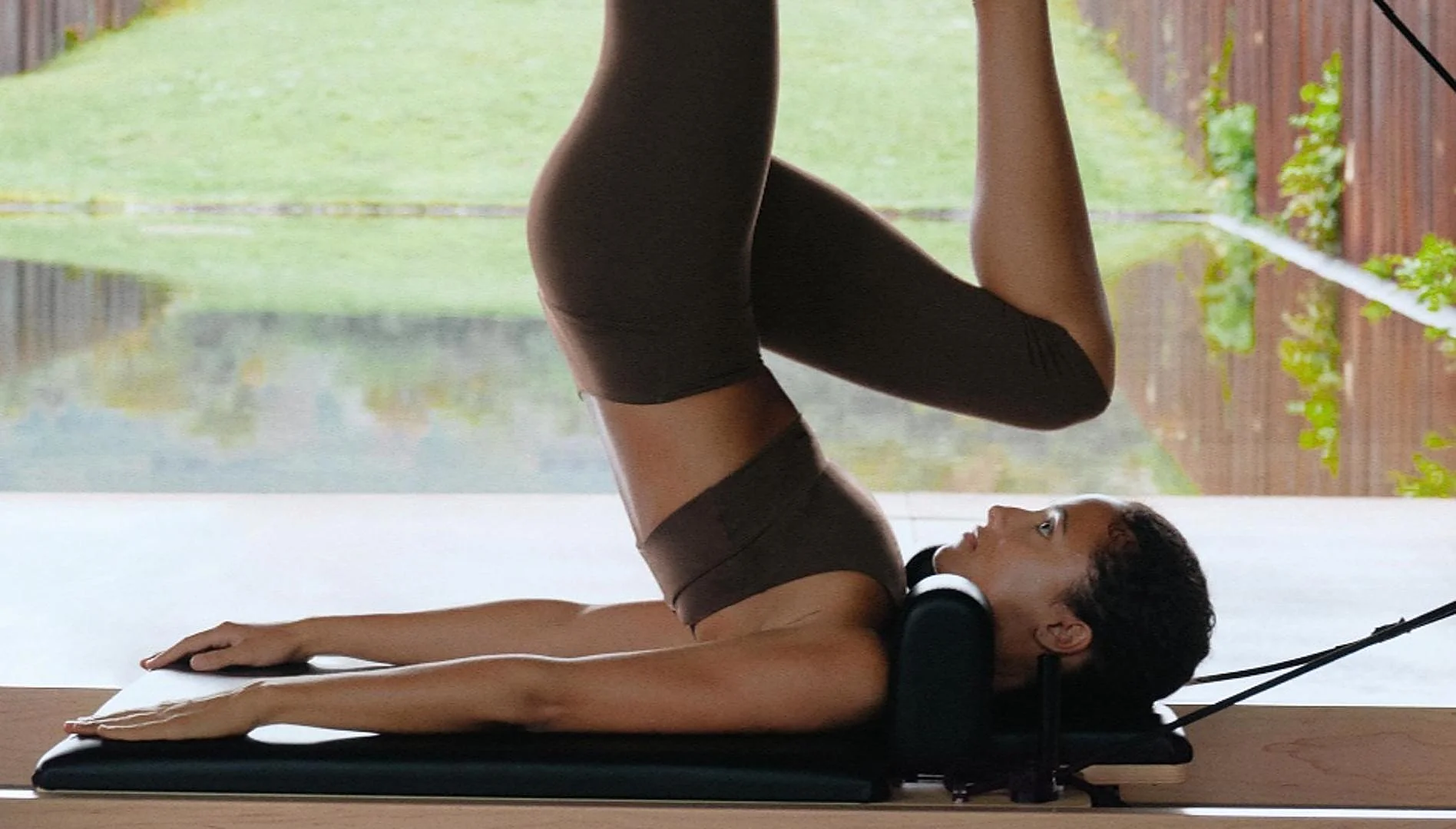
In Pilates, a large arsenal of accessories and devices is typically used for classes and individual sessions to improve the experience and increase the benefits. For many experts, Reformer Pilates (with machines) is the most effective and efficient way to experience the method, and the chair is one of the favorite devices. If you’re not familiar with how it works, here are the best tips and exercises to multiply its benefits.
It is true that at first, Pilates machines can feel a bit strange, even intimidating, for those starting out in this method, which can be somewhat discouraging. But you should get to know the brilliant (and often underestimated) Pilates chair. It can change your view of the discipline.
Why Use the Pilates Chair
The Pilates chair is a compact piece of equipment consisting of a padded seat on top and a pedal attached to one side by springs. It was designed by Joseph Pilates for a wide range of standing, seated, and strengthening exercises. It offers a full-body workout in a compact format, making it ideal for use in both gym and home settings.
It is an excellent accessory for rehabilitation and progression. Its springs and adjustable handles make it adaptable to all levels, helping people safely progress from beginner exercises to more advanced ones or from injury rehabilitation to full-strength training. It challenges stability and coordination, improves functional movement in standing positions, and is especially effective at increasing core strength, arms, and legs.
Until recently, the chair was considered a niche piece of equipment. Only the most devoted Pilates fans knew it. However, there are now entire classes dedicated to it. Moreover, little by little, it is making its way into general fitness and is increasingly found in gyms.
Main features of the Pilates chair
The chair is essentially a box (usually wooden) with a padded seat on top and a pedal connected to the side by springs. These springs allow adjusting the pedal tension and are used to facilitate or harden exercises, adapting to any goal.
Depending on the chair model, the pedal can be a single piece or divided in half. A split pedal makes the equipment more versatile and allows rotational movements. Two detachable handles snap to both sides of the box. These handles allow the chair to offer greater support or greater difficulty to the user.
Women practicing Pilates.
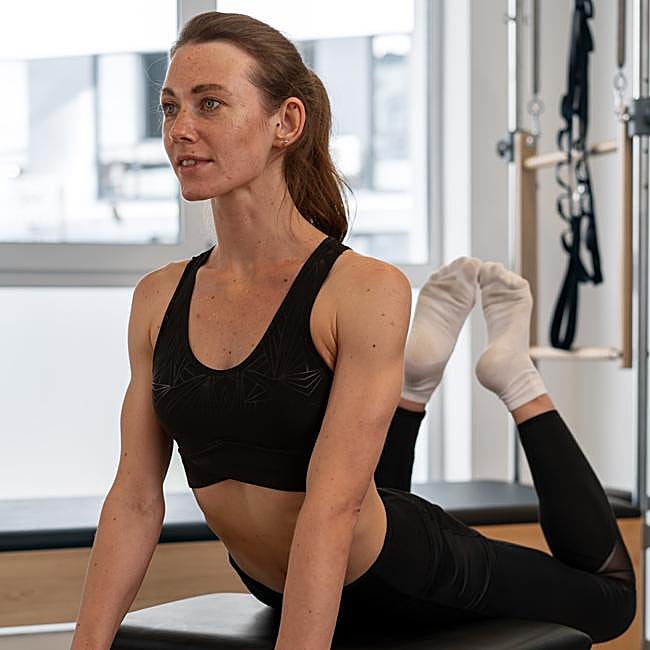
The chair is ideal for standing or seated work. It is also perfect for exercises performed with both the front and the back, such as the spinal extension movement known as the Swan. The Pilates chair allows greater creativity compared with other machines. It can be used both in front of the pedal or seated, with the pedal behind.
Although chair exercises are usually more challenging than those performed on a reformer, certain design features make this not always the case. The design of the chair’s handle, for example, allows it to offer greater support for beginners or people with injuries.
Pilates Exercises on the Chair
The Swan on the chair greatly simplifies a challenging backward-bending exercise. The same exercise on the mat requires a lot of upper-body strength and stability, as well as a great deal of spine flexibility. On the Pilates chair, the pedal gently helps you rise into the movement, so you do not have to use upper-body strength or require as much flexibility. In a chair with a split pedal, you can add rotation to the movement, making it even better for improving spinal mobility.
The original Mermaid exercise is performed on the floor in a position that requires a lot of hip and knee mobility, in addition to being able to bend down. The Mermaid on the chair is ideal for those who cannot bend down or have stiff or injured hips and knees. Additionally, performing this pleasant lateral flexion on the chair allows for a greater range of motion, since the supporting hand can be lower than the height at which you are seated.
The kneeling cat is an advanced exercise. It requires great body awareness and control to avoid losing balance. It is ideal for working the muscles of the upper shoulders, which tend to tense up when not activated enough, and it requires abdominal strength to control the pedal when returning from an inverted position to an upright one.
The Teaser is another classic mat exercise that can be even more challenging on the chair. Having the arms behind instead of overhead makes it harder to use the arms to guide the movement. Good body awareness is required to maintain the pedal height. You need good balance to hold the position on the chair and, finally, lifting both legs presents a strong abdominal challenge.