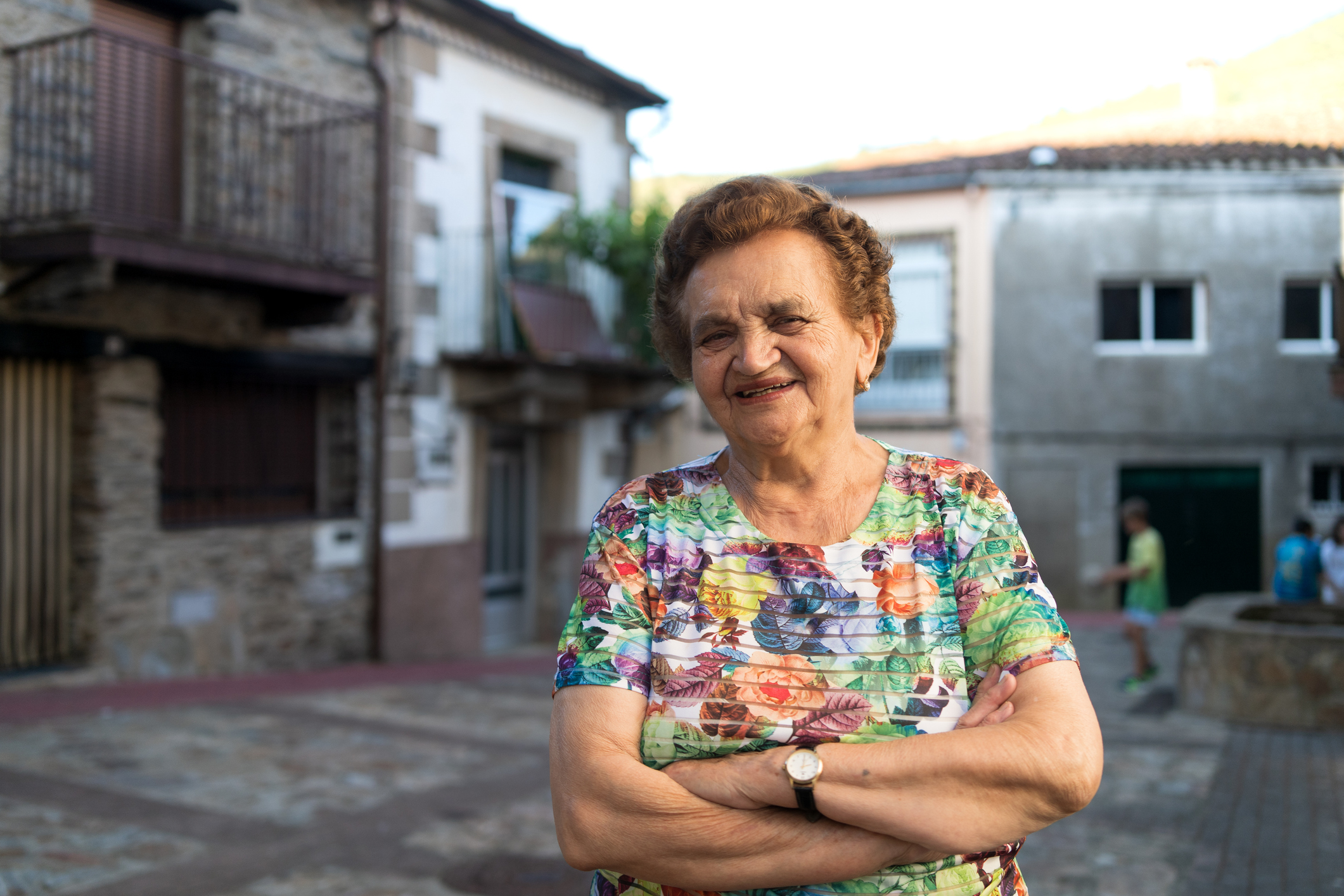
Mothers and grandmothers are untouchable. No one doubts that. Any tribute we pay them falls short, but it is worth continuing to try. Therefore, the La Pregonera project updates (without betraying) that anonymous and forgotten garment: the grandmothers’ housecoats.
Behind this exercise in healthy nostalgia, very homey, lies Yolanda Sáenz de Tejada, a fashion designer, author of 20 books, and a rural entrepreneur. “YVázquezdemimadre,” she likes to add about Sáenz de Tejada, who from a mountain village of 15 inhabitants plans her tasks as an international speaker and expert in female visibility, in addition to weaving projects that “unite artificial intelligence, technology and training.” Also “poet as a way of life,” she adds.
She was born in Huelva, on April 9, 1968, and grew up in Andújar (Jaén). Earlier, a few years before, her mother, Carmen, was born in Huelva. “She is 85 years old and loves painting her lips red,” Yolanda Sáenz de Tejada points out. The creator (and doer) of La Pregonera or How to Reinvent the Housecoat studied Fashion Design in Madrid.
While her colleagues “dreamed of Dior, Versace or Hermès, I visualized having a van and going through the towns designing collections for ladies who did not have access to stores.” Her younger sister attests to that market-stall soul of Yolanda. It galls her (the classic and healthy sibling rivalry) and she snips that “you started all this just to be able to fulfill the dream of reaching a town with a van.”
Those pockets in which you could find anything
That budding seed was followed by summers in which Yolanda observed with perhaps excessive curiosity her mother, her sisters, her aunts Cintia and Mari “always looking for beautiful and fresh housecoats.” They washed in the morning, dried in a jiffy, and put them on again and again. “I’ve seen them slip a clip, a coin, a handkerchief, a hairpin into the pocket… Inheriting those housecoats, with more enthusiasm than a wedding dress, because it is very difficult to find ones of quality. And, above all, beautiful.”
The second, and twin seed, of La Pregonera was her mother. The motivation? “Not finding housecoats for her and deciding that I would make one for her. That I was going to build a company so that no woman would be left without a housecoat.”
Result? The first collection, just launched, a limited edition of only 200 units. “Each housecoat is born from a specific woman, but it represents many,” confesses Yolanda Sáenz de Tejada YVázquezdemimadre.
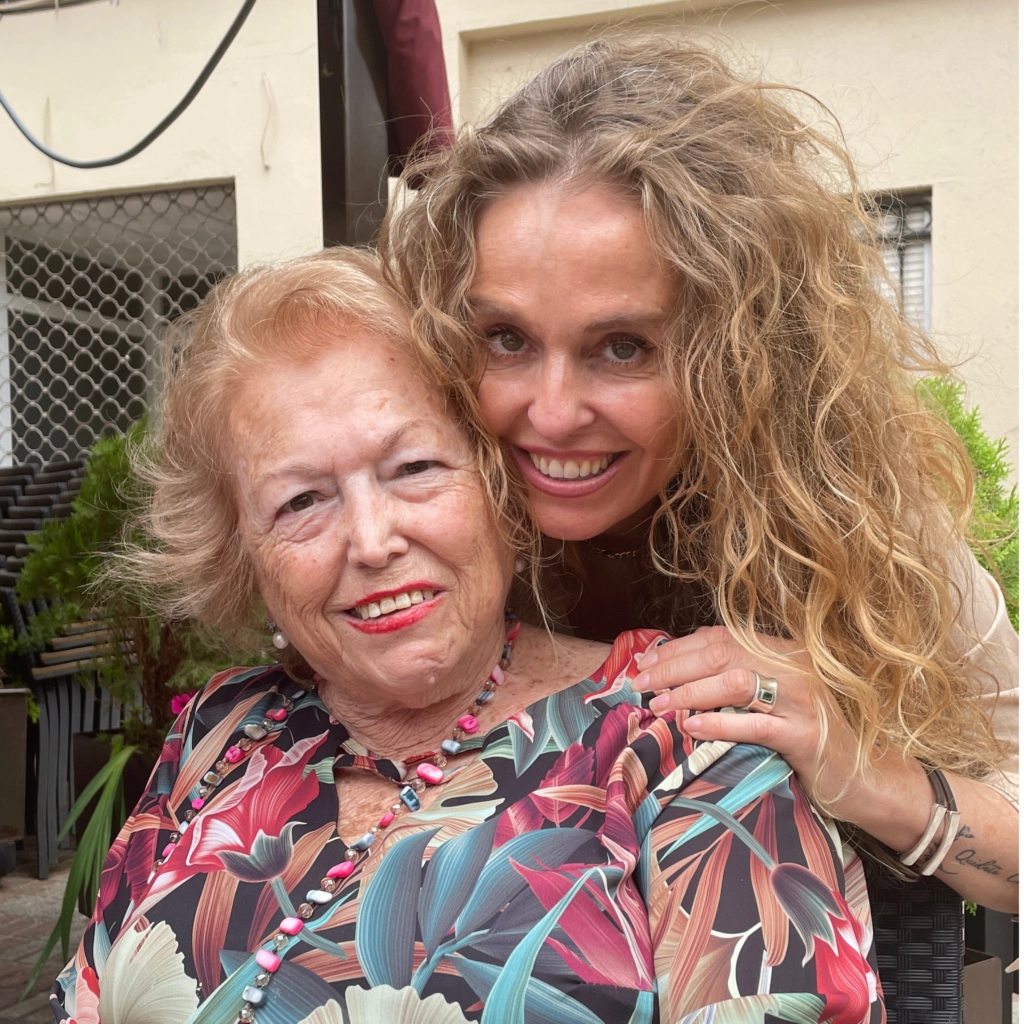
“And the third seed, or flower, because here there was already an immense sowing in my brain and heart, was this summer, in the village, observing the women there. Even in the last two years, in which I have had more contact with the women of the villages by giving workshops or presenting the latest book.” La Pregonera is fashion for them and germinated by them (grandmothers, mothers…). “That is why we reinvented the robe. It is born with a purpose: that women give the proclamation of their lives, that we applaud them, that we recognize them and that we celebrate that we are here thanks to them. That we thank them.”
The true directives
A top executive, a mega leader, a woman who has broken a thousand glass ceilings and who chairs the Board of Directors (of company ‘X’), can of course dress in one of these robes. And a man, if he wishes. If the temperature of executive power could be measured (as some measure love; on a scale from one to ten, how much do you love me?), one would have to ponder who the real directives are.
“Our mothers and grandmothers have run households, families, domestic economies, caregiving, unforeseen events, bereavements, illnesses, meals for twenty, impossible budgets and crises that did not appear in any report.”
They have not shattered glass ceilings, but they have broken hearts: those of everyone who has surrounded them, hugged them, kissed them and caressed them.
Fed up with ironing
“The thing is they were not given the title of directives. They were given other names: mother, grandmother, housewife, working woman, woman who forges ahead. But they did lead. And a lot.” The logo of their companies answered to the name of family, neighborhood, countryside, market, shop, or home. They thought globally before anyone asked for anything. “They had vision and organization and goddess-level leadership. And leadership, because when they spoke, the small world around them was ordered. And they had a capacity for resilience and resolution that many companies would envy,” explains.
For Yolanda Sáenz de Tejada, La Pregonera was her destiny “because I have the feeling that all my life I have been preparing for this; older women move me, they remind me of what I always want to preserve: generosity, simplicity, authenticity.” Considered, for eons, as a minor garment, “it deserves design, fabric, pattern making and beauty.” They must be fresh, comfortable, easy to wash, quick to dry and, yes, that require only minimal ironing “which they have ironed plenty already.”
Not everything is design
Pretty prints, not loud, “flattering cuts, but ones that recognize as their own, pleasant fabrics, pockets always, and a way to fall gracefully over those divine bodies without pinching.” More than ecological and sustainable (concepts that have died from overuse, as Rocío Jurado might say), La Pregonera is born from our home in the village. A village of 15 inhabitants on the mountain, in contact with nature, with the earth, with real rhythms.
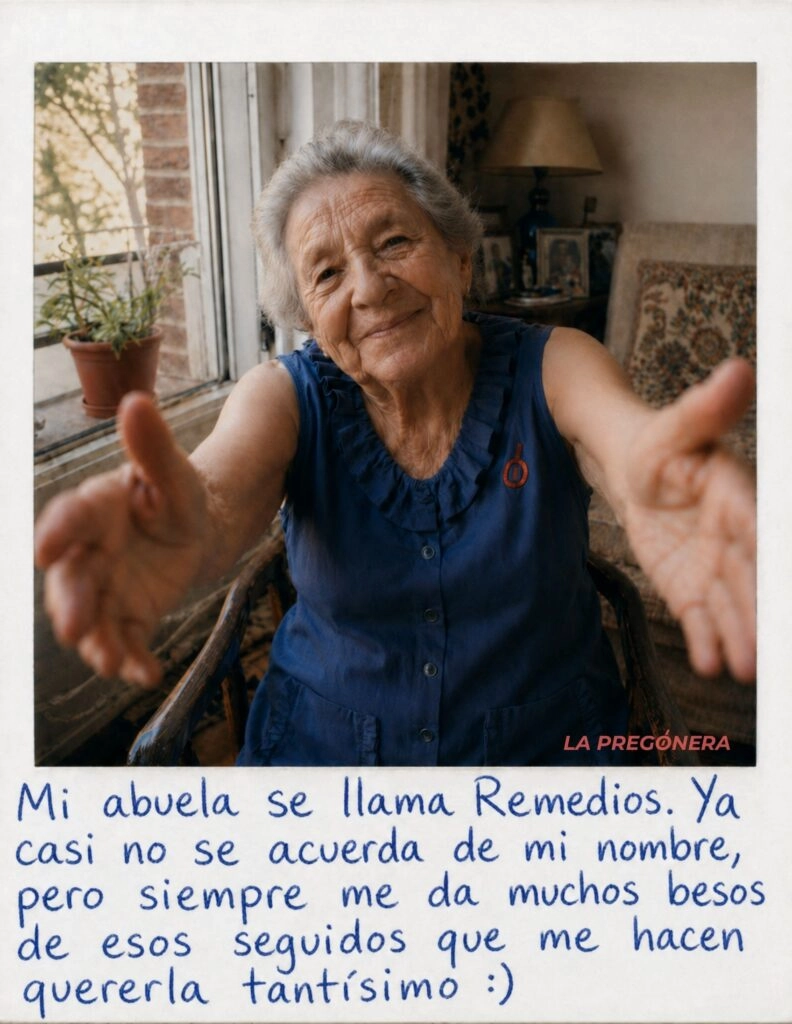
“It would not make sense to create a brand like this and use materials that have nothing to do with what we tell,” she says. “The pregoneras are not only the women who can dance, walk lightly or move without help. They are also those who can barely leave the house. Those who have an illness. Those who have gained weight. Those who are very thin. Those who truly need comfort. Those whose bodies have changed with age, life, childbirth, treatments, for whatever reason.”
Inheriting a housecoat as if it were a wedding dress
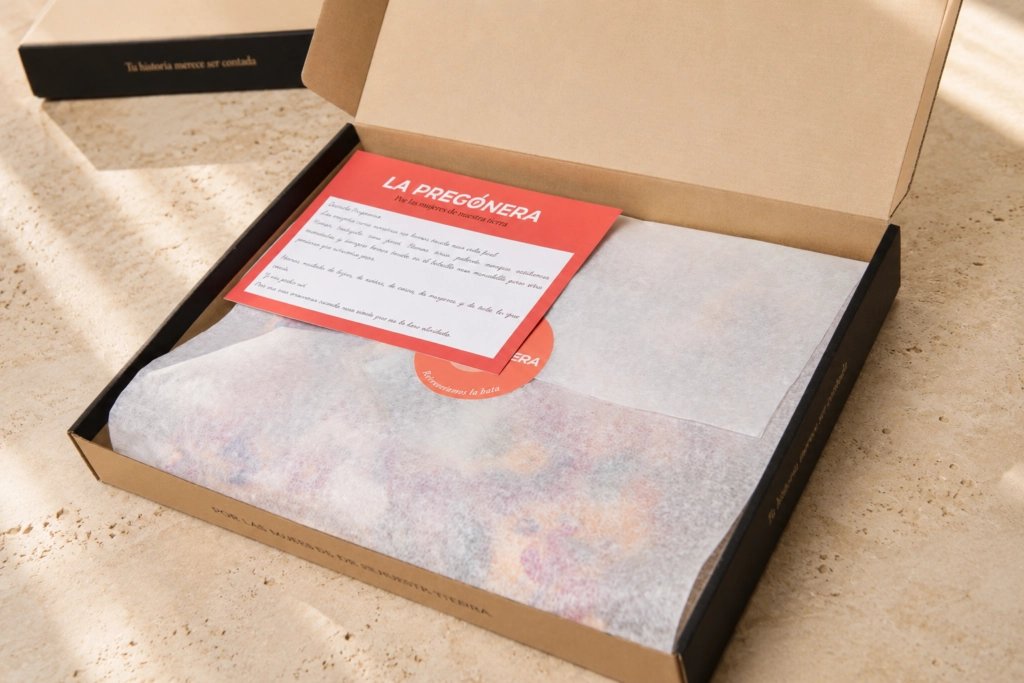
Her sizes range from S to 3XL. Yolanda Sáenz de Tejada YVázquezdemimadre works with nearby workshops “and with professional women in sewing.” With care, slowness, and coherence. It reaches the pregonera (your mother, your grandmother, your aunt, your neighbor…) in a packaging pampered, like a luxury gift, online via La Pregonera’s website. “Like a thoughtful gift. A way of saying: ‘Thank you, this is for you, this time we thought of you,'” she stresses.
Once a month, La Pregonera arrives in a village with party airs. “We are going to create an event around the village’s older women, their pregoneras. It is an event for them. That is why we will work closely with the town councils,” she explains. Those real women ‘parade’ in the robes, “with their age, their bodies, their way of walking and their way of being.” Yolanda Sáenz de Tejada records a videopodcast at the home of a ‘female role model.’ Yolanda’s daughters, aged 29 and 24, “my Vikings,” are partners of La Pregonera (as is Yolanda’s partner).
“I have been filming pregoneras these months, entering their homes. They have told me their lives, they have moved me, I have hugged them and now all of that we are sharing on social media because they are our brand. There is a community team behind preparing each video with a lot of respect and love because they know it is the proclamation of each of our women.”
Her daughters, ‘the Vikings,’ want a robe. Yolanda replies: “They will have one just like their grandmother.”