Injectables are frequently demonized, such as botulinum toxin or hyaluronic acid. It’s no secret that hyaluronic acid has garnered some bad fame in recent times. The blame? Low-quality products, poor technique, lack of information, and underqualified staff.
This is explained by the experts at Teoxane, who come to debunk some of the most popular myths regarding hyaluronic acid.
Seeking the answers in the laboratory
To know what we inject, it is important to know where the product comes from. That’s why we visited Teoxane’s headquarters — the Swiss laboratory specialized in the design and manufacture of dermal fillers and cosmetics with hyaluronic acid — in Valencia, so they could explain how it is made and the bad practices associated with the poor reputation of this active ingredient.
There we meet Luis Caballero, General Manager of Teoxane in Spain and Portugal, and Javier Torregosa, Teoxane’s Medical Education Manager. They explain that hyaluronic acid is an endogenous molecule produced by the body itself. “In the brain, in the eyes, in the joints, in the vascular walls, we have hyaluronic acid throughout the body, but the main reservoir of hyaluronic acid is in the skin. Approximately 55-56% of all the hyaluronic acid in the body is located in the skin,” says Torregosa.
We have a lot and we lose a lot too
“In the skin, hyaluronic acid provides structural support. It’s like a kind of mattress on which fibroblasts rest,” he adds. Therefore, as we age, we lose the amount we have in the dermis and the skin begins to wither and wrinkle.
The decline of hyaluronic acid also affects fibroblasts, those skin cells that produce collagen and elastin. If hyaluronic acid is lost, that support where fibroblasts reside is lost as well, which begin to atrophy and stop producing collagen and elastin. “That’s why, both with cosmetics and with fillers, we try to recover the hyaluronic acid we lose over time.”
Understanding how the skin works
Under the skin we have superficial fat, muscle, another layer of fat, and bone. “The wrinkles we see are not only because we are losing hyaluronic acid from the skin itself. It is because all the support below is being reabsorbed. The bone, the fat… they reabsorb with age.” And, as the expert assures, “if I have a piece of fabric on a table that keeps getting smaller, the fabric end up drooping.”
You age, your hyaluronic acid ages too
We have an enzyme in the skin that, naturally, degrades about a third of the hyaluronic acid each day. Then another new one is produced. What happens over time is that it degrades more and is replenished less.
“That’s why we need that extra hyaluronic acid. In fact, the half-life of hyaluronic acid is between 24 and 48 hours. For this reason the fillers we use are not 100% hyaluronic acid. We need to modify it a little so that it lasts longer than those 24 or 48 hours,” he adds.
Cross-linking
“Hyaluronic acid was originally discovered in the vitreous humor of cows’ eyes. Today we produce it by bacterial fermentation, as many vaccines and antibiotics. It is a biotechnological process,” he adds.
They feed sugar to the bacteria; usually of the genus Streptococcus. This bacteria consumes the sugar and produces, among other compounds, hyaluronic acid. From there the magic begins. You obtain a kind of threads that, at first glance, look like cotton fibers. This ‘cotton’ is filtered to remove any bacterial residue and is mixed with water until it is fully hydrated.
A curiosity? The hyaluronic acid can bind approximately a thousand times its weight in water. And for it to last months in the skin, it must be reticulated, that is, its fibers are joined to form a network.
Goal: improve the formula
Each laboratory has its own techniques to optimize the formula of its dermal fillers. Normally, heat and aggressive chemicals are used to break the hyaluronic acid fibers and then glue them back together with a chemical adhesive (called BDDE). This creates a slightly more rigid gel.
The Teoxane laboratory does it without applying heat. They treat the long chains of hyaluronic acid with extreme care, using the minimum indispensable amount of chemical cross-linking. In this way the long natural fibers do not break. The natural elastic structure of hyaluronic acid is preserved, creating a dynamic network that traps water and stretches without breaking.
From glue to Velcro
If you glue two fabrics with glue, when it dries it becomes a rigid layer. If you try to fold or stretch the fabric, it cracks, breaks or feels hard. This is what happens with traditional hyaluronic acids: they create a rigid block under the skin.
Instead of gluing the chains side by side rigidly, Teoxane’s technology makes the long chains rub, hook and unhook elastically, exactly like the small hooks on a Velcro strip. They call it ‘dynamic beauty’ because it allows natural gesturing. “It’s a hyaluronic acid that accompanies facial movement. In the past, very dense hyaluronic acids were made; people smiled and those balls were seen, which today does not happen if done correctly,” says Torregosa.
Fill or hydrate
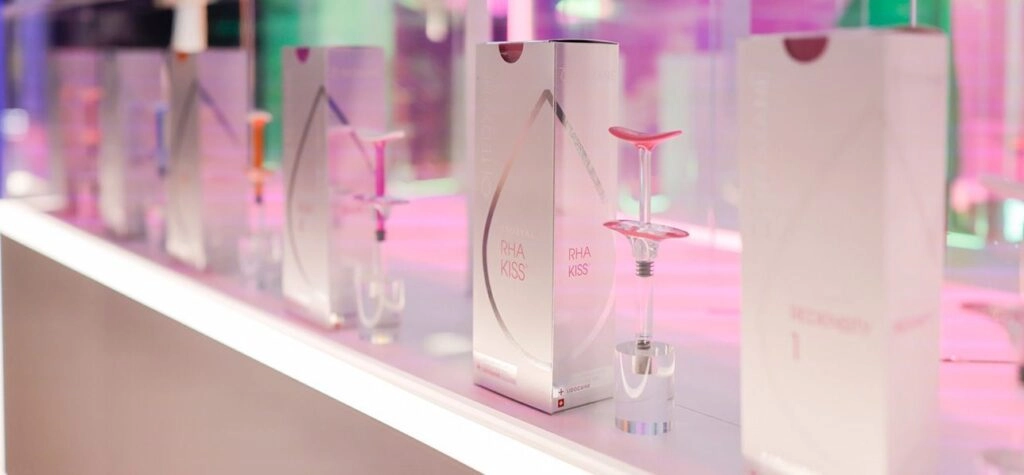
In cosmetics you have surely heard about ‘low (or high) molecular weight’. “In fillers (fillers), we use high molecular weight hyaluronic acids. Areas where I need to recover structure and we go to more reticulated hyaluronic acids. They have more BDDE because I need a stronger hyaluronic acid,” he explains.
For its part, “a skin booster is usually free hyaluronic acid. Free means not reticulated. We add no reticulant because I only want it to hydrate. So it goes in more superficial layers.”
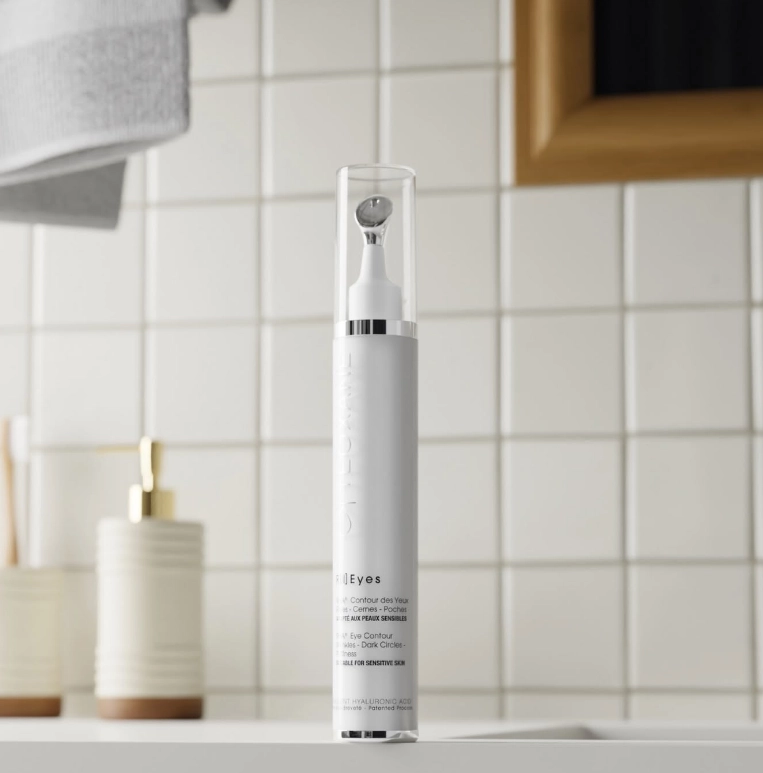
To put it simply, we expect creams to penetrate and hydrate the skin. But in injectables, since the product is injected directly with a cannula, the challenge is the opposite. If you inject short chains (low weight), the body reabsorbs and destroys them in a few days. Therefore, when we talk about fillers, we aim for the chains to stay long (high molecular weight).
The lips: the obvious favorite
Across all eras and cultures, lips have been given prominence. In fact, according to data provided by Teoxane, 71% of patients who received lip treatments would like to repeat it; 73% seek a natural lip; and 50% of patients associate lip treatment with facial enhancement.
So why are people so afraid to inject hyaluronic acid into the lips? “Because often facial harmony is not respected,” explains Dr. Laura Núñez Robinson, expert in facial harmonization. The priority should be to understand the patient’s anatomy to use the right techniques and products. It is not the same to use hyaluronic acid to hydrate, to gain volume, or to balance certain features, and for that it is crucial to have the right hands.
Dr. Katerina Sánchez, specialist in Aesthetic Medicine and Dermatology, explains that the appearance of the lips is also conditioned by age and even by culture. “I had experience working with Ukrainians, Russians, then with Arab patients, and now here the rules change a little. Russians and Ukrainians seek juicier, fuller lips; here in Spain we work more with naturalness.”
But all agree on one thing: the famous ‘pillow face’ (faces swollen from repeated filler abuse) is not an effect, it is a consequence. And getting the right hands is the key to achieving the expected result.