The normal thing when planning a new hotel is to start by correcting things. Here, however, they did the opposite. The small windows remained small, the walls kept their irregularities, the old plaster stayed where it could be saved, and even the traces of rural life became part of the project. Nor was a large pool with views opened, nor was a contemporary pavilion built to receive guests. In Santo Stefano di Sessanio, the idea was to touch as little as possible.
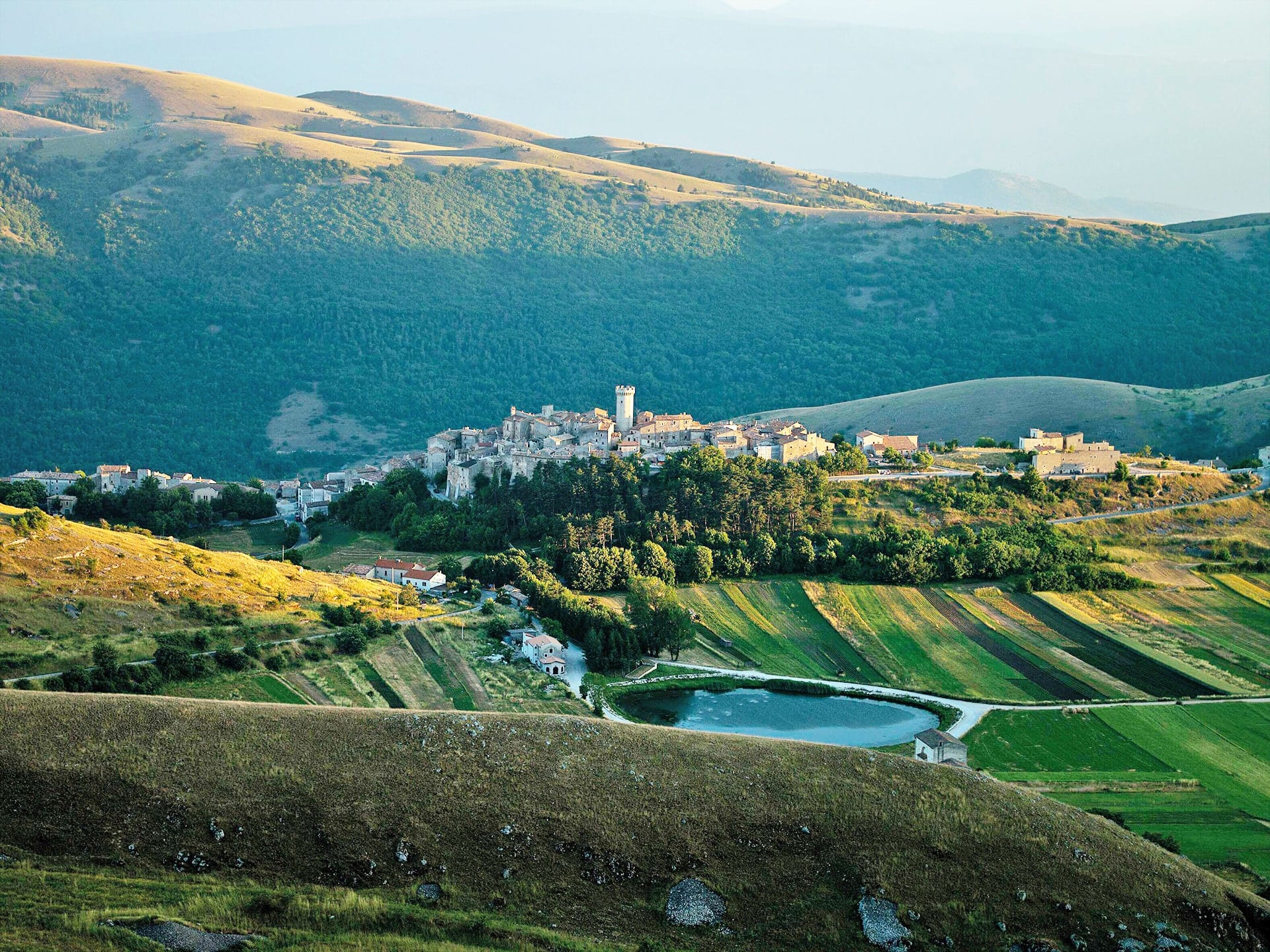
The result is Sextantio Albergo Diffuso, one of the most interesting hotel experiments in Italy. Its 31 rooms are not located inside a building, but spread across different constructions in this small medieval hamlet in the Abruzzo, at an altitude of about 1,250 meters and within the Gran Sasso and Monti della Laga National Park. To go from the room to breakfast you have to go out into the street. The alley is the corridor and the town, in a sense, ends up acting as the hotel.
The History of Sextantio Albergo Diffuso
The story began in the late nineties, when the Italian-Swedish entrepreneur Daniele Kihlgren arrived by motorcycle in Santo Stefano di Sessanio. The place had suffered for decades the same process as so many villages in inland Italy: emigration, aging, and the progressive loss of population. That lack of development had, however, an unexpected effect. While other historic centers had accumulated reforms, expansions, and unfortunate constructions during the twentieth century, here an intact architecture survived.
Kihlgren began buying some of the abandoned houses. His idea was not to restore them to turn them into second homes or to raise a resort on the outskirts, but to ensure that the town itself could host visitors.