Between our mothers’ “whatever the pot asks for” and the almost laboratory precision with which we approach cooking today, there is a great generational step. We have lived — and enjoyed — from a young age the result of intuitive gastronomy, the one that whispered “a pinch of salt” and also “whatever the plate asks for.” The result of these millennial measures was a spectacular flavor, difficult to replicate, achieved thanks to years of patience and experience in front of the stove.
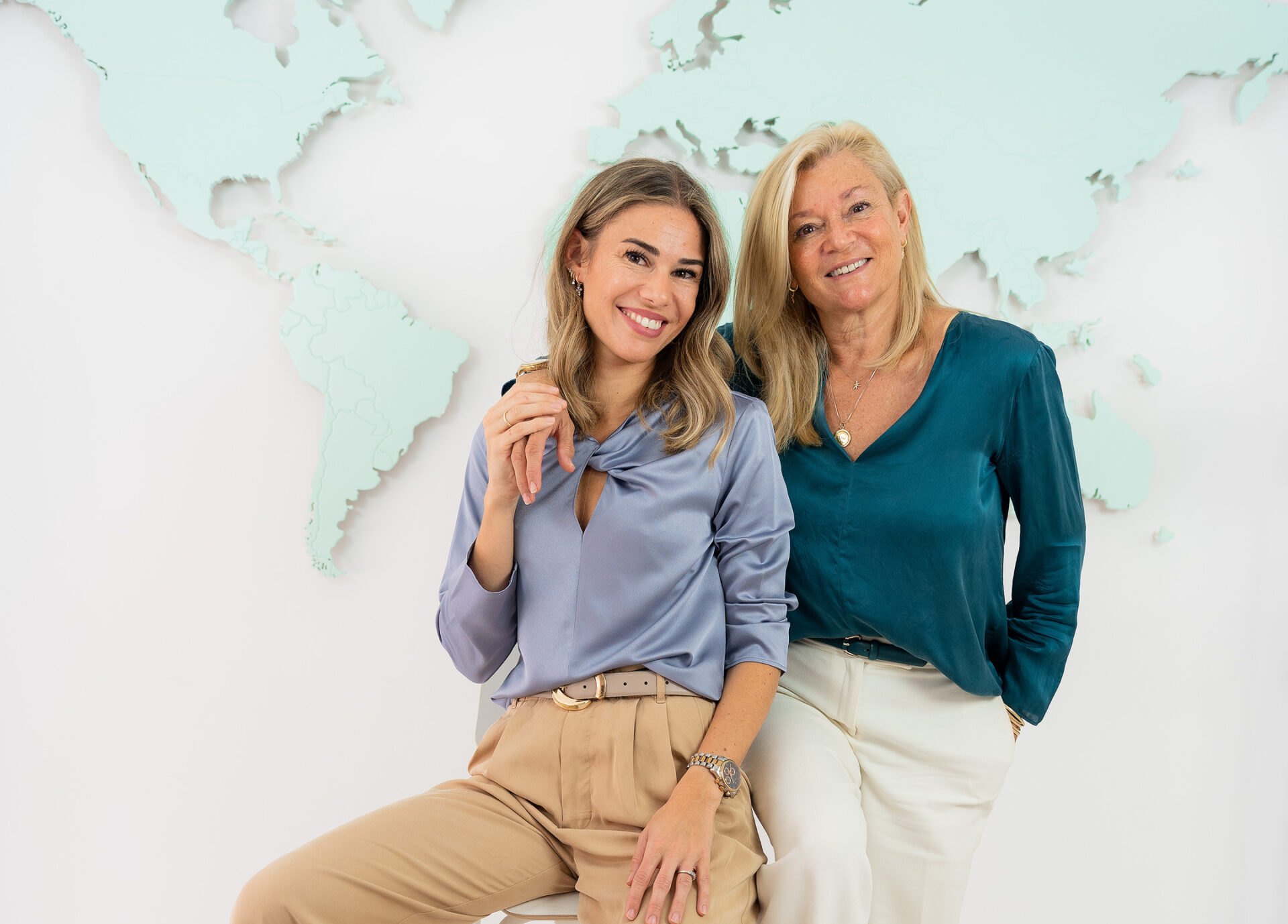
Now, pipette in hand, we see how the scale, the measuring instrument, and the chemistry of foods dictate the pace. However, in that generational clash there is no rupture, but a very interesting mix: the leap from the wisdom of heart-driven cooking to the scientific rigor that seeks to nourish with awareness. The true success of FuturLife21, a project created more than 10 years ago by the biochemists Elena Pérez and María Hernández-Alcalá, mother and daughter —with the aim of translating scientific knowledge into nutritious and delicious food that we can integrate into our daily lives— lies precisely in having managed to condense that perfect hybrid.
A hybrid that they will explain to us, step by step, at the upcoming WeLife Festival, which will be held at Real Teatro de Retiro (Madrid) on Saturday, October 24. Don’t miss your ticket!
The Usual and the New Around the Table
This intergenerational alliance between mother and daughter shows that traditional cooking does not lose its soul when science is added; on the contrary, it is enhanced, transforming the act of eating into a balance between emotional memory, health, and nutritional rigor. “Precisely because of that I think we are reaching so many households, because we seek to make traditional food very nutritious and flavorful. Part of what is happening today is that there is a very large nutritional deficiency, because we are consuming foods with very low nutritional density,” they explain.
“I used to be one of those, the ‘a splash’, ‘a little’… and my daughter said: ‘Mom, how can this be?'”, remembers Elena. Her relationship with food began by working with parents of children with brain injury, whom she taught to monitor what they ingested. The result was that not only the children improved, but the whole family. From there, mother and daughter decided to turn scientific experience into something that anyone could understand and apply because, as Elena explains, we have oversimplified too much the concept of eating healthy: “Healthy does not always mean nutritious. Healthy is eating lettuce and chicken, but that is not nutritious”. For them, the difference matters. It is not about restricting our diet to foods with a good reputation, but about building a complete and varied system, but also rich.
Healthy is Not Enough
They base their method on the Harvard plate: half vegetables, a quarter of protein, and another quarter of carbohydrates, not forgetting healthy fats. But they try not to turn every meal into a mathematical operation. If, to achieve the perfect menu, we end up always eating boiled fish and grilled vegetables, the process becomes longer than a day without bread (no pun intended), and in the end we give up, because it turns into torture. This is the main reason we fail to create lasting habits.
“There is a need to banish the myth of eating only to look good on the outside. Eating well is related to health, to feeling good, to having many more reasons to do things, to a better mood, better digestion, with less joint pain…”, says Elena, while emphasizing that this system is neither torture nor has a finite end; it is about enjoying eating for life with a high nutritional power.
Another major problem in our relationship with food? Turning weight into the main measure of everything. “How can it be that weight ruins our day?”, asks María. Obsessing over the scale and focusing only on calories has caused us to lose sight of the quality of what we put into our bodies. And she explains why oil was demonized for so many years and why light products proliferated: “Many people don’t take that much oil and focus on light products thinking that it is healthier. In the end, artificial sweeteners disrupt the microbiota for many of them, they do not help re-educate the palate, one continues to crave sweetness all day because you spend the day consuming sweeteners and you cannot develop a habit that does not require so much sweetness.”
“Oil has magnificent benefits and, because of the previous studies that looked at calories, it has been heavily demonized. It is a wonderful product and even more so in Spain, where we are full of olive trees. In the end, oil slows the absorption of glucose and is a superhealthy food.” And that is not to mention its importance at the intestinal level. Here is where the still viral, but largely unknown, microbiota finally gets its turn. It conditions all the processes of our system and we still do not give it the importance it deserves. “People still do not understand how important the microbiota is,” notes Elena.
Not Looking at the Calendar
“We always say that to acquire a habit you need three things: the scientific knowledge of how what we eat impacts us; the practice, that is, how to cook or what I have to buy; and the motivation, which is what makes you feel better every day at all levels,” explains María. So, why do we always start with enthusiasm and then lose consistency? “Well, because it isn’t tasty. People change their habits because they have a wedding and want to fit into the dress. If they do it as an obligation, they focus on the scale and they do not eat well,” she notes.
Eat a Hamburger
“If you feel like it, eat an ice cream; when you follow a balanced diet, it is appetizing, necessary and brings happiness. Then you don’t have to compensate by skipping a meal because you eat balanced every day,” they agree. Perhaps there lies the main lesson of this new way of understanding cooking. The wisdom of our mothers was not wrong; they simply did not have all the tools we have today.
Science alone is not enough if it forgets the pleasure of sitting around a table. Between the ‘eye for measurement’ and precision cooking lies a common space where tradition and research stop competing to complement each other. A place where recipes still taste like home, but now also understand microbiota, inflammation and prevention. That, probably, is the ingredient that explains the success of FuturLife21.
Together, they will teach us all the secrets at WeLife Festival 2026, which will be held at Real Teatro de Retiro (Madrid) on Saturday, October 24. If you still don’t have your ticket, get it here. Don’t miss it!