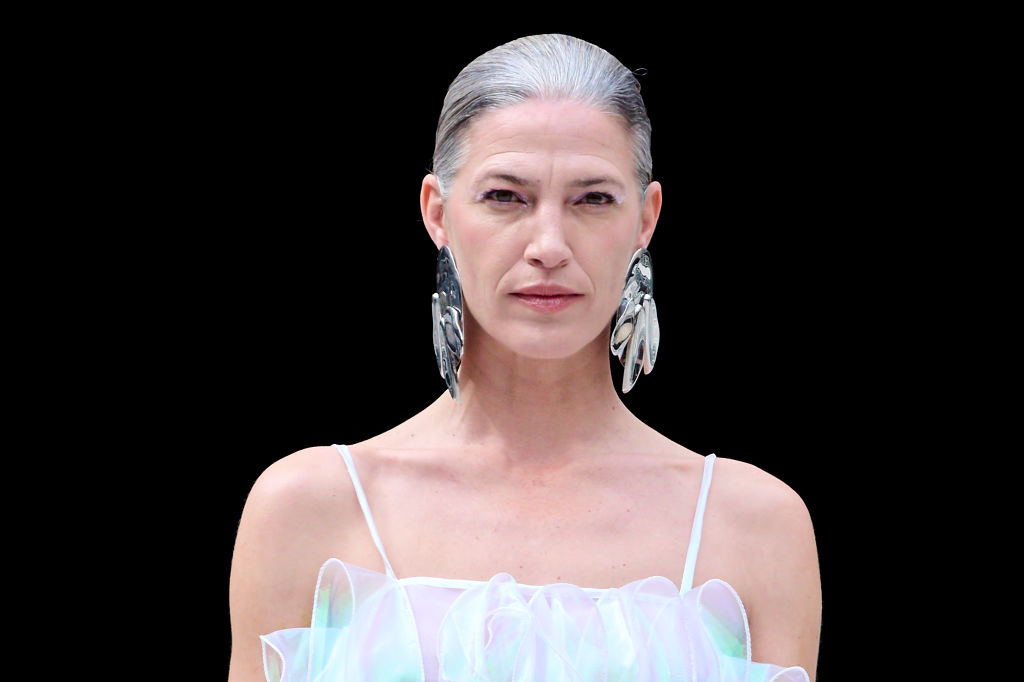
Do I keep dyeing or let the gray show? We all reach that age when we ask ourselves that question. We’ve seen them on Queen Letizia, on Sarah Jessica Parker, or on Andie MacDowell and we understand that yes, you can go out in public with white strands. But something inside us holds us back. We have normalized wrinkles in the name of healthy skin aging, even the weight gain associated with menopause, but gray hairs still carry a lethal ageism.
And worse, that ageism springs from within ourselves toward our own image and toward that of others.
That Woman with Gray Hair Is Not Me
Miriam Quevedo, a well-known Spanish businesswoman and founder of the cosmetics company that bears her name, confessed to me a few days ago that there was a moment when she decided she would no longer dye her hair. “I held out briefly. Suddenly, the white hair made me feel older. I perceived far more the skin aging imperfections, the sagging, the laugh lines. The image I saw in the mirror was that of an older woman, it wasn’t me. So I dyed it again. I admire brave women who do it, but it’s not for me,” she recounted.
The first hurdle to letting the gray show is that gray hair is not white, but grayish or yellowish. “Many clients come to us with ruined hair because they get bleaching or aggressive dyes to achieve an elegant white,” she adds. And that gray tone, which is not white but ‘silver’, is perceived as dirty, decrepit, abandoned.
Then guilt arises over something natural, but that can be camouflaged with a dye.
Guilt When Gray Roots Show
The hair stylist Juandiegoteo acknowledges that when a client arrives at the salon “with gray roots, she typically shows some shame. The first thing she does is justify having let the grays grow so much, as if they were a sign of neglect or lack of care.” An absurd embarrassment that does not appear when the roots are of our own color.
That mea culpa with a bashful tone doesn’t happen either when the client arrives at the salon with hair scorched from using inappropriate home dyes, from overusing the flat iron at full temperature, or from leaving it to its fate under the sun, seawater, and pool chlorine. “It’s something that catches our attention a lot because rescuing damaged hair is harder than covering a gray strand. But yes, we are much more forgiving with other cases that really damage hair, such as overdoing the heat, the dryer etc. In the end, it seems that people worry more about whether a gray strand is visible than about the real health of the hair,” she continues.
“I’m struck by the fact that women are especially demanding with gray hair because they associate it with neglect or lack of care.” And that is the problem: the ageist connotations of abandonment, decline, and even dirt that are linked to gray hair.
Gray-Haired, Mature? That Is Attractive
Letting your gray show is like crossing an imaginary Rubicon, the one that separates full youth and energy from the decrepitude assumed in aging. We have managed to see natural beauty in a wrinkle or in imperfect skin. Gray hair still sinks under personal and social stigma. “There is a lot for us to do as a society. First of all, we must overcome that double standard around aging: men with gray hair are indeed perceived as attractive, they are given more leeway when showing their age, but women are expected to always display youth, femininity and coquettishness in the sense of following those youth standards that society marks,” notes Marga Segovia, a general health psychologist, specialized in relationships and self-esteem (@seryconectarpsicologia).
She points out that changes cannot be made overnight. “It’s an exercise that must be undertaken by the media, advertising, audiovisual industries, social networks… All the channels of those messages we internalize as our own and make us feel, when a gray strand appears, that it is not very feminine, not well cared for and that I have to fix it as soon as possible.”
The Stereotype of Old Age
The psychologist emphasizes that “we still have a very stereotyped view of old age, one that we flee from when it’s about us and that we attribute to others.”
The first victims of that ageism about gray hair are ourselves. “In that double standard of aging we referred to earlier, the worth of a woman is tied to her physical appearance, something that does not happen with men. There is social pressure for hair to be dyed and without roots, especially if they look white. Why do we self-flagellate when we miss a salon appointment and gray roots begin to show? Because we internalize that negative discourse about what society believes having gray hair entails and you dye it to protect yourself from that rejection. It’s sad, but we tend to be guided more by rejection than by authenticity,” the psychologist adds.
Is covering gray hairs always a capitulation? It isn’t if it’s done from free choice and not from the obligation to do it, because the other way is not valid. Hopefully when dyeing we could have considered beforehand that not doing so would also be okay.”
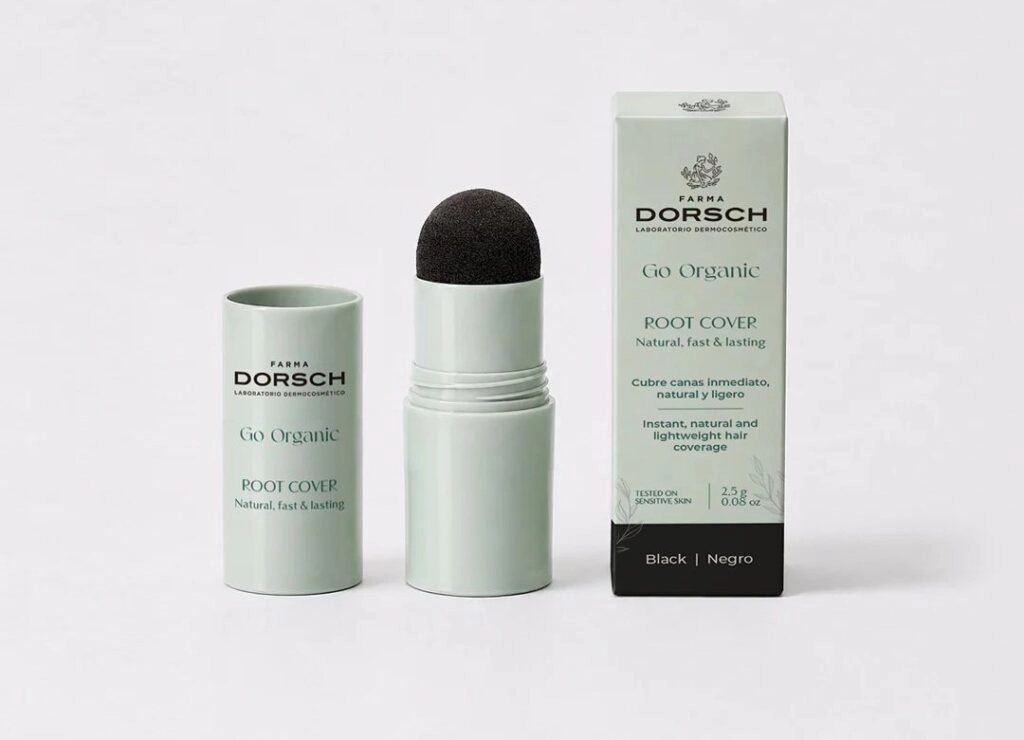
Judging Others by Their Gray Hair
We should not speak about other people’s bodies. Neither have opinions, nor judge. That criterion seems not to apply when it comes to judging someone else’s gray hair. “We associate gray hair with vital exhaustion because culturally we have learned to connect certain physical signs with aging. We innately associate a loss of energy and a lack of attractiveness when a person shows their gray hair, especially if it is a woman. And that leads us to the pressure to appear young by hiding the gray hair,” explains the psychologist.
Recent work history shows in a humiliating way how many women face dismissal or, simply, relegation to minor tasks, just because their gray hair is visible. A new glass ceiling that makes hiring or promoting a woman in midlife more difficult.
This kind of discrimination is known as lookism, and, unlike sexism or racism, it flies under the inclusivity radar. “Discrimination based on physical appearance is not as well identified because it forms part of organizational biases. This impacts the mental and physical health of people and generates losses of talent, diversity, and innovation for companies,” denounces sociologist Gisela Dohm.