In an October packed with major TV premieres, such as the new versions of East of Eden, Steinbeck’s classic, or Carrie, Stephen King’s first novel, Aquel also makes its appearance: the eagerly awaited biopic of Raphael. Over eight episodes we will delve into the life and work of Miguel Rafael Martos Sánchez (Linares, 1943), from his humble origins in postwar Spain to the conquest of the major international stages.
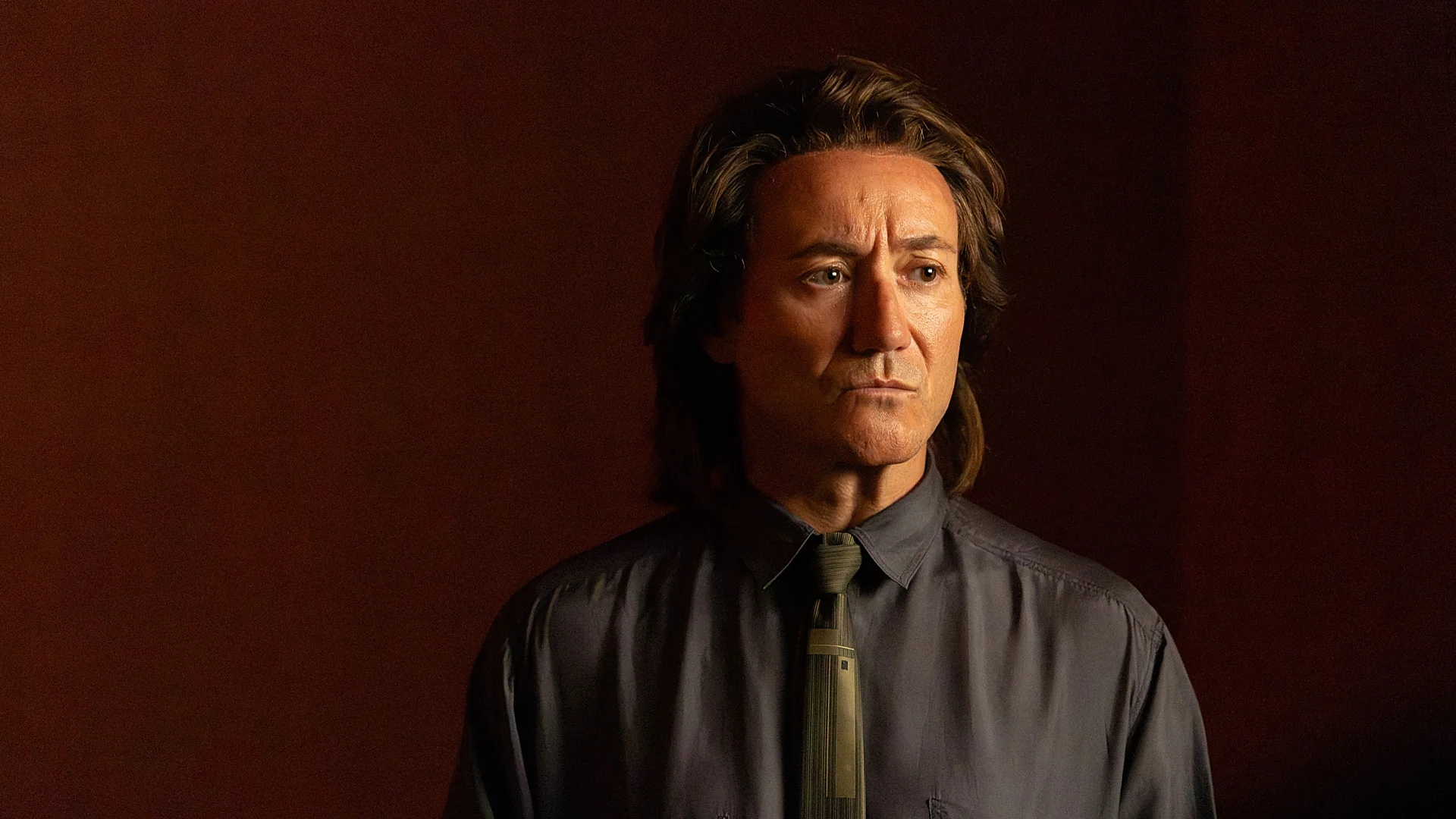
Javier Morgade and Carlos Santos embody Raphael in two stages of his life: youth and maturity, respectively, in a story that traces the lights and shadows of the artist and premieres on October 9 on Netflix, with his son, Jacobo Martos, serving as associate producer. In statements to the streaming platform, the singer says he has told his life “without filters,” later interpreted “with total freedom” by the screenwriters to draw “an honest portrait, without embellishments, that does not shy away from any aspect, no matter how complicated it has been”.
The series portrays the unstoppable rise of an irreplaceable artist and that remains in top form at 83: his most intimate passions, his greatest hits, his personal conflicts and the ghosts that have accompanied him throughout his life. Present are his rivalry with Julio Iglesias, his problems with alcohol, or his love story with the aristocrat and journalist Natalia Figueroa.
With settings ranging from Madrid to Las Vegas, via Paris, Acapulco or Moscow beyond the Iron Curtain, Aquel is an emotional journey through six decades full of lights and shadows. A moving story that reveals the man behind the myth. “This biopic not only tells my story, it also reflects a shared story: a career marked by unforgettable moments, some very well known, others more intimate; some luminous, others tougher,” added the performer of My Great Night.
Aquel: the ghosts of Raphael
“You were born to be an artist,” we hear them say to Raphael in one of the early scenes of his biopic. A long and fruitful career that began in Madrid, where he had moved from Linares when the singer was barely a nine-month-old baby. Passionate about theater since he was 10, after a nocturnal escapade he came home at dawn and his mother, Rafaela, greeted him with a resounding slap. Far from intimidating him, the punishment served to reaffirm his vocation: “And will this be every day? Because I will always arrive at this hour; I want to be an artist.”
The young Raphael in the biopic Aquel.
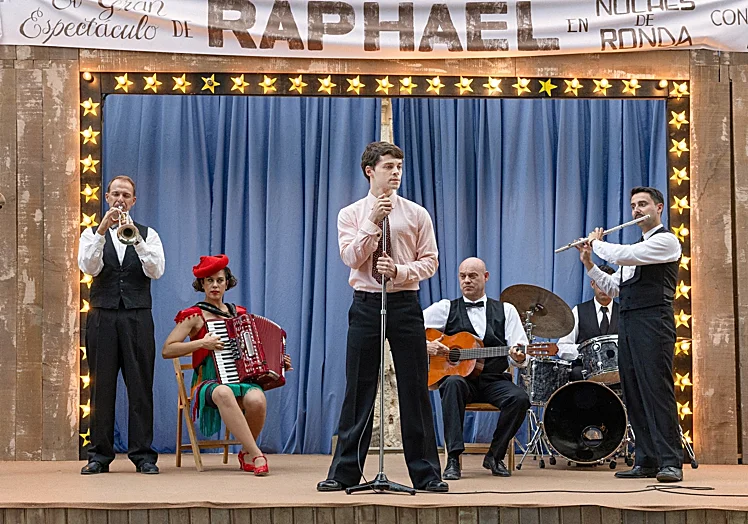
The 100,000 pesetas he earned by winning at the Benidorm Festival were his first big success in music. Then would come his first performances in dance halls; the day he broke the mold in Spanish popular music by delivering a solo recital at the Teatro de la Zarzuela in Madrid with resounding success; his double participation in Eurovision and the leap to the international stage that took him from the United States to the Soviet Union.
The biopic does not shy away from its most difficult moments. Aquel explores the bitter side of fame and the immense psychological pressure of maintaining the status of living myth for six decades. And it honestly addresses the darkest period of his life: his health crisis due to hepatitis. The series lays bare the dramatic months in the early 2000s when his health collapsed rapidly, culminating in the anxious wait and the liver transplant operation in 2003 that saved his life.
Natalia Figueroa: her unconditional support
Alongside Raphael’s meteoric career, Natalia Figueroa’s role occupies a central place as his life partner for more than five decades. Raphael and Natalia met in the late 1960s at an awards ceremony sponsored by the powerful radio host Encarna Sánchez. He was the latest sensation of song and she, a rising star of journalism and literature. The singer, winner of the Benidorm Festival and Eurovision, fell for the high-society journalist.
Raphael and Natalia Figueroa, on their wedding day in Venice, in 1972.
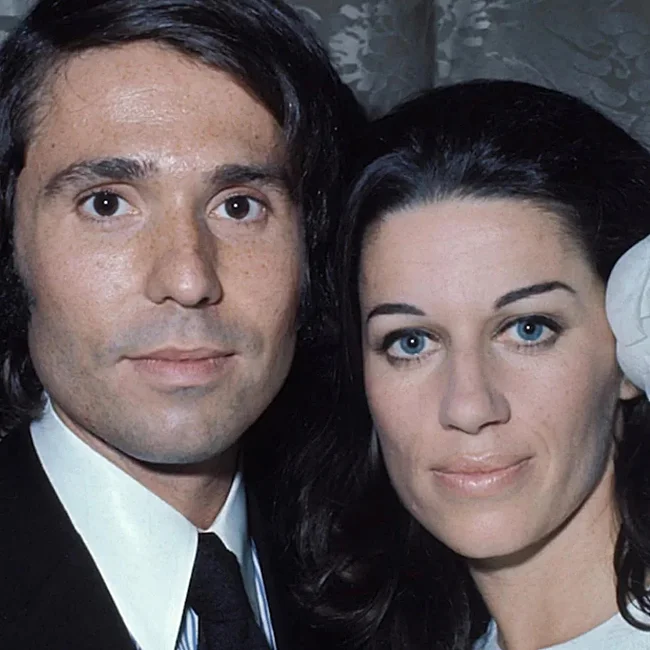
The romance was almost a state secret. “I deny wedding rumors,” Rafael said in 1972, a few months before marrying Natalia in Venice. “We are only good friends,” she had assured in the letter she sent to the Pueblo newspaper. The lovers managed to have their respective families attend the airport without knowing exactly where they were flying: the singer’s obsession and his future wife’s desire to keep the press away were in vain, and reporters were also present at the Church of San Zacarías.
Perhaps because the start of their relationship was so difficult, the marriage proved absolutely unbreakable. Just like Rafael’s career, the Spanish artist’s best-selling run. Only many decades later did we learn that the already famous singer had taken refuge in alcohol, a problem that began due to severe sleep disorders accumulated during his tours and that ended in a transplant. Both in real life and in the Netflix biopic, Natalia Figueroa is shown as the absolute pillar that sustained the family and the singer during his most critical months in the hospital.