
With the Puerta del Sol camp-out reaching its eleventh day, the announcement by UGT and CC.OO. that they would join the general strike proposed by the Renters’ Union and the two decrees of Pedro Sánchez being (again) approved by the Council of Ministers, awaiting the Permanent Deputation, the housing situation in our country is the topic dominating current affairs. And that is why we have looked at non-fiction works that can help us understand it better, selecting nine books that will help us learn more about the housing problem in Spain.
From the situation that the baby boom generation faced when buying a home, which bears no resemblance to the present, to investment funds that manage thousands of flats across the country; from the rise in house prices to the role that banks or deregulation have played, and continue to play, in the moment many young people (and not only) try to become independent, to find affordable rent, or to buy a home, these nine books are an enlightening and comprehensive portrait of a reality that affects the daily lives of the entire country, directly or indirectly.
The works we have selected offer a revelatory and illustrative view of a situation that, after years of being among the Spaniards’ main concerns, has become the axis around which the second half of 2026 will revolve. A problem that it is always worth knowing more about, to be clear about what we want to achieve and what we will face soon.
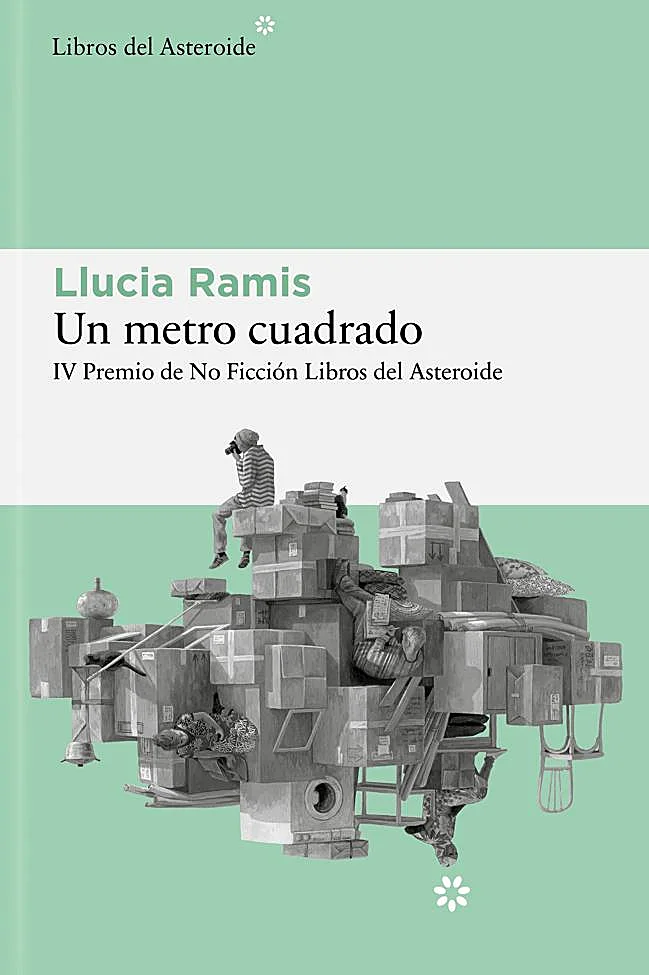
Cover of One Square Meter, the nonfiction book by Llucia Ramis.
One Square Meter. Llucia Ramis. Libros del Asteroide.
The fourth Libros del Asteroide Nonfiction Prize is an in-depth investigation through the author’s experience as a tenant. A personal and intimate chronicle of the spaces and the people that shaped different stages of her life, as well as a map of the progressive gentrification of our cities and the causes and consequences of the rising cost of housing. A work that probes the importance of the word “home” in an era when precarity is normalized and our neighborhoods become stages for tourists and wealthy expatriates.
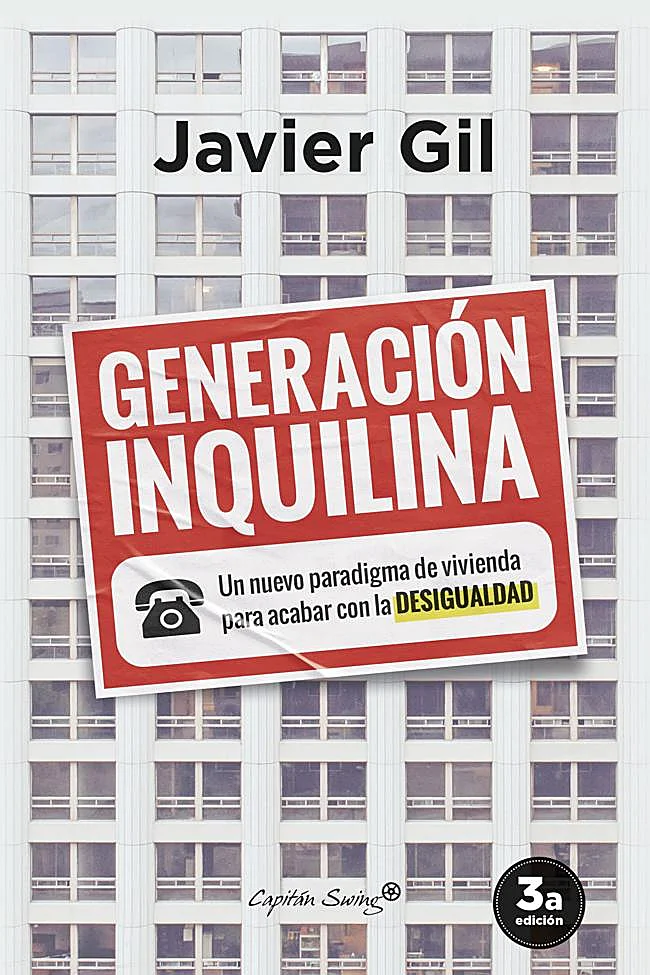
Cover of Tenant Generation, the book by Javier Gil.
Tenant Generation. Javier Gil. Capitán Swing.
An investigator at the Consejo Superior de Investigaciones Científicas (CSIC) and a PhD in Sociology from UNED, the Madrid author unravels the factors that have turned the housing problem into something structural and political. Housing is today the main financial asset of contemporary capitalism and the basis of a system that profits from owning, not producing. With its high prices, the majority of the population can no longer access a home of their own, which gives rise to the generation referenced in the title. A new social scenario in which the work proposes a horizon of change and a new paradigm, based on the right to inhabit, social justice, and the democratization of territory.
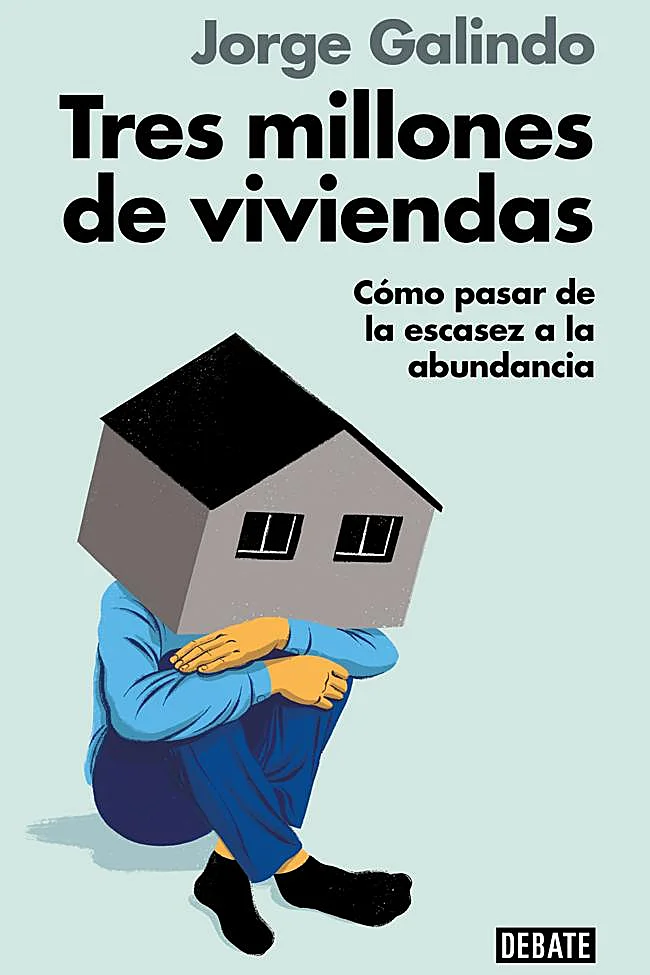
Cover of Three Million Homes, the book by Jorge Galindo.
Three Million Homes. Jorge Galindo. Debate.
Doctor in Sociology from the University of Geneva, the director of Esade’s Center for Economic Policy dissects in this book what has brought us to the current situation and the barriers we must overcome if we want to reverse a trend that erodes and harms the health of our cities, our economy, and society as a whole.
Because, as he notes in his work, if you do not have the capacity to choose where or how to live, the present and the future of the individual are conditioned and personal ambitions crash against problems that seem individual but share the same origins: a rising demand versus stagnant supply, increasingly stringent credit, an administration trapped in bureaucracy, ineffective policies, and a private sector lacking sufficient incentives and hampered by the housing bubble.

Cover of The Housing Sequestration, the book by Jaime Palomera.
The Housing Sequestration. Jaime Palomera. Península.
Doctor in Economic Anthropology from the Universitat de Barcelona, researcher and cofounder of the Institute of Urban Research (IDRa) and the Sindicat de Llogateres, the author dismantles in this book the myths surrounding the housing market. Drawing on success stories like Vienna or Singapore, he demonstrates why prices are not going to stop rising and how only structural changes will prevent neighborhoods and towns from turning into private enclaves for a few.
A book that not only unravels the roots of a crisis affecting millions but also explains how the market is indeed intervened, but in favor of rentierism. A call to action, to rethink current policies and to return housing to its status as a fundamental right.

Cover of Housing. The New Class Divide, the book by Lisa Adkins, Melinda Cooper, and Martijn Konings.
Housing. The New Class Divide. Lisa Adkins, Melinda Cooper and Martijn Konings. Lengua de Trapo.
After a brief historical run that begins with the baby boom generation’s promise of social ascent through housing, and ends with the millennial finding that the opposite is true, that ownership has become a social divider that channels the rents of the majority to a minority, this work explores phenomena widely debated but little understood, such as the dynamics of urban real estate inflation, changes in monetary policy, and the responsibility of third-way politicians in these changes or the role of global funds.
An illuminating essay in which the authors argue that in an asset-based economy like the one we live in, the conflict has shifted away from the world of work; now it is real estate ownership that redefines our social class.

Cover of Tenants, Unite! Jacob Stringer.
Tenants, Unite! Jacob Stringer. Bellaterra Edicions.
Written by the housing and social movements researcher and a member of the London Renters’ Union, this 188-page book explores the challenges of new spaces of community organizing. In recent decades, the housing struggle has given rise to a new renters’ and neighborhood unionism that, from solidarity and mutual aid, weaves community ties and organizes popular power through new forms of struggle.
More and more neighborhoods and cities around the world are joining to radically challenge the housing market and the rentiers, and Stringer places himself at the front line of the struggle to show us the worst face of the real estate market, explaining what this new wave of organizing consists of, as well as what victorious outcomes the renters’ union movement might look like.

Cover of Rebels’ Cities, the book by David Harvey.
Rebel Cities. From the Right to the City to the Urban Revolution. David Harvey. Akal Editions.
The British geographer and social theorist places the city at the center of the class struggle and around capital in this work, from Johannesburg to Bombay, from New York to Sao Paulo. Focusing on the Paris Commune as well as the Occupy Wall Street movement and the London riots, he asks how cities can be reorganized in a way that is socially more just and ecologically healthier, and how they can become the center of anti-capitalist resistance. As a utopian and revolutionary reflection, the city, at the same time, has been a center of capitalist accumulation and the front line in struggles over access to urban resources, as well as the quality and organization of daily life.