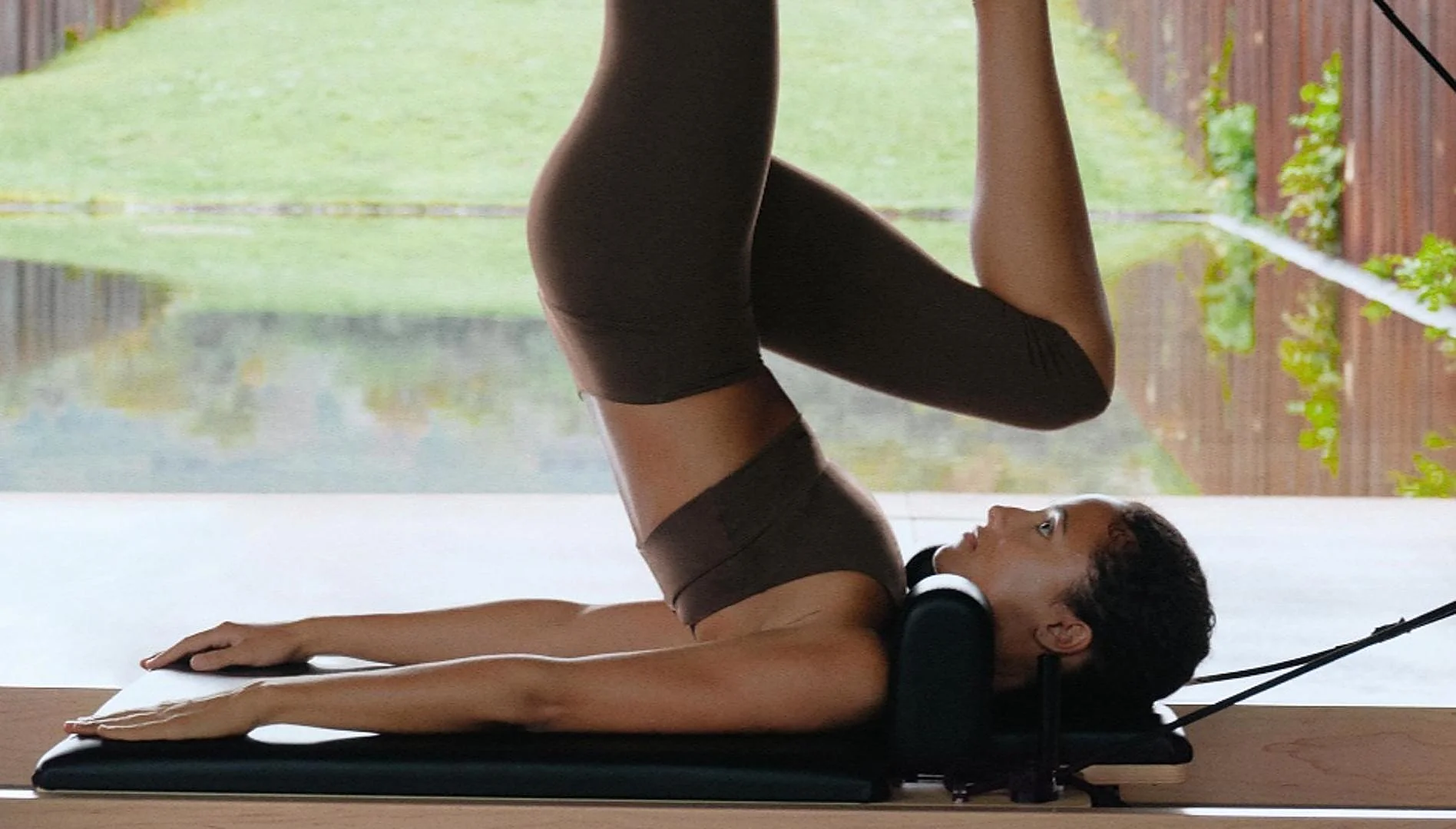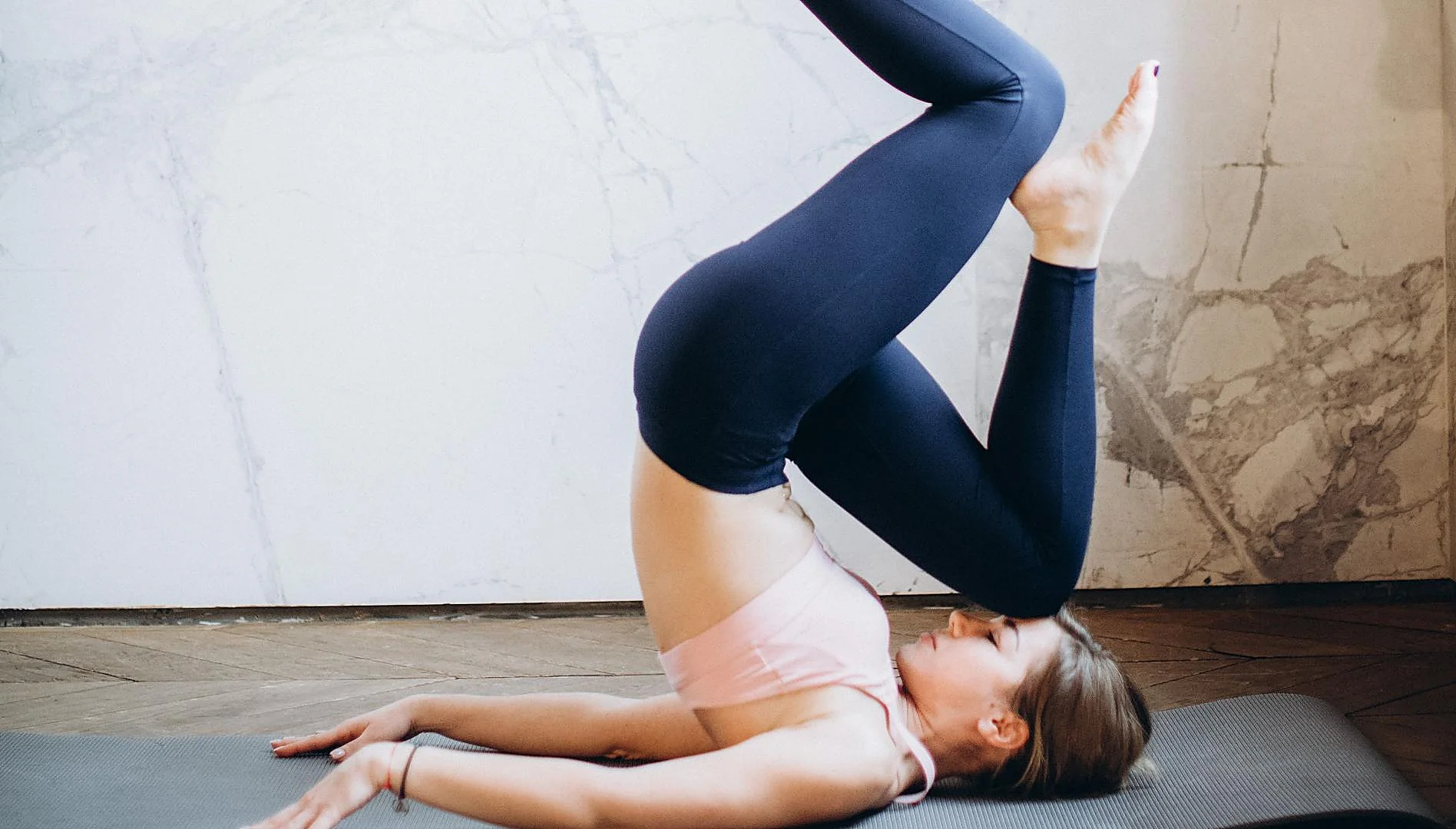
The spine flexes as the body inverts relative to gravity. It is not an exercise to introduce simply due to years of practice. Teresa Vázquez de Castro, head of Education and Product at Club Pilates Spain, explains it bluntly: “Balance control requires a solid base of abdominal strength, mobility and spinal control, pelvic stability, strength of the posterior chain, and balance. It should not be introduced solely because the student has been practicing Pilates for years.”
From age 45 onwards, there is something that should be checked before considering this exercise. “It is important to know if osteopenia or osteoporosis exists, a history of vertebral fractures, or any spinal pathology,” says Vázquez de Castro. When osteoporosis exists or there is a high fracture risk, deep flexion or inversion exercises may be contraindicated or require specific modifications.
Not only do strength and balance matter. “One should assess not only strength, balance and motor control, but also the state of the spine and bone health,” explains Vázquez de Castro. Progression should begin with preparatory exercises that allow mastering abdominal control before moving toward the full version.
More than age, what determines whether someone is prepared is something else. “Factors such as having sufficient abdominal strength, mobility of the spine and hip, pelvic control, the ability to maintain balance and absence of pain during the preparatory movements matter,” details Vázquez de Castro.
How to teach progressively
Verifying that previous exercises are mastered is the first filter. “One should verify that the person can perform exercises such as roll over, shoulder bridge and abdominal control exercises without losing alignment or loading the neck,” says Vázquez de Castro. A reasonable progression begins with abdominal control and the articulation of the spine, with exercises such as the roll up, and continues with the assisted roll over and balance with support before reaching the final version. Each of these phases is usually worked on over weeks, not in a single session, within a regular machine-based Pilates class.
There is no need to rush toward the full exercise. “Mastering the different phases separately allows identifying the point at which control is lost,” explains Vázquez de Castro. That identification is precisely what marks when a student is ready to take the next step. It is a common approach in teaching advanced Pilates: breaking down a complex exercise into simpler parts before demanding full execution.
Carrying too much weight on the neck and collapsing the cervical spine are the most common mistakes. “Using momentum to enter or exit the position and losing pelvic control can reduce abdominal work and unnecessarily increase the load on the neck and lower back,” warns Vázquez de Castro. If neck or lower back pain appears, the answer is clear: regress the exercise or substitute it directly.
Is it accessible after 45? “Yes, for a person with a solid base, but it should not be considered a mandatory or appropriate exercise for all students,” nuances Vázquez de Castro. Being over 45 does not contraindicate it, but years of practice also do not guarantee that one is prepared to perform it safely. Not all students need to reach this exercise to benefit from the method.
The decision, she explains, should be based on mobility, strength, control and the ability to perform the progressions without compensations. Not on the number of years on the mat or on the desire to advance faster than the body allows. Each body reaches this point by a different path, and forcing the schedule instead of respecting that individual progression is often precisely what ends up generating the compensations that Vázquez de Castro warns should be avoided.